

Watching a group of capybaras is like seeing a gentle society in action. These large, friendly rodents are famous for their calm nature and tight family bonds. Often called the “giant guinea pigs,” capybaras live in groups for safety, warmth, and social interaction.
Their way of life is a fascinating look at animal teamwork and harmony.
What Is A Group Of Capybaras Called?
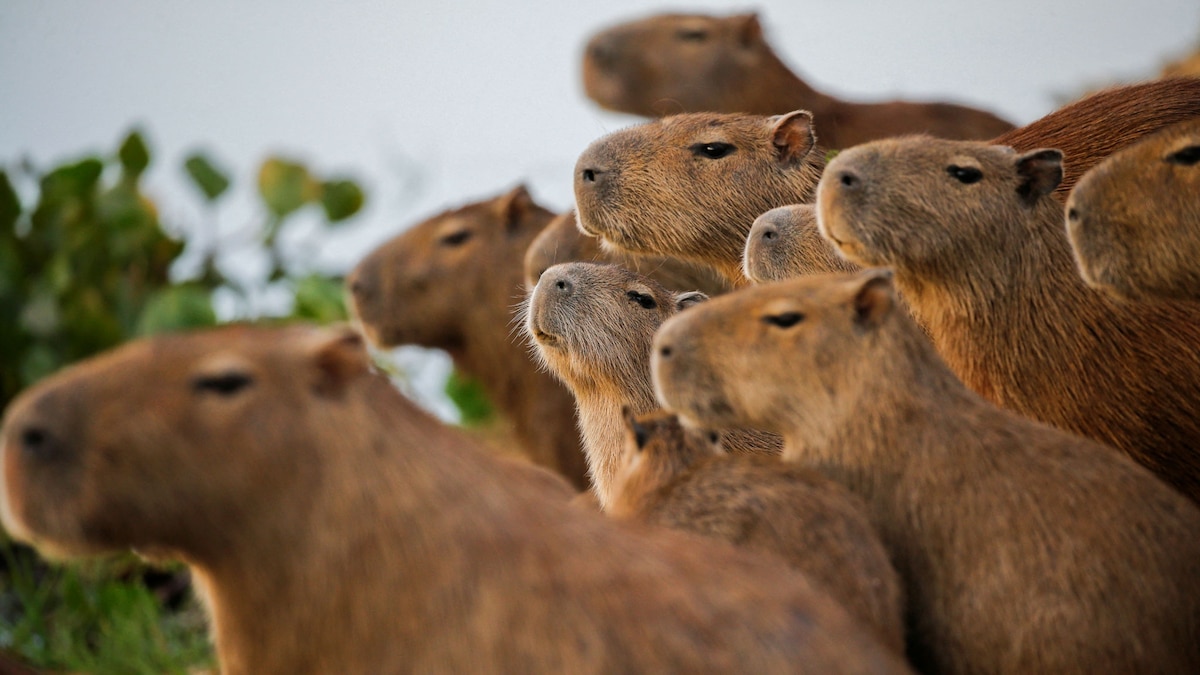
A group of capybaras is called a herd. Sometimes, people also use the words band or cluster. In the wild, herds usually have 10–20 members, but during dry seasons, herds can join together and form super groups with up to 100 capybaras.
Why Do Capybaras Live In Groups?
Capybaras are social by nature. Living together brings many advantages:
- Safety from predators: There is safety in numbers. A herd can keep watch for jaguars, caimans, or anacondas and warn each other if danger comes close.
- Grooming and health: Capybaras help each other stay clean by grooming and removing ticks.
- Warmth: At night or in cold rain, capybaras huddle together for warmth.
- Raising young: Mothers help each other look after the babies, called pups.
Most people do not realize that capybaras use a mix of vocal sounds—like barks, whistles, and purrs—to keep in contact with their group. This complex communication helps the herd stay together and respond fast to danger.

Credit: www.nationalgeographic.com
Inside A Capybara Herd
Every capybara group has a clear social structure. Here’s how their society works:
| Role | Details |
|---|---|
| Dominant Male | Leads the herd, guards territory, and mates with females |
| Subordinate Males | Follow the leader, rarely mate, help protect the group |
| Females | Form the core of the group, raise the young together |
| Pups | All babies in the herd, cared for by mothers and other females |
The dominant male is easy to spot. He is usually the largest and often sits in the center of the group. He marks territory with a scent gland on his nose, warning other males to stay away.
How Capybaras Behave In Groups
Capybaras are peaceful animals. They avoid fighting by using body language and gentle touches. Instead of biting, they nudge or brush against each other to show dominance or affection.
One key fact many beginners miss is that capybaras spend much of their day in water. Herds rest, eat, and even sleep near rivers, lakes, or ponds. Water is their safe zone—they escape into it if threatened and even mate in the water.
Capybaras eat together in the early morning and late afternoon when the weather is cooler. Their menu is mostly grass, but they will also eat fruit, bark, and aquatic plants.

Credit: unsplash.com
Where Can You See Capybara Herds?
Capybaras are native to South America. They live in countries like Brazil, Venezuela, Colombia, and Argentina. You can find them in grassy wetlands, marshes, and along riverbanks.
In some places, especially in urban parks in Brazil, capybara herds have adapted to living near humans. It’s not rare to see groups of capybaras relaxing in city parks or even crossing busy roads.
Social Bonds And Communication
Strong social bonds are key to herd survival. Capybaras greet each other with soft purrs and grooming. Mothers nurse not only their own pups but also others in the group. This practice, called alloparenting, is rare in the animal world.
Capybaras use several sounds to talk with each other. These include:
- Barks: Warnings when a predator is near
- Whistles: Contact calls to find group members
- Clicks and purrs: Signs of contentment or to calm pups
These communication methods are so effective that even young pups quickly learn the right call for each situation.
Herd Size: Numbers And Variations
A typical capybara herd has about 10–20 members. However, the size can change:
| Season | Average Herd Size | Why? |
|---|---|---|
| Wet Season | 10–20 | Plenty of food, more territory available |
| Dry Season | 40–100 | Herds merge near shrinking water sources |
Larger herds are not always safer. Sometimes, big groups attract more attention from predators or humans. But, with more eyes watching, there’s a better chance of spotting danger early.
Capybara Herds In Zoos And Parks
Many zoos and wildlife parks keep capybaras in small groups. This helps them feel safe and behave naturally. Zoos often design large, wet enclosures with both land and water areas, because capybaras need both to be healthy.
One interesting fact is that capybaras can live peacefully with other animals. In zoos, you might see them sharing space with ducks, turtles, or even monkeys. Their calm nature makes them popular in mixed-species exhibits.
Credit: www.nationalgeographic.com
Surprising Facts About Capybara Groups
- Capybaras can swim underwater for up to 5 minutes.
- Pups start eating grass within a week of birth but still nurse for 16 weeks.
- A dominant male can lose his status if he becomes sick or weak.
- Capybaras sometimes sleep in water, with just their noses sticking out.
- Each herd has its own social “personality”—some are friendly to strangers, others are not.
Many first-time observers are surprised by how quiet and organized a herd is, even with dozens of animals moving together.
Threats To Capybara Herds
While capybaras are widespread and not endangered, their herds face challenges:
- Habitat loss: Wetlands are drained for farms and cities.
- Hunting: In some areas, people hunt capybaras for meat and leather.
- Traffic: Urban capybaras risk being hit by cars.
Despite these risks, their adaptability helps them survive in changing environments. Conservationists watch capybara populations closely and encourage the protection of wetlands.
If you want to learn more about their status and protection, visit the Wikipedia page on capybaras.
Frequently Asked Questions
How Long Do Capybaras Live In Groups?
Capybaras live in herds their whole lives. In the wild, they can live 6–10 years. In captivity, some reach up to 12 years.
Are Capybara Herds Dangerous To Humans?
No, capybara herds are not dangerous. They are gentle and shy. If they feel threatened, they will run or swim away.
Can Capybaras Live Alone?
While a single capybara can survive, they are much happier and healthier in groups. Loneliness can cause stress and health problems.
What Do Capybara Herds Eat?
Capybara herds mostly eat grass, but they also enjoy fruit, bark, and water plants. They graze together for safety and social reasons.
Do Capybara Groups Have Leaders?
Yes, each herd has a dominant male who leads, protects, and organizes the group. If he loses strength, another male will take his place.
Being part of a group is the secret to the capybara’s success. Their calm, social lifestyle helps them survive and thrive across South America. Seeing a herd of capybaras is a reminder that sometimes, peace and teamwork are the smartest way to live.


