

Are Alligators Afraid Of Capybaras?
Curiosity about the animal world often brings up unexpected questions, like whether alligators are afraid of capybaras. At first glance, the idea sounds strange: an apex predator, the alligator, being scared of a large, gentle rodent. But in the wetlands of South America, where capybaras and caimans (a close alligator relative) share the same space, many videos and reports show these two animals living side by side with little drama. Is there any truth behind the belief that alligators avoid capybaras? Or is this just another internet myth? Let’s explore the real relationship between these fascinating creatures.
Understanding Alligators And Capybaras
To answer the main question, it’s important to know a bit about each animal.
Alligators are powerful reptiles found mainly in the United States and China. They belong to the Crocodylia order, and are known for their strong jaws and stealthy hunting skills. The most common species, the American alligator, can grow up to 13–15 feet (4–4.5 meters) long and weigh 800–1,000 pounds (360–450 kg). Alligators are carnivores, eating fish, birds, mammals, and sometimes even other reptiles.
Capybaras are the largest rodents in the world. Native to South America, they live in groups near rivers, lakes, and wetlands. Adult capybaras can weigh between 77–146 pounds (35–66 kg) and measure about 4 feet (1.2 meters) long. Despite their size, capybaras are gentle, social, and mostly eat grass and aquatic plants.
Do Alligators And Capybaras Meet In The Wild?
In the United States, alligators do not live in the same places as capybaras. However, in South America, capybaras often share their habitat with caimans—close relatives of alligators. The yacare caiman and spectacled caiman are the most common, and they behave very much like alligators.
So, while “alligators” and capybaras do not meet in the wild, caimans and capybaras do. Most stories about alligators and capybaras actually refer to caimans.

Credit: www.youtube.com
Observed Behavior: Are Alligators (or Caimans) Afraid?
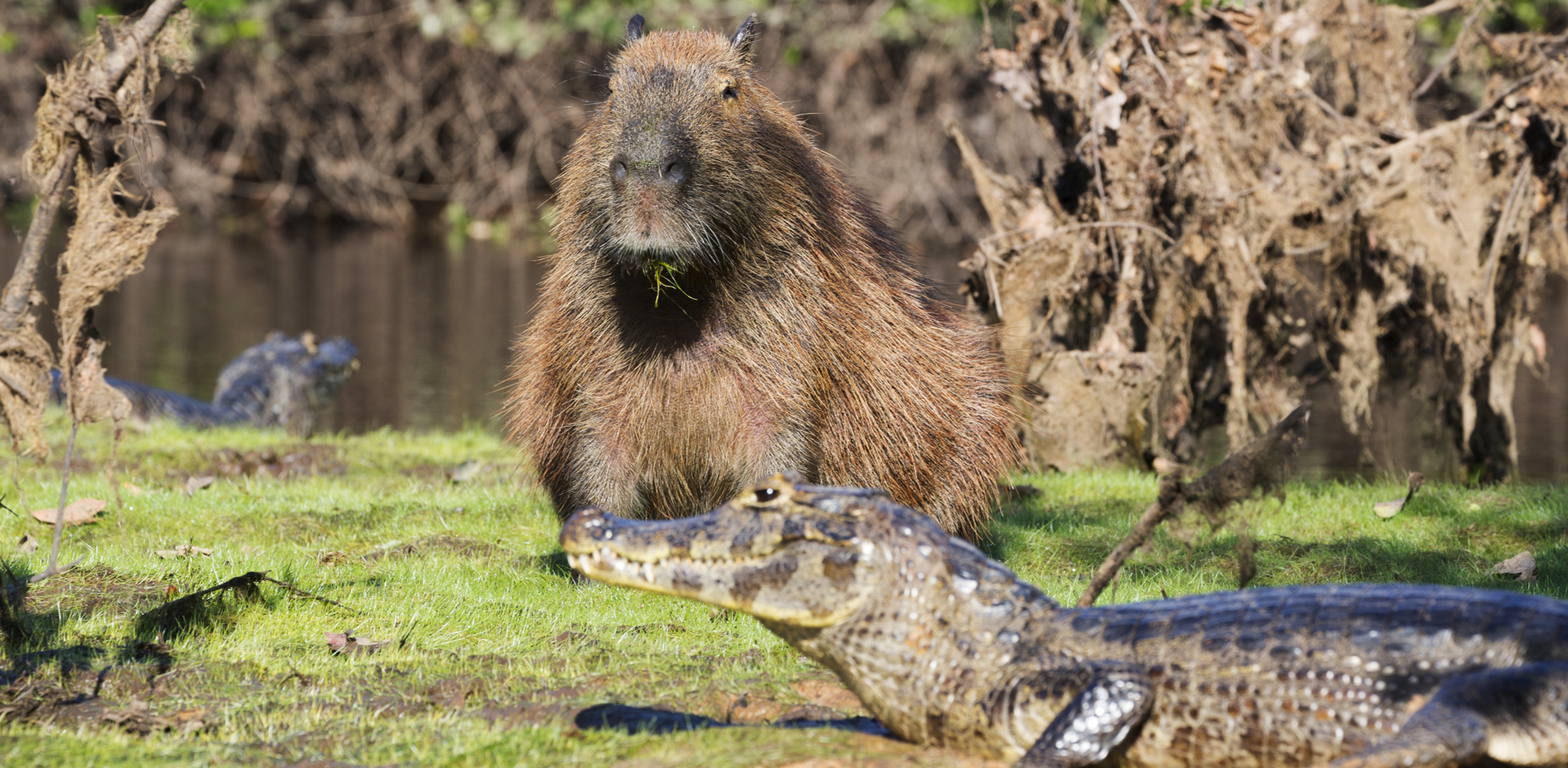
Many online videos show capybaras lounging beside caimans with no signs of fear. Sometimes, a capybara will even sit on top of a caiman’s back. At zoos and nature reserves, capybaras and alligators sometimes share enclosures and seem to ignore each other.
However, there is no real evidence that alligators or caimans are truly afraid of capybaras. Instead, scientists believe:
- Capybaras are not prey of choice: Alligators and caimans usually hunt smaller, slower animals. Capybaras are large, alert, and live in groups, which makes hunting them riskier.
- Capybaras are vigilant and fast swimmers: If a caiman approaches, capybaras often spot danger quickly and escape into the water.
- Caimans are opportunistic hunters: They may attack sick, young, or isolated capybaras but rarely challenge healthy adults in a group.
There are reports and studies confirming that caimans do eat capybaras sometimes. But the image of an alligator being scared by a capybara is more myth than fact.
Why Do Capybaras And Caimans Coexist Peacefully?
Several key reasons explain why these animals often appear relaxed together:
- Mutual Tolerance: Both species are used to sharing space in the wild. Capybaras are not aggressive, and caimans save energy by ignoring large, healthy animals unless they are hungry or desperate.
- Safety in Numbers: Capybaras live in groups of 10–20 individuals. Their many eyes make it difficult for a predator to sneak up.
- Good Escape Skills: Capybaras are excellent swimmers and divers. If threatened, they can stay underwater for up to 5 minutes.
- Feeding Habits: Caimans have many food options—fish, birds, and small mammals are easier to catch.
Credit: www.iflscience.com
What Do Data And Studies Show?
Scientists have studied the diets of caimans and alligators in the wild. In the Pantanal (the world’s largest wetland), studies found that capybara remains are rare in caiman stomachs. Fish, snails, and small mammals are far more common.
Here’s a simple comparison of prey found in caiman diets:
| Prey Type | Percentage in Diet (%) | Notes |
|---|---|---|
| Fish | 60–75 | Main food source |
| Snails & Invertebrates | 15–25 | Common in young caimans |
| Small Mammals | 5–10 | Includes rodents |
| Capybara | 1–3 | Rare, usually young or weak |
This data shows that while capybaras are sometimes eaten, they are not a preferred target.
How Do Capybaras Protect Themselves?
Capybaras use several strategies to avoid predators:
- Group Living: More eyes and ears to spot danger.
- Vocal Alarms: Capybaras bark or whistle to warn others.
- Water Escape: They can jump into water and stay hidden.
- Speed: On land, they can run fast over short distances.
These methods make it difficult for predators to catch an adult capybara.
Common Misunderstandings
Many people see viral videos and think alligators are afraid of capybaras. But these moments are usually:
- Animals relaxing in a safe environment: Well-fed caimans or alligators may ignore large animals nearby.
- Group effect: Capybaras are rarely alone, making attacks less likely.
- Captive animals: In zoos, predators are well-fed and do not hunt for survival.
Wildlife experts warn against reading too much into these peaceful scenes. Predators make choices based on energy and risk, not fear.
Capybara And Alligator/caiman Size Comparison
To understand why capybaras may not be the first target for a caiman or alligator, here is a size comparison:
| Animal | Average Length | Average Weight |
|---|---|---|
| Capybara | 4 ft (1.2 m) | 100 lb (45 kg) |
| Yacare Caiman | 6.5 ft (2 m) | 88 lb (40 kg) |
| American Alligator | 13 ft (4 m) | 800 lb (360 kg) |
This table shows that while alligators are much bigger, caimans are often similar in size to capybaras.
Non-obvious Insights
Many beginners miss these key points:
- Predators like alligators and caimans are energy calculators: They attack only if the reward is worth the risk and effort. A group of large, alert capybaras is a risky meal.
- Capybaras use mutualism: Birds and other animals often stay near capybaras, using their alarm calls as warning signals. This helps both parties avoid danger.
Final Thoughts
Are alligators afraid of capybaras? The answer is no. Alligators and their relatives, caimans, are not scared of capybaras. Instead, they usually choose easier prey. Capybaras are large, live in groups, and are hard to catch. Sometimes, a caiman or alligator may eat a young or sick capybara, but these events are rare. Videos of these animals relaxing together show peaceful coexistence, not fear.
If you want to read more about caimans and capybaras, visit the Wikipedia Capybara page.

Credit: www.youtube.com
Frequently Asked Questions
Why Do Capybaras Sit On Caimans Or Alligators In Some Videos?
Capybaras are calm and social. Sometimes, they sit on caimans because the reptile is resting and not hunting. Both animals are used to sharing space, especially in captivity.
Do Alligators Ever Eat Capybaras?
In the wild, alligators and caimans may eat capybaras, especially if the rodent is young, sick, or alone. But this is not common, and they prefer easier prey.
Are Capybaras Aggressive Toward Alligators Or Caimans?
No, capybaras are not aggressive. They rely on group living and escape skills to stay safe, not fighting.
Can Capybaras And Alligators Live Together Safely In Zoos?
Yes, in many zoos, capybaras and alligators (or caimans) share enclosures without problems, as long as the animals are well-fed and have enough space.
What Helps Capybaras Survive In The Wild With Predators Nearby?
Capybaras use group living, alarm calls, swimming, and speed to avoid predators. They are always alert and ready to escape if needed.


