

Capybaras and guinea pigs capture the hearts of animal lovers around the world. Many people notice their similar faces, chubby bodies, and calm nature. But are capybara and guinea pigs related? The answer is not as simple as it first appears. Exploring their connection reveals fascinating facts about biology, evolution, and the animal kingdom.
Understanding Their Relationship
Capybaras and guinea pigs both belong to the rodent family. This is the largest order of mammals, including more than 2,000 species. Both animals are grouped in the Caviidae family, making them relatives. However, their relationship is like distant cousins, not brothers or sisters.
Capybaras are the largest rodents in the world. An adult capybara can weigh up to 66 kg (145 lbs) and reach 1.3 meters (4.3 feet) in length. In contrast, guinea pigs are much smaller, usually weighing about 1 kg (2.2 lbs) and measuring 20-25 cm (8-10 inches) long.
So, while they share a family tree, these animals have taken very different paths in evolution.
Key Differences And Similarities
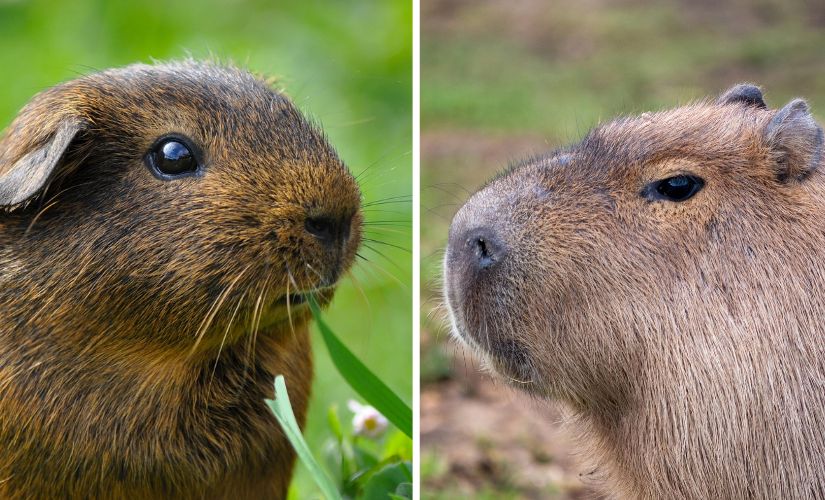
People often compare capybaras and guinea pigs because of their similar looks. But when you look closer, some clear differences emerge.
| Feature | Capybara | Guinea Pig |
|---|---|---|
| Size | Up to 66 kg (145 lbs) |
Up to 1 kg (2.2 lbs) |
| Habitat | Wetlands and rivers in South America |
Grasslands and mountains in South America |
| Lifespan | 8-10 years (wild) | 4-8 years |
| Social Behavior | Live in large groups | Live in small groups |
| Swimming Ability | Excellent swimmers | Poor swimmers |
Both species are herbivores, eating mostly plants, grasses, and vegetables. Their teeth grow continuously, and they must chew tough plants to keep them short. Both animals have friendly, gentle personalities, which is why people love them as pets.
Credit: spca.bc.ca
How Did They Evolve?
Capybaras and guinea pigs evolved from a common ancestor millions of years ago. Over time, they adapted to different environments in South America.
Capybaras became strong and aquatic, living in marshes and rivers. Their webbed feet help them swim, and they can stay underwater for up to five minutes to avoid predators. Guinea pigs, on the other hand, stayed small and lived in grassy areas and rocky plains.
Scientists believe that the split between their ancestors happened about 15-20 million years ago. Since then, each species has developed unique skills and body shapes.
Capybara Vs Guinea Pig: Behavior And Lifestyle
Their daily lives are quite different. Capybaras are social animals, often found in groups of 10-20. They use vocal sounds, like purrs and whistles, to communicate.
Guinea pigs also use sounds to talk, but their groups are smaller—usually 3-10 animals. They are shy and prefer to hide when scared. Capybaras are more relaxed and sometimes even let birds sit on their backs.
Let’s look at a direct comparison of their behaviors:
| Behavior | Capybara | Guinea Pig |
|---|---|---|
| Social structure | Large herds | Small groups |
| Communication | Whistles, barks, purrs | Whistles, squeaks, purrs |
| Activity | Active at dawn and dusk | Active mostly at night |
| Hiding | Rarely hide | Hide often |
Physical Features: What Stands Out
Although both animals have round bodies and short legs, capybaras are built for water. They have:
- Webbed feet for swimming
- Eyes and ears placed high on their heads to see and hear while in water
- Thick, rough fur that dries quickly
Guinea pigs do not swim well. Their feet are small, and their fur is soft and fluffy, which helps them stay warm on land.
Another interesting fact: capybaras can sleep in water, keeping just their noses above the surface!
Can Capybaras And Guinea Pigs Live Together?
Some people wonder if these two relatives can live together as pets. The answer is usually no. Capybaras need large outdoor spaces and access to water. They also require a special diet and social group.
Guinea pigs are best kept indoors in safe cages. They can become stressed by larger animals. Mixing the two can be dangerous for guinea pigs because capybaras are much bigger and stronger.

Credit: www.reddit.com
Why The Confusion?
Many people believe capybaras and guinea pigs are closely related because of their faces and gentle attitudes. The confusion also comes from their shared family, Caviidae. But in nature, family trees can be big. Just as humans and chimpanzees share a family but are not the same, capybaras and guinea pigs are relatives, not twins.
Here’s a look at their scientific classification:
| Classification Level | Capybara | Guinea Pig |
|---|---|---|
| Kingdom | Animalia | Animalia |
| Phylum | Chordata | Chordata |
| Class | Mammalia | Mammalia |
| Order | Rodentia | Rodentia |
| Family | Caviidae | Caviidae |
| Genus | Hydrochoerus | Cavia |
| Species | H. hydrochaeris | C. porcellus |
Surprising Insights Most People Miss
- Capybaras and guinea pigs cannot breed. Even though they are related, their DNA is too different for cross-breeding. There are no “caguinea” hybrids in nature or zoos.
- Their teeth are very similar. Both animals have special teeth for grinding tough plants. Their front teeth never stop growing, which is why they must always chew.
Most people also do not realize that wild guinea pigs still live in South America, but the ones kept as pets are a different subspecies.

Credit: www.reddit.com
The Bigger Picture
Learning about the relationship between capybaras and guinea pigs teaches us about evolution, adaptation, and the diversity of life. It reminds us that even animals with similar faces and habits can live very different lives.
If you want to read more about their scientific background, the Wikipedia page on Caviidae offers more detailed information.
Frequently Asked Questions
Are Capybaras And Guinea Pigs From The Same Family?
Yes, both belong to the Caviidae family. This makes them relatives, but they are different species with unique traits.
Can Capybaras Eat The Same Food As Guinea Pigs?
Not exactly. While both are herbivores, capybaras need more fiber and eat tougher plants. Guinea pigs require vitamin C in their diet because their bodies cannot make it.
Do Capybaras And Guinea Pigs Live In The Same Places?
Both come from South America, but capybaras live near water in wetlands, while guinea pigs prefer dry grasslands and mountains.
How Long Do Capybaras And Guinea Pigs Live?
Capybaras live around 8-10 years in the wild, and guinea pigs live 4-8 years. With good care, both can live longer in captivity.
Can You Keep A Capybara And Guinea Pig As Pets Together?
It is not recommended. Capybaras need a large outdoor space and water, while guinea pigs are better suited to indoor cages. The size difference can also be dangerous for guinea pigs.
Capybaras and guinea pigs share a family link, but their lives, bodies, and needs are very different. Understanding these differences helps us care for them better and appreciate the rich variety of animals on our planet.


