

Capybaras are fascinating animals that catch the eye with their relaxed nature and unusual looks. Many people see them swimming and wonder: are capybaras amphibians? The answer might surprise you. In this article, you’ll learn what makes an animal an amphibian, why capybaras are often confused with them, and what these gentle giants really are. Along the way, you’ll get clear examples, simple comparisons, and helpful facts you won’t find in every article.
What Makes An Animal An Amphibian?
To understand capybaras, you first need to know what an amphibian is. Amphibians are a special group of animals that include frogs, toads, salamanders, and newts. They have some key features:
- Start life in water: Most amphibians hatch from eggs in water and live as larvae (like tadpoles) before becoming adults.
- Breathe through skin: Many amphibians can absorb oxygen through their skin, especially when they’re young.
- Cold-blooded: Their body temperature depends on the environment.
- Moist, smooth skin: Amphibians have soft, wet skin, not covered by scales or fur.
All these traits help amphibians live both in water and on land. But do capybaras match these features?
What Are Capybaras?
Capybaras are the largest rodents in the world. They live in South America, usually near lakes, rivers, or swamps. Here’s what you should know about them:
- Scientific name: Hydrochoerus hydrochaeris
- Average size: 50-70 kg (110-150 lbs)
- Habitat: Wetlands, grassy banks, and forests near water
- Diet: Herbivores (they eat grass, plants, and fruit)
- Lifespan: 8-10 years in the wild
Unlike amphibians, capybaras give birth to live young (not eggs in water) and have thick fur. They do not go through a tadpole stage or breathe through their skin. Still, they spend a lot of time in water, which causes confusion.
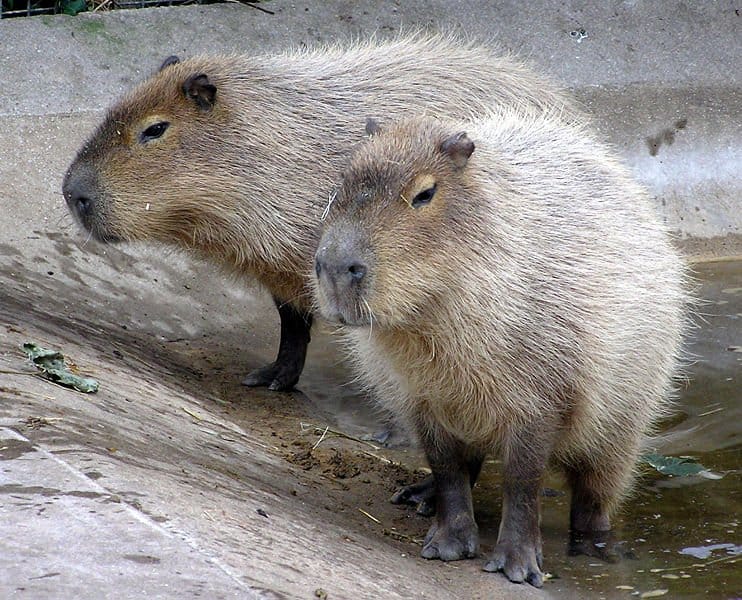
Credit: a-z-animals.com
Why People Think Capybaras Are Amphibians
Capybaras are often seen swimming, diving, or resting in water. They even sleep with their noses above the surface. These water-loving habits make some people think they must be amphibians. However, looks can be deceiving.
Here’s a simple comparison:
| Feature | Capybara | Amphibian |
|---|---|---|
| Body covering | Fur | Moist, smooth skin |
| Life cycle | No tadpole stage | Larva (tadpole) to adult |
| Breathing | Lungs only | Lungs & skin |
| Reproduction | Live birth | Eggs in water |
| Class | Mammal | Amphibian |
As you can see, capybaras are very different from amphibians in important ways.
Capybaras Are Mammals, Not Amphibians
The truth is, capybaras are mammals. Mammals are warm-blooded, have fur or hair, and feed their babies with milk. Capybaras fit all these rules:
- Warm-blooded: They keep a steady body temperature.
- Have fur: Their thick brown fur helps them stay warm and dry.
- Live births: They don’t lay eggs; babies are born fully formed.
- Feed young with milk: Capybara mothers nurse their babies.
Amphibians do none of these things. This is why scientists put capybaras in the rodent family, not the amphibian group.

Credit: www.amazon.com
How Capybaras Live In Water
Capybaras spend hours in water each day. They are excellent swimmers and can hold their breath underwater for about five minutes. This helps them escape predators like jaguars and caimans.
Here are some special features that make capybaras great in water:
- Webbed feet: Their toes are connected by skin, making swimming easy.
- Eyes, ears, and nose on top of the head: They can see, hear, and breathe while the rest of their body is underwater.
- Dense fur: Helps insulate them, but they still dry off quickly when on land.
Capybaras are not the only mammals that like water. Beavers, otters, and hippos also spend much of their lives in rivers and lakes. But none of these are amphibians either.
Capybara Vs. Amphibian: Key Differences
To make things clearer, look at how capybaras compare to true amphibians like frogs.
| Trait | Capybara | Frog |
|---|---|---|
| Class | Mammal | Amphibian |
| Birth method | Live birth | Eggs in water |
| Skin type | Fur | Moist skin |
| Development | No larva stage | Tadpole to adult |
| Breathing | Lungs only | Lungs and skin |
| Diet | Herbivore | Often carnivore or insectivore |
You can see that, while both can be found near water, capybaras and amphibians are not close relatives.
Non-obvious Facts About Capybaras
Many people do not realize that:
- Capybaras are closely related to guinea pigs, not frogs or salamanders.
- Their digestive system helps them eat tough plants that few other animals can digest. They even eat their own droppings to get more nutrients—a behavior called coprophagy.
These facts show capybaras are unique, even among mammals.
Why The Confusion Matters
Mixing up capybaras and amphibians is more than a simple mistake. It shows how much people rely on what they see, not what they know. Recognizing the difference helps us:
- Understand biodiversity: Knowing how animals are classified teaches us about evolution and nature.
- Protect habitats: Capybaras need wetlands and forests, not just water. Protecting the right spaces helps many species, not just one.
For more on animal classification, you can visit the Wikipedia page on amphibians.

Credit: www.amazon.com
Frequently Asked Questions
Are Capybaras Amphibians Or Mammals?
Capybaras are mammals. They have fur, give birth to live young, and nurse their babies with milk. They are not amphibians.
Can Capybaras Breathe Underwater?
No, capybaras cannot breathe underwater. They can hold their breath for about five minutes and swim very well, but they must come up for air.
Do Capybaras Lay Eggs In Water?
No, capybaras do not lay eggs. They give birth to live young, usually on land, and take care of their babies like other mammals.
Why Do Capybaras Spend So Much Time In Water?
Capybaras use water to escape predators, cool off, and find food. Their bodies are well adapted for swimming and hiding in water.
Are There Any Mammals That Are Also Amphibians?
No, mammals and amphibians are two separate groups. No animal is both a mammal and an amphibian at the same time.
Capybaras are wonderful, water-loving mammals—but they are not amphibians. Knowing the difference helps us respect and protect these gentle giants and their natural homes.


