

Capybaras and nutrias are two large, water-loving rodents that often get confused for each other. Both animals live in South America, have webbed feet, and enjoy swimming. But are capybaras and nutrias related? Many people wonder if they belong to the same family or just share similar habitats and habits. This article explores their relationship, differences, and what makes each species unique. If you’ve ever spotted a capybara or nutria and wanted to know more, you’re in the right place.
Understanding Capybaras And Nutrias
Before comparing them, it’s important to know what each animal is. The capybara is the largest rodent in the world. It can grow up to 134 cm (about 4.4 feet) long and weigh as much as 66 kg (146 lbs). Capybaras are native to South America and are famous for their calm nature and love for water.
The nutria, also known as coypu, is smaller than the capybara but still much bigger than most rodents. Adult nutrias usually weigh between 5 and 9 kg (11–20 lbs) and can reach about 60 cm (2 feet) long, not including their long, thin tail. Nutrias are also semi-aquatic and originally come from South America, though today they are found in North America, Europe, and Asia due to introductions.
Taxonomy: Are They Related?
To answer if capybaras and nutrias are related, let’s look at their scientific classification. Both are part of the large order Rodentia, but how close are they really? Here’s a side-by-side look at their taxonomy:
| Category | Capybara | Nutria |
|---|---|---|
| Kingdom | Animalia | Animalia |
| Phylum | Chordata | Chordata |
| Class | Mammalia | Mammalia |
| Order | Rodentia | Rodentia |
| Family | Caviidae | Echimyidae (sometimes Myocastoridae) |
| Genus | Hydrochoerus | Myocastor |
| Species | Hydrochoerus hydrochaeris | Myocastor coypus |
As you can see, capybaras and nutrias are both rodents. However, they do not belong to the same family or genus. Their last common ancestor is quite far back in evolutionary history.
What Does This Mean?
Simply put, capybaras and nutrias are distant relatives within the rodent group. They are more closely related to guinea pigs (capybara) and spiny rats (nutria) than to each other. Their similarities are due to convergent evolution—meaning they developed similar traits to survive in the same kind of environment, not because they are closely related.

Credit: www.youtube.com
Similarities Between Capybaras And Nutrias
Even though they are not closely related, these two rodents share many features.
- Semi-aquatic lifestyle: Both spend much of their time in or near water. Their webbed feet help them swim efficiently.
- Social behavior: Capybaras live in groups of 10–20, sometimes more. Nutrias can also be social, especially where food is abundant.
- Diet: Both mainly eat plants—grasses, aquatic vegetation, and sometimes fruit.
- Physical appearance: From a distance, both look like large, brown rodents with short fur and small ears.
Here’s a quick comparison of their physical features:
| Feature | Capybara | Nutria |
|---|---|---|
| Average Weight | 35–66 kg (77–146 lbs) | 5–9 kg (11–20 lbs) |
| Body Length | 106–134 cm (3.5–4.4 ft) | 40–60 cm (1.3–2 ft) |
| Tail | Very short, almost invisible | Long, thin, round tail |
| Teeth | Large, orange incisors | Prominent, orange incisors |
Key Differences
Despite their many similarities, capybaras and nutrias have several important differences.
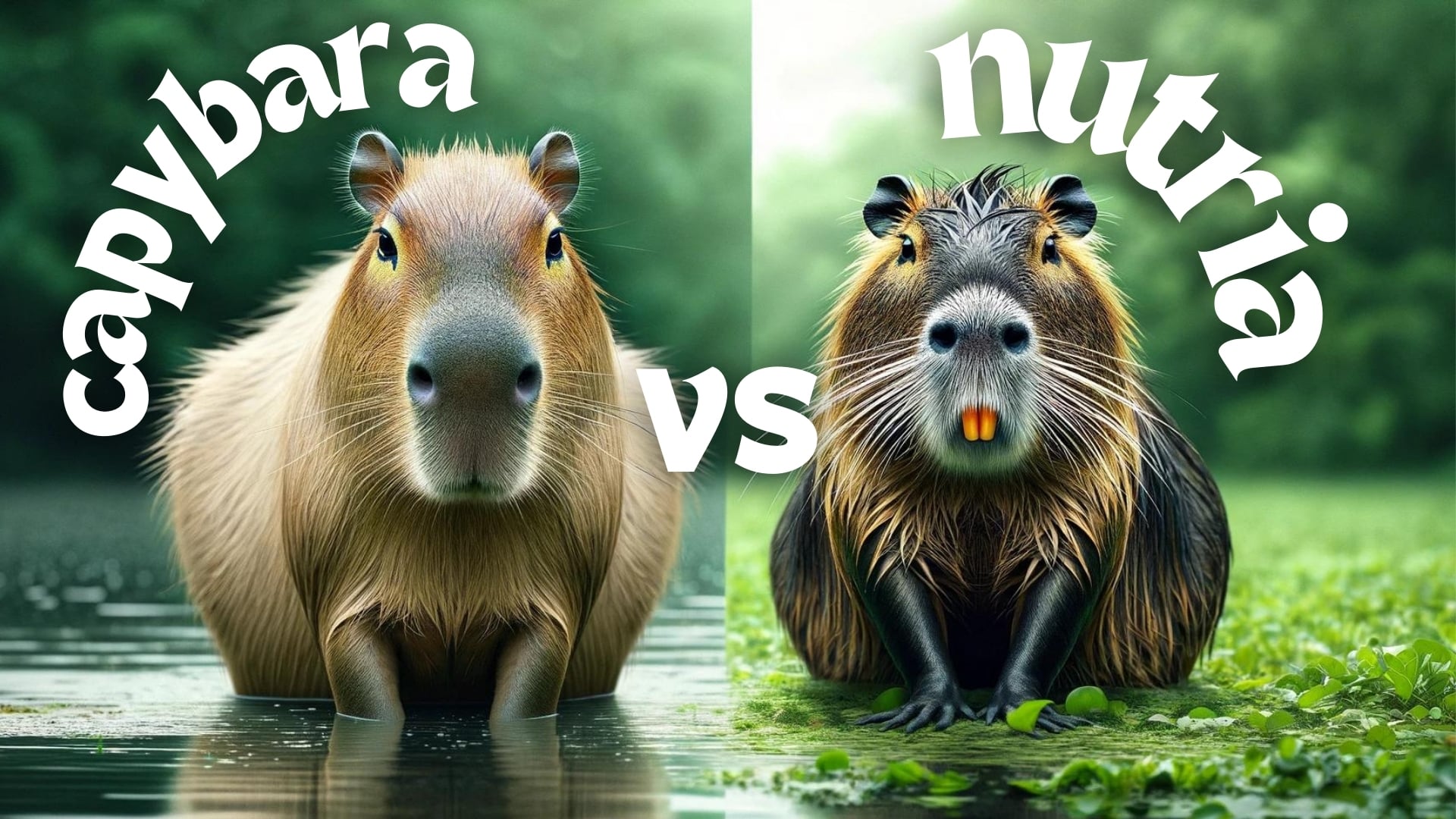
- Size: Capybaras are much larger. A full-grown capybara can be as heavy as a large dog, while nutrias are similar in size to a small beaver.
- Tail: The capybara’s tail is almost invisible. Nutrias have a long, round, rat-like tail.
- Family: Capybaras are in the Caviidae family (with guinea pigs and maras). Nutrias are in Echimyidae or sometimes listed in their own family, Myocastoridae.
- Distribution: Capybaras are mostly found in South America. Nutrias have spread to many parts of the world and are considered invasive in some places.
- Behavior: Capybaras are often described as gentle and calm. Nutrias can be aggressive, especially when protecting their young.
Credit: capybaramag.com
Real-world Impact
Understanding the relationship between capybaras and nutrias is important for several reasons. Nutrias, for example, have become a major problem in the United States and Europe. They destroy wetlands, eat crops, and damage riverbanks. Capybaras, on the other hand, rarely cause such problems.
In fact, their grazing can help maintain grasslands and wetlands in their native range.
It’s also useful to know the differences for pet owners and animal lovers. Capybaras are sometimes kept as exotic pets due to their friendly nature, while nutrias are less common and may require more care due to their behavior and potential to damage property.
Surprising Facts Most People Miss
- Capybaras have unique social calls. They use barks, whistles, and purrs to communicate, especially in large groups. Nutrias are quieter, usually making grunts or squeaks when disturbed.
- Nutrias have webbed hind feet but not front feet. This makes their swimming style different from capybaras, who have partially webbed toes on all feet.
- Capybara skin secretes a special oil. This oil helps them stay dry and even acts as a sunscreen.
Many beginners think that all large, brown, swimming rodents in South America are capybaras. In fact, seeing a nutria in North America or Europe is much more likely, as nutrias have spread far beyond their original home.
Conservation And Human Interaction
Capybaras are listed as Least Concern by the IUCN. They are hunted for meat and leather in some areas but are not considered threatened. Nutrias, on the other hand, are sometimes seen as pests. In places where they are invasive, governments spend millions on control efforts. For example, Louisiana spends over $2 million each year to manage nutria damage to wetlands.
Despite their differences, both species show how adaptable rodents can be and how humans have changed their natural history by moving animals around the globe.
If you want more scientific detail, you can read about their taxonomy and history on the Wikipedia Nutria page.
Frequently Asked Questions
Are Capybaras And Nutrias The Same Animal?
No, capybaras and nutrias are different species. They look similar because they both live in water, but they belong to different families and have unique traits.
Can Capybaras And Nutrias Live Together?
In the wild, their ranges rarely overlap. In captivity, they could share space if their needs are met, but their different sizes and behaviors might cause problems.
Why Are Nutrias Considered Invasive?
Nutrias breed quickly and eat large amounts of plants. In places like the U. S. and Europe, they destroy wetlands and compete with native wildlife, causing ecological and economic harm.
Is It Legal To Own A Capybara Or Nutria As A Pet?
Laws differ by country and state. Capybaras are legal in some places with special permits, while nutrias are often banned due to their invasive status.
How Can You Tell A Capybara From A Nutria?
Capybaras are much bigger, have a stocky body, and almost no visible tail. Nutrias are smaller, with a long, thin tail and a more pointed face.
Capybaras and nutrias may look alike, but their differences are significant. Understanding these unique rodents helps people protect native ecosystems and appreciate wildlife diversity.

Credit: a-z-animals.com


