

Capybaras are often called the world’s largest rodents, but they’re also known for their gentle nature. Many people wonder if capybaras are good with dogs, especially as exotic pets become more popular. If you’re considering bringing a capybara into your home and you already have dogs, or vice versa, it’s important to understand how these animals interact. This guide covers their behavior, compatibility, risks, and practical tips to help you make an informed decision.
Understanding Capybara Behavior
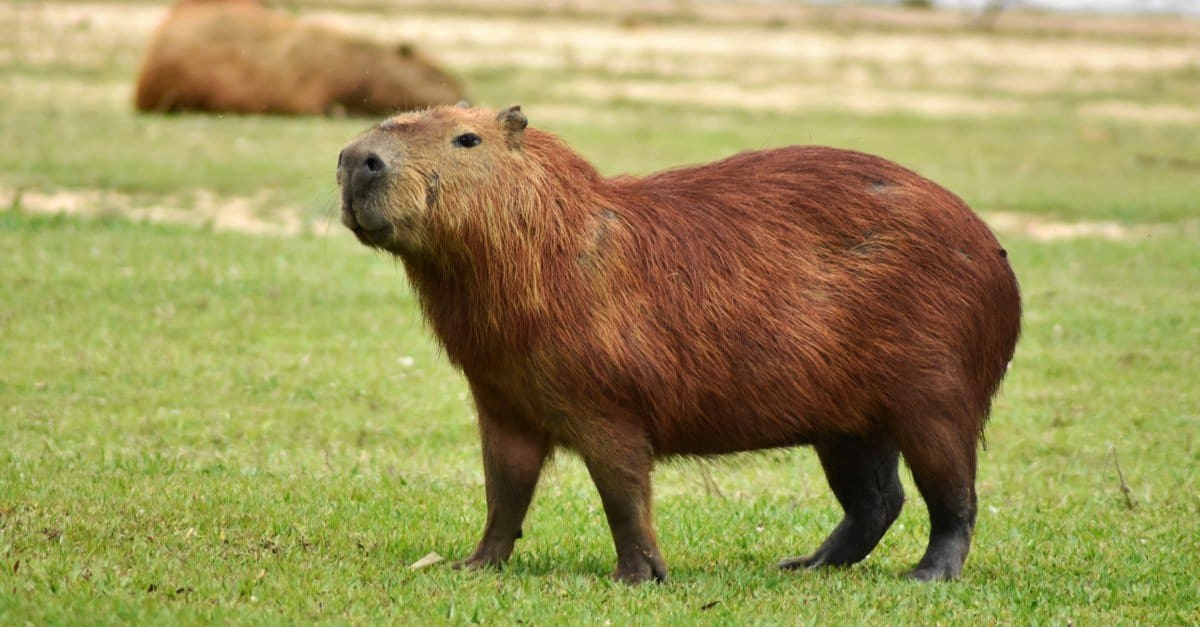
Capybaras come from South America and live in groups, sometimes with 10 or more members. Their social nature means they often get along well with other animals. They are herbivores and rarely show aggression unless threatened. When introduced to a new environment, capybaras can be shy, but their curiosity and calm attitude usually help them adapt.
Dogs, on the other hand, have a wide range of personalities. Some are energetic and playful, while others are more reserved. Breed, age, and training make a big difference in how a dog might react to a capybara.
Can Capybaras And Dogs Live Together?
In most cases, capybaras and dogs can live together peacefully, but this depends on several factors:
- Dog’s temperament: Calm, gentle dogs are more likely to get along with capybaras than aggressive or highly energetic breeds.
- Capybara’s age: Young capybaras may be more adaptable, while older ones might feel stressed by new animals.
- Home environment: Space, supervision, and proper introduction matter a lot.
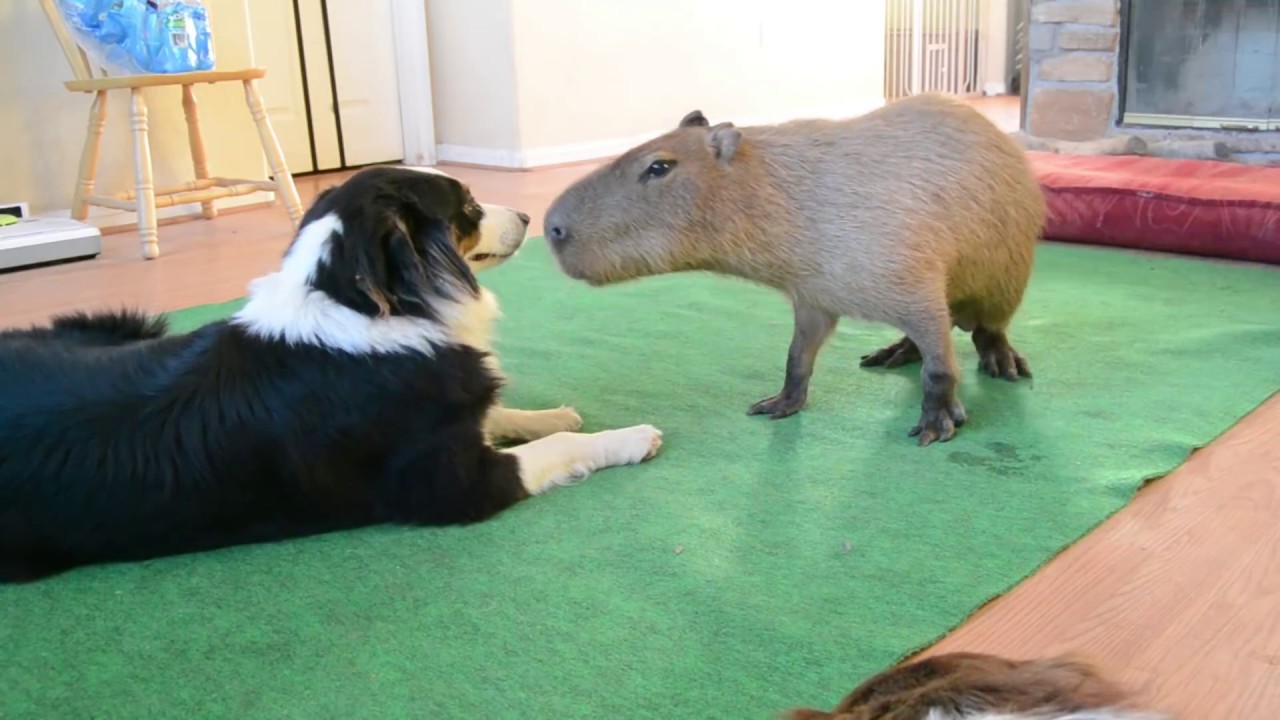
Some pet owners report their capybaras and dogs become best friends. Videos online show capybaras cuddling with dogs, sharing food, and even playing together. However, not every pairing will be successful.
Comparing Capybaras And Dogs
To get a clear idea of their compatibility, let’s look at some key differences and similarities:
| Trait | Capybara | Dog |
|---|---|---|
| Social Nature | Highly social, prefers groups | Varies by breed, many are social |
| Diet | Herbivore | Omnivore |
| Activity Level | Moderate, enjoys water | Varies (low to high) |
| Communication | Whistles, barks, purrs | Barks, growls, whines |
| Size | 40–60 kg (88–132 lbs) | Varies (2–90 kg) |
Most capybaras are larger than small dog breeds, but smaller than big ones like Great Danes. Their calm nature means they rarely provoke dogs, but size differences can lead to accidents.
Safe Introduction Tips
Introducing a capybara to a dog needs careful planning. Here’s how to do it safely:
- Start slow: Let the animals see each other from a distance for a few days.
- Supervise: Always watch them during first meetings.
- Use neutral space: Meet in a room or yard neither animal considers “theirs.”
- Reward calm behavior: Give treats when both animals are relaxed.
- Separate when stressed: If either animal acts fearful or aggressive, stop and try again later.
Some owners find it helps to let the animals sniff each other’s bedding or toys before face-to-face meetings. This reduces surprise and helps them get used to each other’s scent.
Risks And Challenges
Even if capybaras and dogs seem friendly, there are risks to watch for:
- Dog aggression: Some dogs have a strong prey drive and may see capybaras as prey. Breeds like terriers or hunting dogs need extra caution.
- Capybara stress: Capybaras can become anxious if chased or cornered. Signs include hiding, freezing, or vocalizing.
- Disease transmission: Dogs and capybaras can carry diseases, such as parasites. Regular vet checks are important.
- Resource guarding: Some dogs guard their food or toys, which can cause fights.
In rare cases, injuries happen. Capybaras have strong teeth and can bite if frightened. Dogs can also injure capybaras, especially during rough play.
Real-life Examples
Many capybara owners share stories of their pets living peacefully with dogs. For example, in Florida, a capybara named Joe became famous for his friendship with the family’s Labrador. They played in the pool together and even napped side by side.
However, there are cases where the animals did not get along. One family reported their Jack Russell chased their capybara, causing stress and injury. The key difference was the dog’s breed and training.
Credit: a-z-animals.com
Legal And Practical Considerations
Not every state or country allows capybaras as pets. Check local laws before getting one. Capybaras need outdoor space, water for swimming, and specialized diets. Dogs must be trained to respect the capybara’s space.
Here’s a quick comparison of their basic care needs:
| Care Requirement | Capybara | Dog |
|---|---|---|
| Space | Large yard, water access | Varies by size |
| Diet | Fresh grass, vegetables | Commercial dog food, meat, vegetables |
| Socialization | Needs company | Needs attention |
| Legal status | Often restricted | Commonly allowed |
Non-obvious Insights
Most beginners overlook the importance of water for capybaras. They spend hours swimming each day, so a pool or pond is essential. Without water, capybaras become stressed, which can affect their behavior around dogs.
Another detail many miss: capybaras need companionship. If you only have one capybara and your dog is not social, your capybara may feel lonely. Consider getting two capybaras or making sure your dog is comfortable with constant interaction.
Credit: www.youtube.com
Expert Guidance
If you’re unsure whether your dog and capybara will get along, consult an exotic animal vet or animal behaviorist. They can assess your pets and suggest a safe introduction plan. Remember, each animal is unique; what works for one pair may not work for another.
For additional information on capybara behavior and care, visit Wikipedia.
Frequently Asked Questions
Can Capybaras Live With All Dog Breeds?
No, some breeds, especially those with high prey drive like terriers, may not be safe around capybaras. Calm, gentle breeds are usually better companions.
Do Capybaras Ever Attack Dogs?
Capybaras are generally gentle, but they can bite if threatened or cornered. Their teeth are strong, so injuries can happen, though it’s rare.
What Should I Do If My Dog Is Aggressive Towards My Capybara?
Separate them immediately and consult a trainer or animal behaviorist. Never force interaction, and try gradual introductions.
How Can I Tell If My Capybara Is Stressed Around My Dog?
Signs include hiding, freezing, loud vocalizing, or refusing food. Provide a safe space and monitor their behavior closely.
Is It Legal To Keep Capybaras And Dogs Together?
Dog ownership is legal almost everywhere. Capybara ownership depends on local laws, so always check regulations before getting one.
Living with capybaras and dogs can be rewarding, but it needs careful planning and attention to both animals’ needs. With the right approach, many households enjoy peaceful, happy friendships between these unique pets.

Credit: twpark.com


