

Capybaras and crocodiles both live in wetlands and rivers of South America. People often ask: do capybaras get along with crocodiles? At first, it sounds impossible. Capybaras are friendly, gentle rodents. Crocodiles are fierce predators. Still, you might see photos of these animals near each other in the wild. The truth is more complex than a simple yes or no. Let’s dive into their relationship, why they sometimes share the same space, and what really happens when these two very different animals meet.
How Capybaras And Crocodiles Live In The Wild
Capybaras are the world’s largest rodents. They live in groups near rivers, ponds, and marshes. Crocodiles—especially the yacaré caiman and Orinoco crocodile—also live in these watery places. These animals often cross paths, especially during the dry season, when water is hard to find.
Both animals need water to survive. Capybaras use water to stay cool, escape danger, and find food. Crocodiles use water for hunting and resting. This means their territories overlap almost daily.
What Makes Capybaras Special?
Capybaras are not aggressive. Instead, they are social and calm. They do not fight with many animals. When in danger, capybaras run into water, where they swim well. Their large groups help them spot danger quickly.
What About Crocodiles?
Crocodiles are ambush predators. They wait for the right moment to attack. But they do not eat all animals they see. In the wild, crocodiles hunt when they are hungry or when prey is easy to catch.
Do Capybaras And Crocodiles Interact Peacefully?
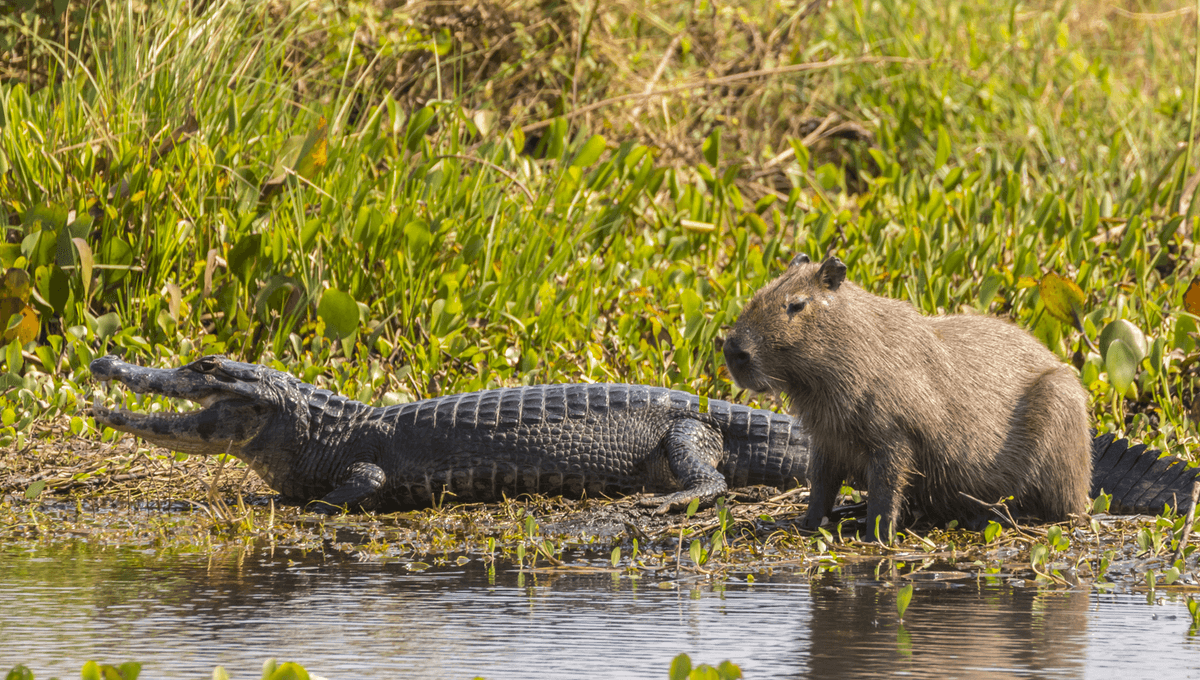
Most of the time, capybaras and crocodiles keep a safe distance. You might see them lying near each other on a riverbank. This does not mean they are friends. Instead, it shows a type of peaceful tolerance.
Here is a simple comparison:
| Animal | Diet | Behavior with Others | Main Defense |
|---|---|---|---|
| Capybara | Herbivore (plants) | Social, calm | Group alertness, swimming |
| Crocodile | Carnivore (meat) | Solitary, territorial | Ambush attack |
Capybaras are not the main food for crocodiles. These rodents are fast in water, and their groups help protect them. Crocodiles often target weaker, smaller animals. Healthy adult capybaras are harder to catch.
Credit: www.iflscience.com
Why Don’t Crocodiles Always Attack Capybaras?
Some people wonder why crocodiles don’t eat capybaras more often. The answer includes these points:
- Size and Effort: Capybaras are large. Catching and eating one is risky for a crocodile. Injuries during a hunt can be deadly for predators.
- Plenty of Food: In the wild, crocodiles have many food choices—fish, birds, smaller mammals. If food is easy to find, there is less reason to chase big animals.
- Group Safety: Capybaras live in groups of up to 100 during the dry season. Many eyes make surprise attacks difficult.
- Capybara Awareness: Capybaras are always alert. They often spot danger early and escape into water.
A study found that only about 5% of a caiman’s diet is capybara meat. Most of the time, they eat fish and snails.
When Do Crocodile Attacks Happen?
Attacks are rare, but they do happen. Young, old, or sick capybaras are at risk. Crocodiles may attack if:
- Food is scarce
- Capybaras are alone
- The prey is weak or unaware
Even then, the success rate is low. Most healthy capybaras escape.
Here is a look at attack risk:
| Capybara Situation | Attack Risk by Crocodile |
|---|---|
| Large group, healthy adults | Very low |
| Alone or small group | Moderate |
| Young, sick, or injured | High |
Surprising Insights Most People Miss
Many people believe capybaras are always in danger. But here are some facts beginners often overlook:
- Mutual Tolerance: Capybaras and crocodiles sometimes rest side by side in the sun. Both save energy this way, and crocodiles may not see capybaras as worth the chase unless desperate.
- Ecosystem Balance: Capybaras feed on grass and help keep wetlands healthy. Crocodiles control animal populations. Their balance keeps nature working well.
Another interesting point: Capybaras sometimes use crocodile presence as a warning. If crocodiles are calm, it means no jaguars (another predator) are nearby, since jaguars hunt crocodiles. This helps capybaras feel safer.
What Happens In Captivity?
In zoos or wildlife parks, capybaras and crocodiles are almost never kept together. The risk is too high. Crocodiles may attack if stressed or hungry, and capybaras cannot escape as easily as in the wild.
Careful design is needed to keep both animals safe. Usually, they have separate spaces to avoid accidents.

Credit: www.reddit.com
Should Capybaras And Crocodiles Be Kept Together?
Never try to keep these animals together at home or in private collections. Capybaras are prey animals, and crocodiles are unpredictable. Even if they seem peaceful, one mistake can be fatal for the capybara. Animal experts always recommend separate enclosures.
Real-life Example
In the Pantanal wetlands of Brazil, tourists often see capybaras and yacaré caimans side by side. Local guides explain that as long as food is plentiful, these animals ignore each other. During droughts or when food is low, attacks become more common.
For more on the complex relationships in the Pantanal, see the Pantanal Wikipedia page.

Credit: www.reddit.com
Frequently Asked Questions
Can Capybaras And Crocodiles Be Friends?
No, they are not friends. They may share space, but it is not friendship. It is more like peaceful tolerance.
Why Do Photos Show Capybaras Next To Crocodiles?
Sometimes, both animals use the same sunbathing spots. They can lie near each other if the crocodile is not hunting.
Are Baby Capybaras Safe Around Crocodiles?
No. Baby capybaras are at high risk. Crocodiles are more likely to attack young, small, or weak animals.
Do Capybaras Help Crocodiles In Any Way?
Not directly. But capybaras help the environment by eating grass, which keeps wetlands healthy for all animals.
Is It Safe To Visit Rivers With Both Animals?
Yes, with care. Guides in South America often help tourists stay safe. Never approach wild capybaras or crocodiles.
Capybaras and crocodiles are not enemies, but they are not friends either. They have learned to live near each other, using their own survival skills. Nature is full of surprises, and their relationship is a perfect example of how different animals can share the same home—sometimes peacefully, sometimes not.


