

Capybaras are famous for their gentle nature and unique look. Many people see their round bodies, short legs, and webbed feet and wonder: do capybaras have hooves? This question may seem simple, but the answer reveals a lot about their biology, lifestyle, and how they move through their watery world. Let’s explore this fascinating topic in detail so you’ll understand not just the facts, but also why capybaras are built the way they are.
What Are Capybara Feet Like?
At first glance, capybara feet might remind you of a duck’s foot more than a horse’s hoof. Capybaras are the world’s largest rodents, and their feet are designed for swimming, walking on soft ground, and escaping predators.
Each foot has:
- Four toes on the front feet
- Three toes on the back feet
The toes are joined by webbing, which helps them paddle through water with little effort. Instead of hard, single-piece hooves like horses or cows, capybaras have small, blunt nails at the end of each toe.
This unique foot shape is a clue to the answer: capybaras do not have traditional hooves, but something much more suited to their lifestyle.
What Is A Hoof?
To understand the capybara’s feet, let’s look at what a hoof actually is. In biology, a hoof is a hard covering that protects the tip of a toe. Hooves are made of thick keratin, the same material as our fingernails. Animals with hooves (like horses, cows, and goats) are called ungulates.
Key features of true hooves:
- Made of one solid piece
- Cover the entire tip of the toe
- Used for running, digging, or defense
Capybaras don’t match these features, so they are not hoofed animals.
Capybara Feet Compared To Other Animals
Comparing capybara feet to those of other animals can make the difference clear. Here’s a simple table to help you see how capybaras stand out:
| Animal | Number of Toes | Foot Covering | Main Function |
|---|---|---|---|
| Capybara | 4 front, 3 back | Webbing + Nails | Swimming, walking |
| Horse | 1 per foot | Solid Hoof | Running |
| Duck | 4 per foot | Webbing | Swimming |
| Dog | 5 front, 4 back | Pads + Nails | Running, digging |
As you can see, capybaras have more in common with ducks in terms of webbing, but their nails are similar to a dog’s, just less sharp.
Why Don’t Capybaras Have Hooves?
Capybaras live in wetlands, rivers, and marshes in South America. Their bodies evolved for this environment. Hooves are great for running fast on dry land, but not for swimming or walking on mud.
Here’s why capybaras have nails and webbing instead of hooves:
- Swimming: Webbing acts like paddles, pushing water so they can glide smoothly.
- Walking on Mud: Soft nails and wide feet spread their weight, so they don’t sink.
- Digging: Nails help them dig for roots and create burrows in soft ground.
If capybaras had hard hooves, they would struggle in their watery world.
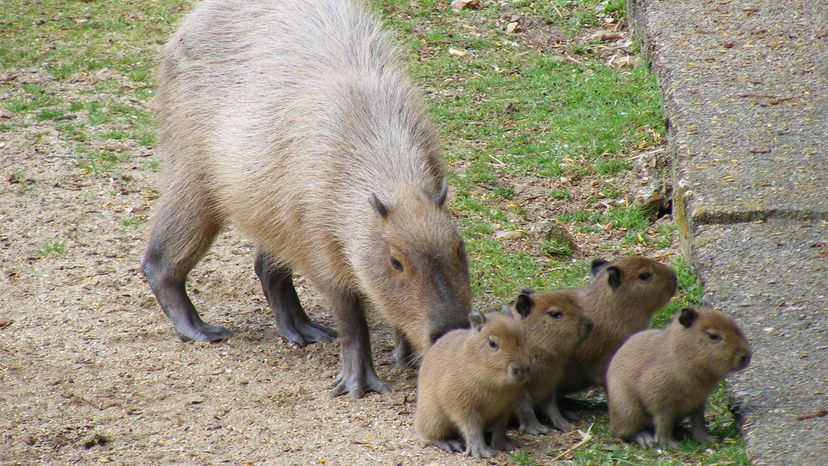
Credit: animals.howstuffworks.com
Are Capybara Feet Ever Mistaken For Hooves?
Sometimes people look at capybara feet and mistake their nails for tiny hooves. This is easy to do because their nails are thick and blunt, not sharp like a cat’s claws. But there are important differences:
- Shape: Capybara nails are oval, not curved or pointed like true hooves.
- Material: Their nails are made of keratin, but much softer than a hoof.
- Webbing: True hooved animals never have webbed feet.
If you ever get a close look at a capybara, you’ll see the webbing is the most obvious feature.
How Do Capybara Feet Help Them Survive?
Capybara feet are not just for swimming. They play a big role in everyday survival. Here’s how:
- Escape from Predators: Capybaras can jump into water and swim away from danger. Their webbed feet give them speed.
- Food Search: They use their nails to dig up plants, roots, and even sometimes help break apart food.
- Comfort: Capybaras like to rest in muddy or soft ground. Their feet keep them comfortable and balanced.
Unlike hoofed animals, capybaras don’t need to run at high speeds for long distances. They rely on water to escape, so their feet evolved for this purpose.

Credit: www.reddit.com
Common Myths About Capybara Feet
Many myths exist because people see capybaras and guess about their biology. Here are some common myths and the real facts:
- Myth: Capybaras have hooves like a pig or cow.
- Fact: They have nails, not hooves.
- Myth: Webbed feet mean they are related to ducks.
- Fact: Capybaras are rodents, not birds. Webbing is a result of living in water, not family ties.
- Myth: Capybara feet are fragile.
- Fact: Their feet are strong and adapted for tough environments.
Understanding these details helps people appreciate how unique capybaras are.
Capybara Foot Care In Captivity
If you ever visit a zoo or rescue center, you’ll see staff paying special attention to capybara feet. Healthy feet are important because:
- Overgrown nails can cause pain and infection.
- Dirty webbing can lead to fungal problems.
- Hard surfaces can damage their soft foot pads.
Zoo keepers sometimes trim nails and provide soft, natural ground to keep capybaras comfortable.

Credit: www.palmbeachzoo.org
Evolutionary Purpose Of Capybara Feet
Looking back in time, capybara ancestors lived in different environments. Over millions of years, the ones with better swimming and soft-ground walking abilities survived. This led to the development of webbed feet and strong nails instead of hooves.
This adaptation is a perfect example of how animals change to fit their world, a process called evolution. Capybara feet are a living record of their watery history.
How To Recognize A Capybara’s Footprint
If you’re lucky enough to see capybara tracks, you’ll notice the unique shape. Here’s a quick guide:
| Feature | Capybara | Hoofed Animal |
|---|---|---|
| Toe Marks | 3-4, rounded | 1-2, pointed |
| Webbing | Visible lines | None |
| Claw/Nail Imprint | Short, blunt tip | Single, solid shape |
Capybara footprints are wider and softer than hoof prints, making them easy to spot near water.
Frequently Asked Questions
Do Capybaras Have Hooves Or Claws?
Capybaras have claws (more accurately, nails) at the end of each toe, not hooves. Their nails are blunt, strong, and perfect for digging and walking on soft ground.
Why Do Capybaras Have Webbed Feet?
The webbing helps capybaras swim quickly and efficiently. It also keeps them from sinking in mud, which is common in their natural habitat.
Are Capybara Feet Dangerous?
Capybara feet are not dangerous to humans. The nails are not sharp, and they rarely scratch. However, they use their feet to dig and groom themselves.
Can Capybaras Run Fast Without Hooves?
Capybaras can run, but they are not as fast as hoofed animals like deer or horses. Their feet are built for swimming and walking, not for high-speed running.
How Do I Learn More About Capybara Anatomy?
A good place to start is by reading detailed animal guides or checking resources like the Wikipedia page on Capybaras, which explains more about their body structure and lifestyle.
Capybaras may not have hooves, but their feet are a perfect match for their world. Next time you see one, you’ll know why those webbed toes and strong nails make them masters of land and water.


