

Capybaras are famous for their gentle nature and unique appearance. Many people see photos of these large rodents relaxing together by the water and wonder: Do capybaras live in groups? Understanding their social behavior reveals much about how they survive in the wild and why they are often called the world’s friendliest animal. Let’s explore how capybaras organize their lives, the reasons behind their group living, and what it means for them in their natural habitat.
Capybara Social Structure
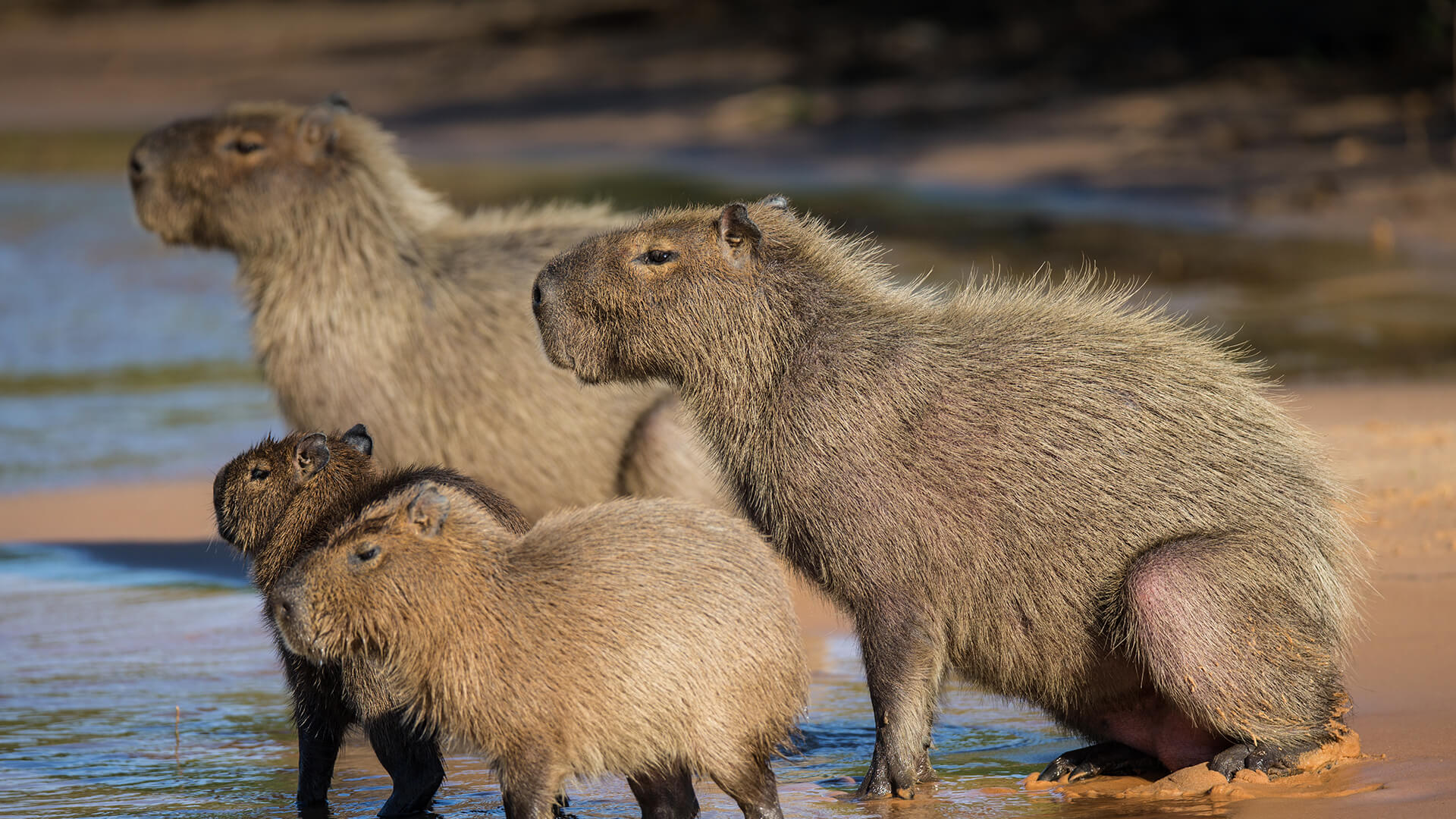
Capybaras are not solitary animals. In the wild, they almost always live in groups. A typical group contains 10 to 20 individuals. During the dry season or when resources are limited, these groups can become even larger, sometimes reaching up to 100 capybaras. This group is called a herd or a colony.
Each group usually has:
- One dominant male (the leader)
- Several females
- Their offspring
- A few subordinate males
The dominant male is responsible for protecting the group and controlling mating rights. Subordinate males and juveniles help watch for danger. Females often cooperate in raising the young. This structured system helps keep the group safe and organized.
Why Capybaras Live In Groups
Living in a group gives capybaras many advantages:
1. Protection From Predators
Capybaras have many natural enemies, including jaguars, caimans, anacondas, and eagles. In a group, there are more eyes and ears to detect danger. If a predator is near, one capybara will give a sharp warning bark. The whole group will then rush into water or thick reeds for safety.
2. Better Access To Resources
Capybaras eat grasses, aquatic plants, and sometimes fruits. In the wild, food can be spread out. Groups can split up to search for food, then gather again to rest and digest. This teamwork increases their chance of survival, especially in dry seasons.
3. Raising Young Together
Female capybaras often give birth around the same time. They help each other by nursing each other’s babies. This behavior, called alloparenting, makes sure that more young survive. It’s a rare trait in rodents and shows how deeply social capybaras are.
Credit: animals.sandiegozoo.org
Daily Life Inside A Capybara Group
Capybaras spend a lot of time together. Here’s what a typical day looks like for a capybara herd:
- Early morning: Foraging for food while it’s cool
- Midday: Resting in water or mud to escape the heat
- Evening: Feeding again and interacting with group members
Communication is key. Capybaras use barks, whistles, purrs, and grunts to talk with each other. These sounds help keep the group together and warn of danger.
They groom each other often, which strengthens social bonds and removes parasites. Young capybaras play together, learning important survival and social skills.
Group Size And Territory
The size of a capybara group depends on the environment. Near rivers and lakes with plenty of food, groups are larger. In drier areas, groups are smaller because food and water are limited.
Capybara herds are territorial. Each group controls an area with enough food and water for everyone. The dominant male marks the territory using scent glands. If another male tries to enter, the leader may chase him off.
Below is a comparison of group sizes in different habitats:
| Habitat Type | Average Group Size | Max Recorded Size |
|---|---|---|
| Flooded wetlands | 15-20 | 100 |
| Forest edges | 8-12 | 30 |
| Dry savanna | 5-10 | 20 |
This table shows that environment plays a big role in how capybaras organize their groups.

Credit: worldrainforests.com
Capybaras And Other Species
Capybaras are not just social with their own kind. They often share their space with other animals. Birds, such as cattle egrets, sit on their backs and eat insects. Sometimes, monkeys, turtles, and even small deer are seen resting near capybara groups.
This peaceful attitude helps capybaras avoid conflict. Their calm presence means other animals feel safe around them. However, capybaras are always alert for predators, and they rely on the group for safety.
Non-obvious Insights About Capybara Groups
Most people know capybaras are social, but there are less obvious facts:
1. Group Leadership Is Not Permanent.
If the dominant male becomes weak, another male may challenge him. Leadership changes happen without much violence, as capybaras prefer to avoid injury.
2. Orphaned Young Are Rarely Alone.
If a mother dies, other females in the group often adopt the orphaned young. This is not common in many wild animals, but it helps keep the group strong.
Capybaras In Captivity
In zoos and wildlife parks, capybaras are always kept in groups. When alone, they become stressed and may develop health problems. Zoos try to mimic natural herds with at least 3-5 individuals.
Here’s a quick look at the differences between wild and captive capybara groups:
| Setting | Group Size | Social Structure |
|---|---|---|
| Wild | 10-100 | Natural hierarchy, changing leaders |
| Captivity | 3-10 | Managed by keepers, stable groups |
It’s important for pet owners to know that capybaras are not happy living alone. They need companions to stay healthy and active.
How Group Living Affects Capybara Survival
Group living has helped capybaras become one of the most successful large rodents in South America. Their numbers are stable, and they are not considered endangered. By working together, they can escape predators, find food, and raise young more successfully than if they lived alone.
However, living in groups also has some risks. Diseases can spread quickly when many animals are close together. Also, fights for dominance can sometimes lead to injuries. Still, the benefits of group living far outweigh the downsides for capybaras.

Credit: www.britannica.com
Frequently Asked Questions
Why Do Capybaras Need To Live In Groups?
Capybaras rely on groups for protection from predators, help raising young, and better access to food. Living in a group makes it easier for them to survive in the wild.
Can Capybaras Live Alone?
Capybaras can survive alone for short periods, but they are not happy or healthy when isolated. In captivity, it is recommended to keep at least two or more capybaras together.
How Do Capybaras Communicate Within The Group?
Capybaras use a mix of sounds like barks, whistles, and grunts. They also use body language and grooming to share information and keep the group together.
Are Capybara Groups Ever Aggressive?
Capybaras are mostly peaceful, but males may fight for dominance. Serious injuries are rare because they usually prefer to avoid direct conflict.
Where Can I Learn More About Capybaras?
A good resource for learning more is the Wikipedia page on Capybaras, which covers their biology, behavior, and role in the ecosystem.
Capybaras remind us that cooperation is powerful in the animal kingdom. Their group living helps them thrive, showing that together, even the world’s largest rodents can live in peace and safety.


