

Capybaras are not only the world’s largest rodents but also among the most fascinating animals from South America. Their gentle nature and unusual appearance attract millions of fans worldwide. But one question often stands out: Do capybaras swim? The answer is not just yes—they are true masters in the water. Let’s dive deeper into the swimming abilities of capybaras, why they love the water, and what makes them so special among mammals.
Capybaras And Water: A Natural Connection
Capybaras are semi-aquatic mammals. They are found near rivers, lakes, swamps, and flooded grasslands in countries like Brazil, Argentina, and Venezuela. Water is not just a place to drink or cool off. For capybaras, it’s essential for their survival.
Their bodies have evolved to make swimming easy. Capybaras have webbed feet that act like paddles, and their eyes, ears, and nostrils are located high on their heads. This design lets them keep most of their body underwater while still seeing, hearing, and breathing.
How Capybaras Swim
Swimming comes naturally to capybaras from a very young age. Newborns can follow their mothers into the water within just a few days of birth. When they swim, their movements are smooth and strong.
Here’s what happens when a capybara enters the water:
- They slide into the water quietly, often from a riverbank.
- Their webbed feet push against the water, giving them speed and control.
- Capybaras can hold their breath for up to five minutes underwater.
- They often swim in groups for safety.
Capybaras don’t just float or paddle—they can dive, swim long distances, and even sleep in shallow water, with just their noses out to breathe.
Why Capybaras Swim
Swimming is not just a hobby for capybaras. It’s a key part of their daily life.
- Escape from predators: Jaguars, caimans, and anacondas all hunt capybaras. Water gives them a safe escape route. They dive and swim away, sometimes hiding under water plants.
- Regulate body temperature: South America gets very hot. Swimming helps capybaras stay cool during the hottest hours.
- Social bonding: Capybaras live in groups of 10–20. They often swim, play, and groom each other in the water, which strengthens social bonds.
Physical Adaptations For Swimming
Many features make capybaras excellent swimmers. Here’s a comparison of capybara body features versus a land rodent, like the guinea pig:
| Feature | Capybara | Guinea Pig |
|---|---|---|
| Feet | Webbed for swimming | No webbing |
| Body shape | Streamlined | Rounded |
| Ear/eye/nose position | High on head | Side of head |
| Fur type | Coarse, dries fast | Soft, holds water |
These differences show why capybaras are so much more at home in water than their rodent relatives.

Credit: capybarafacts.com
Unique Swimming Behaviors
Capybaras display some behaviors in water that are rare among mammals.
- Group diving: If a predator approaches, the whole group dives underwater almost at the same time.
- Underwater eating: Capybaras can graze on aquatic plants while swimming or even with only their heads above water.
- Play: Young capybaras chase each other, jump in and out of the water, and practice swimming skills.
One non-obvious fact is that capybaras use water as a “highway. ” They travel long distances through streams and flooded areas, which helps them find food and avoid threats.
Capybaras In Captivity: Swimming Habits
In zoos or as exotic pets, capybaras need access to water to stay healthy. A simple pond or even a large pool will work. Without water, capybaras can suffer from stress and even health problems.
Here’s how swimming affects their well-being in captivity:
| Situation | With Swimming Area | Without Swimming Area |
|---|---|---|
| Health | Good skin, active, low stress | Dry skin, risk of obesity |
| Behavior | Natural, playful, social | Boredom, aggression |
| Hygiene | Self-cleans in water | Needs manual cleaning |
If you ever see capybaras in a zoo, notice how much time they spend in and near the water compared to on land.
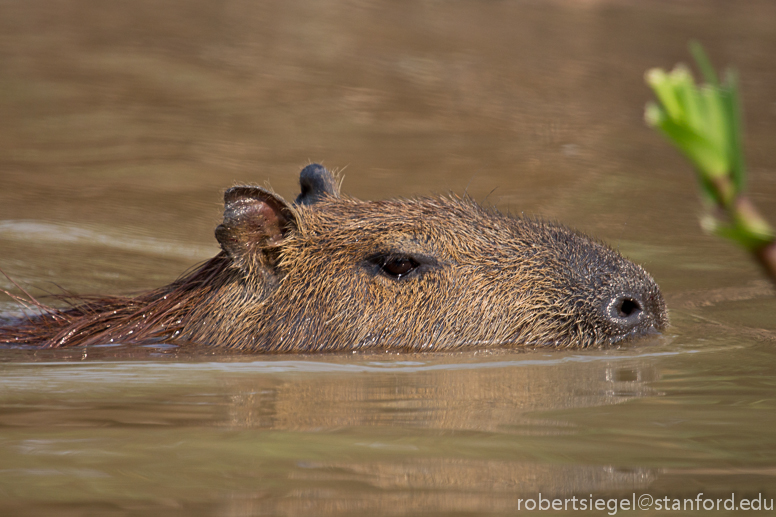
Credit: web.stanford.edu
Surprising Swimming Facts
Many people are surprised to learn just how talented capybaras are in water:
- Capybaras can stay underwater for five minutes without breathing.
- They can run into the water at speeds up to 35 km/h on land when escaping threats.
- Their fur dries quickly, so they don’t get cold easily.
- Capybaras sometimes mate in the water, which is uncommon for most mammals.
One insight many miss: capybaras do not swim just to escape, but also to seek certain foods that grow only in water.
Swimming Vs. Other Semi-aquatic Mammals
Capybaras are not the only mammals that swim. How do they compare with others like beavers or otters?
| Animal | Swimming Skill | Primary Reason for Swimming |
|---|---|---|
| Capybara | Excellent | Escape, feeding, social |
| Beaver | Strong | Building, escape |
| Otter | Expert | Hunting, play |
While otters and beavers are famous for their water skills, capybaras are unique in how much of their social life and daily routine depends on swimming.

Credit: a-z-animals.com
What Beginners Often Miss
Many people think capybaras can just “get by” in water. In reality, water is critical for their health, happiness, and even survival. Another common mistake: believing all rodents are poor swimmers. Capybaras break this rule—they are as comfortable in water as on land.
If you ever want to observe capybaras, do it near water. You’ll see their true nature.
For more about capybara biology and behavior, you can visit the Wikipedia page on Capybaras.
Frequently Asked Questions
How Long Can Capybaras Stay Underwater?
Capybaras can hold their breath for up to five minutes underwater. This helps them hide from predators and move safely in their habitat.
Do Capybaras Teach Their Babies To Swim?
Yes, young capybaras follow their mothers into the water soon after birth. They learn to swim by copying adults and practicing in shallow areas.
Can Capybaras Live Without Water?
Capybaras need regular access to water. Without it, they can become stressed, unhealthy, and are more at risk from predators.
Are Capybaras Better Swimmers Than Beavers?
Capybaras are very skilled, but beavers are also excellent swimmers. Both animals are adapted to water, but for different reasons—capybaras for safety and social life, beavers for building and food storage.
Is It Safe For Pet Capybaras To Swim In Pools?
Yes, as long as the pool is clean, free from chemicals like chlorine, and easy to enter and exit. Capybaras need water to stay healthy, but safety is important.
Capybaras’ swimming abilities are a marvel of nature. Their connection to water is deep, shaping their behavior, health, and social life. Understanding this helps us appreciate these gentle giants and protect their watery homes.


