

Have you ever wondered what happens when two of the wildest creatures in South America cross paths? Crocodiles and capybaras live in the same watery habitats, but do crocodiles actually eat capybaras?
If you’re curious about this dramatic predator-prey relationship, you’re in the right place. Understanding how these animals interact can reveal surprising facts about nature’s balance and survival. Keep reading to uncover the truth behind this fierce encounter—you might be more fascinated than you expect.
Crocodile Diet Basics
Crocodiles are strong predators that live in water and on land. They eat many types of animals. Their diet depends on their size, age, and habitat. Young crocodiles eat small animals. Adults can eat bigger prey. Understanding what crocodiles eat helps us know if they eat capybaras.
These reptiles have sharp teeth and powerful jaws. They catch prey quickly and hold it tightly. Crocodiles can wait a long time for the right moment to attack. Their diet is varied but mostly meat-based.
Common Prey Species
Crocodiles eat fish, birds, and mammals. Small animals like frogs and insects are common food for young crocodiles. Larger crocodiles hunt bigger animals. These include deer, wild pigs, and capybaras. Capybaras live near water, making them easy targets.
They also eat turtles and snakes. Crocodiles do not eat plants. Their diet is all about protein from animals. They adapt to the animals available in their area.
Hunting Techniques
Crocodiles use stealth and speed to catch prey. They wait quietly near water edges. When an animal comes close, they strike fast. Crocodiles grab the prey with strong jaws. They drag it underwater to drown it.
They use a “death roll” to tear large prey apart. Crocodiles can stay still for hours. This patience helps them catch animals like capybaras. Their hunting skills make them top predators in their environment.
Capybara Habits And Habitat
Capybaras are the world’s largest rodents. They live in groups and spend much time near water. These habits shape how they survive and interact with other animals.
Understanding their behavior and where they live helps explain their risks and challenges, including threats from predators like crocodiles.
Social Behavior
Capybaras live in groups of 10 to 20. Groups give safety and company. They communicate using sounds, like whistles and barks. This helps them warn each other about danger quickly. They also groom each other to build trust and stay clean.
These social habits help capybaras stay alert and survive in the wild. Group living reduces the chance of being caught alone by predators.
Habitat Overlap With Crocodiles
Capybaras live near rivers, lakes, and wetlands in South America. Crocodiles share these watery habitats. Both animals need water for food and shelter. This overlap means they often cross paths.
Crocodiles hunt near water edges, where capybaras drink and swim. This makes capybaras vulnerable to crocodile attacks. Capybaras use their swimming skills to escape, but risks remain.
Predator-prey Encounters
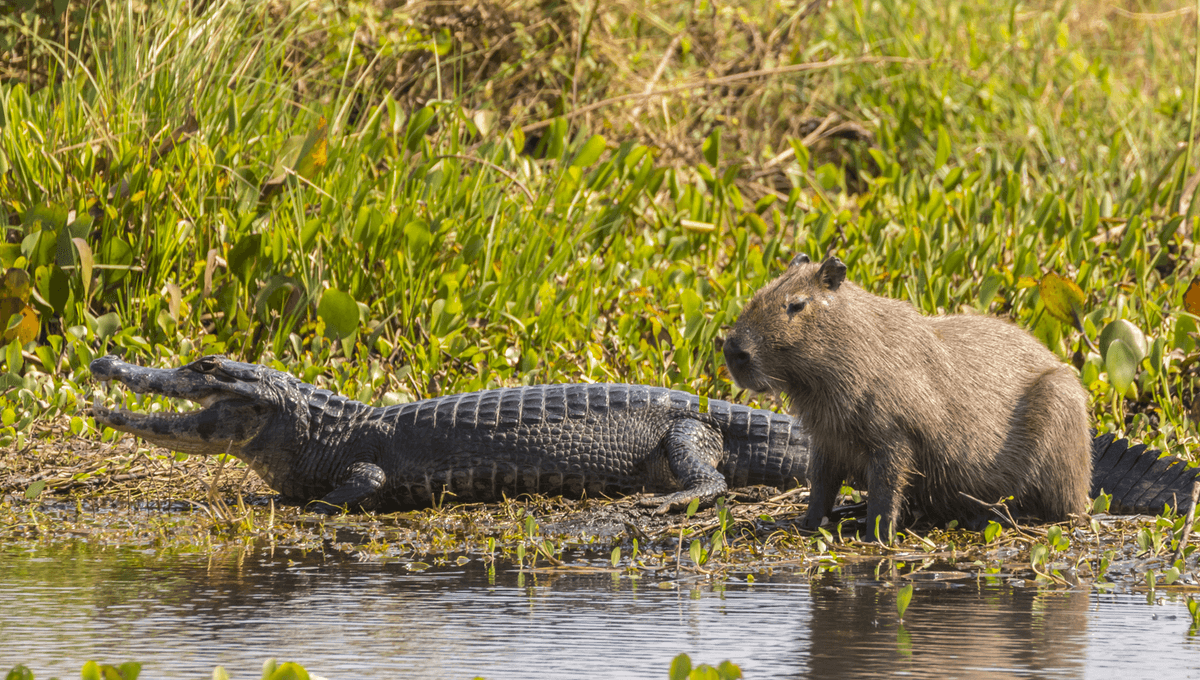
In the wild, crocodiles and capybaras share the same habitats. Their interactions often lead to predator-prey encounters. Crocodiles are skilled hunters. Capybaras are large rodents but can become prey. Understanding these encounters helps us learn about nature’s balance.
Frequency Of Attacks
Crocodile attacks on capybaras happen regularly near water bodies. Capybaras spend much time in rivers and lakes. Crocodiles lie in wait underwater. They strike quickly when capybaras come to drink. Not every meeting ends in an attack. Success depends on crocodile size and capybara alertness.
Survival Strategies Of Capybaras
Capybaras use several methods to stay safe. They live in groups, which helps watch for danger. Their sharp senses detect crocodiles early. They stay close to water for a quick escape. Capybaras swim fast and dive to avoid attacks. Staying alert and social boosts their chances of survival.
Credit: www.iflscience.com
Shocking Predator-prey Facts
Crocodiles and capybaras share habitats in South America. Their interactions reveal surprising predator-prey dynamics. Crocodiles are powerful hunters, but capybaras have unique defense strategies. These facts show nature’s balance and the struggle for survival.
Understanding these interactions helps us see the complex food web. It also shows how both animals impact each other’s lives.
Rare Hunting Events
Crocodiles do eat capybaras, but attacks are not very common. Capybaras live in groups, which helps protect them. Crocodiles usually hunt alone and prefer easier prey. When crocodiles catch capybaras, it happens quickly and with surprise.
These rare events are critical for crocodile survival in some areas. They show the crocodile’s ability to adapt to different prey. Capybaras use water and speed to escape many attacks.
Impact On Ecosystems
Predator-prey relationships between crocodiles and capybaras affect many species. Crocodiles help control capybara populations. This keeps plant life balanced, as capybaras eat a lot of vegetation.
Healthy ecosystems depend on these natural checks and balances. If crocodiles disappear, capybara numbers could grow too large. This change would affect water plants and other animals.
Comparing Crocodile Prey Choices
Crocodiles are powerful hunters with a wide range of prey. They eat fish, birds, and mammals. Their diet depends on where they live and what is available. Large animals often become targets when smaller prey is scarce. Understanding their prey choices helps us learn about their role in the ecosystem.
Among their large prey, capybaras are common in some regions. These rodents live near water, making them easy targets for crocodiles. Not all crocodiles hunt capybaras, but many do because they provide a good meal.
Why Capybaras?
Capybaras are the largest rodents in the world. They weigh between 35 and 66 kilograms. Their size makes them a filling meal for crocodiles. Capybaras often stay close to water bodies, just like crocodiles. This overlap in habitat increases the chance of encounters.
Capybaras move slowly on land. This slow speed makes them easier to catch. They often graze in groups, which can attract crocodiles. Crocodiles wait patiently near the water’s edge for capybaras to come close.
Other Large Prey
Crocodiles also hunt animals like deer, wild pigs, and large birds. These animals are found near rivers and lakes. Their size and strength can vary, but crocodiles use ambush tactics to catch them.
Sometimes crocodiles attack young or weak animals. This choice increases their chance of success. Large prey offers more energy but requires more effort to catch. Crocodiles balance the risk and reward with each hunt.

Credit: www.reddit.com
Credit: www.reddit.com
How Capybara World Can Help You with Do Crocodiles Eat Capybaras
Exploring Predator-Prey Dynamics Through Real-Life Learning
Understanding whether crocodiles eat capybaras opens a fascinating window into predator-prey encounters and the dietary habits of these impressive reptiles. By examining crocodile diet basics alongside capybara habits and habitats, we get a clearer picture of how these two species interact in the wild. This knowledge isn’t just for curiosity—it’s a practical way to appreciate ecosystem balance and animal behavior.
If you’re curious about how predator-prey relationships shape wildlife communities, consider observing or researching these interactions with a thoughtful approach. For instance, noting where capybaras tend to gather near water can help explain why crocodiles might choose them as prey. It’s a great hands-on lesson in ecology and animal adaptations.
- Review local wildlife reports or documentaries to see real examples of these encounters.
- Use trusted resources like Capybara World for accurate, science-backed insights curated by experts.
- Share observations with fellow animal lovers or conservation groups to deepen your understanding.
If you have more questions or want to dive deeper into capybara ecology or crocodilian diets, you can reach out to us anytime at hello@capybara-world.com. We’re always happy to share what we know and learn alongside you.
Frequently Asked Questions
Do Crocodiles Prey On Capybaras Regularly?
Yes, crocodiles often hunt capybaras as part of their diet. Capybaras live near water, making them easy prey for crocodiles.
How Do Crocodiles Catch Capybaras?
Crocodiles use stealth and powerful jaws to ambush capybaras near water edges. They wait patiently for the right moment to strike.
Are Capybaras The Main Food For Crocodiles?
No, crocodiles have a varied diet, but capybaras are a common and convenient prey due to their habitat overlap.
Can Capybaras Escape Crocodile Attacks?
Capybaras are good swimmers and can sometimes evade crocodiles by quickly diving into water or escaping into dense vegetation.
Conclusion
Crocodiles do eat capybaras in the wild. These large rodents are common prey because they live near water. Crocodiles wait quietly to catch them by surprise. This predator-prey relationship is part of nature’s balance. Both animals play important roles in their ecosystems.
Understanding this helps us appreciate wildlife better. Nature works in many interesting ways. It shows how animals survive and adapt. Observing these facts makes wildlife more fascinating.


