

Crocodiles and capybaras are two fascinating animals from South America. Many people wonder if crocodiles eat capybaras or if there is something special about their relationship. Some online sources even claim crocodiles avoid capybaras completely. But is this true? Let’s dive deep and clear up the facts.
Where Crocodiles And Capybaras Live
Both crocodiles and capybaras live in watery environments. Capybaras, the world’s largest rodents, are found near rivers, lakes, and wetlands across South America. Crocodiles, especially the Orinoco crocodile and American crocodile, share similar habitats in some regions.
But many areas have caimans, not true crocodiles. Caimans are close relatives but smaller and more common in South America. True crocodiles are less widespread.
| Animal | Main Regions | Habitat |
|---|---|---|
| Capybara | South America | Rivers, lakes, swamps |
| Orinoco Crocodile | Venezuela, Colombia | Orinoco River basin |
| Caiman | Widespread in South America | Freshwater wetlands |
Many videos and photos showing “crocodiles” with capybaras are actually about caimans. This confusion is important for understanding their interactions.
Do Crocodiles Eat Capybaras?
The short answer: Yes, crocodiles and caimans can eat capybaras. Capybaras are not immune to predation. In the wild, young or weak capybaras are more at risk.
Crocodiles and caimans are opportunistic predators. This means they eat what they can catch, including fish, birds, and mammals. Capybaras sometimes become prey, especially when drinking or swimming.
Evidence From The Wild
Several wildlife documentaries and scientific reports show caimans and crocodiles attacking capybaras. A well-known example is the Orinoco crocodile hunting capybaras along riverbanks.
Still, capybaras are not the main food source for these reptiles. In most regions, they eat more fish and smaller animals. Capybaras are larger and harder to catch, especially in groups.
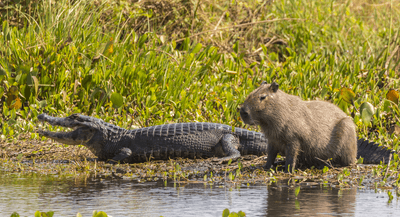
Credit: www.iflscience.com
Why Do Crocodiles Not Always Attack Capybaras?
You might see pictures of capybaras and caimans sharing the same riverbank. Sometimes, they seem peaceful together. This does not mean crocodiles never eat them. There are reasons for this behavior:
- Capybaras are large and alert. Adult capybaras can weigh 35-66 kg (77-146 lbs). They are fast swimmers and live in groups. Group living means there are always lookouts for danger.
- Crocodiles and caimans save energy. They prefer weaker or smaller prey. Hunting a healthy adult capybara is risky and takes energy.
- Seasonal changes matter. During the dry season, water sources shrink and animals gather together. This can lead to temporary “truce” periods when predators and prey share space without constant attacks.
- Young capybaras are most at risk. Adults are harder to catch, but babies or sick capybaras are easier targets.
| Capybara Age/Condition | Predator Risk |
|---|---|
| Baby/Juvenile | High |
| Adult (healthy) | Medium |
| Old/Sick | High |
What Other Predators Hunt Capybaras?
Crocodiles are not the only danger. Capybaras face several predators:
- Jaguars: The main land predator in South America.
- Anacondas: Large snakes that attack near water.
- Eagles: Sometimes prey on young capybaras.
- Humans: Hunt capybaras for meat and leather.
So, crocodiles are just one part of the food web.
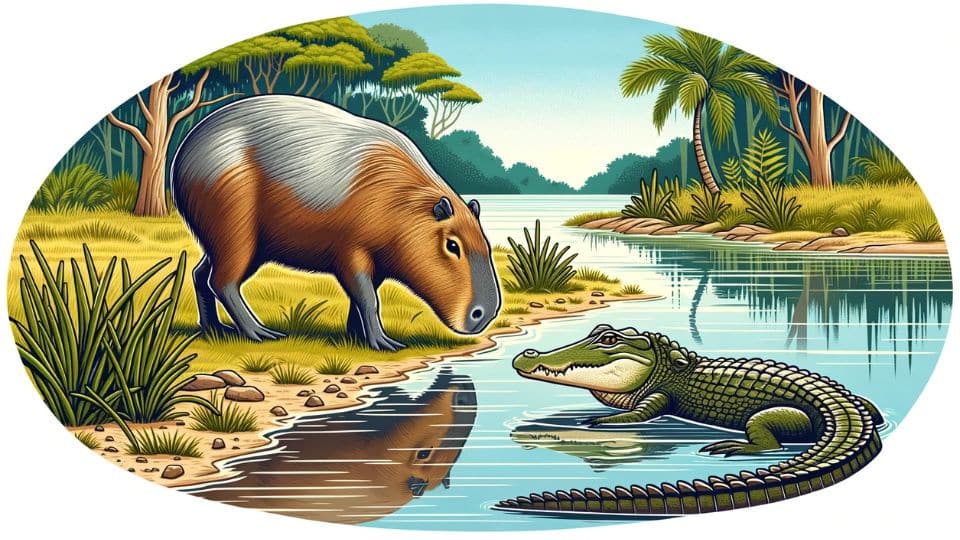
Credit: capybaramag.com
Rare Peaceful Encounters
You may have seen viral photos of capybaras sitting close to caimans. These moments are real, but they are rare and do not mean lasting friendship. Sometimes, animals tolerate each other due to:
- Abundant food: If there are many fish, crocodiles may not hunt capybaras.
- Temperature: Both species sunbathe together for warmth.
- Non-hunting mode: Crocodiles are not always hungry.
Wildlife experts warn against thinking this is “friendship.” It is more about temporary tolerance. The risk for capybaras is always there.
Two Insights Most People Miss
Many people believe crocodiles “never” eat capybaras because they see peaceful images online. But:
- Predator and prey can share space without constant attacks. Just because they are together does not mean danger is gone.
- Capybaras use group tactics and water escape. Their social behavior and swimming skills lower their risk, but do not remove it.
Another thing: Crocodile diets change with age and season. Young crocodiles eat smaller animals. Only large adults go after big prey like capybaras.

Credit: www.youtube.com
Real-world Example: Pantanal Wetlands
In Brazil’s Pantanal, both capybaras and caimans gather during the dry season. Scientists have seen caimans ignoring adult capybaras for weeks, then suddenly hunting when food is scarce.
This shows that animal behavior is flexible. It depends on hunger, opportunity, and local conditions. For more scientific background, visit the Orinoco crocodile Wikipedia page.
How Capybaras Protect Themselves
Capybaras have several defense strategies:
- Living in groups: More eyes watching for predators.
- Alert calls: Loud whistles warn others.
- Escape to water: Capybaras are strong swimmers.
- Camouflage: Their brown fur blends with muddy riverbanks.
But none of these methods are foolproof. Predators get lucky sometimes.
| Defense Method | Effectiveness |
|---|---|
| Group living | High |
| Swimming | Medium |
| Alert calls | High |
| Camouflage | Low |
Final Thoughts
To sum up, crocodiles and caimans do eat capybaras, but not all the time. Capybaras are big, alert, and social, which lowers their risk. However, young, weak, or unlucky capybaras can fall prey. Some peaceful moments happen, but this does not mean a special friendship.
The real story is about balance in nature, survival tactics, and the complex dance between predator and prey.
Frequently Asked Questions
Why Do Some Photos Show Capybaras And Crocodiles Together Peacefully?
These moments usually happen when both animals are sunbathing or when there is plenty of other food. It does not mean crocodiles will never attack. They hunt when hungry or when the opportunity arises.
Are Caimans And Crocodiles The Same?
No, but they are close relatives. Caimans are more common in South America, while true crocodiles are rarer. Both can prey on capybaras.
How Often Do Crocodiles Eat Capybaras?
There are no exact numbers, but it is not their main diet. Attacks happen, especially on young or weak capybaras, but most adult capybaras avoid being eaten.
Can Capybaras Defend Themselves?
Capybaras rely on group living, alert calls, and quick escapes to water. They rarely fight back but use teamwork to stay safe.
Do Capybaras Have Other Predators?
Yes, besides crocodiles and caimans, they face threats from jaguars, anacondas, large birds of prey, and humans. Capybaras use their social skills and swimming ability to avoid these dangers.


