
Capybaras, the world’s largest rodents, are often seen relaxing in groups near water in South America. Their calm nature and unique social behavior make them fascinating animals to study. But one area that surprises many people is how capybaras are born. Their birth process is different from many other animals, blending elements of aquatic and land life, and shaped by their semi-aquatic habitat. This article explores each stage of the capybara birth journey, from mating to the arrival of baby capybaras, with clear explanations and real-life insights.
Mating And Reproduction
The process begins with capybara mating, which usually happens in water. Capybaras live in social groups, and the dominant male has mating rights with females. Mating in water helps the female control the situation—she can swim away if she does not want to mate.
Most breeding happens during the rainy season, but in some areas, capybaras can mate any time of year. Female capybaras reach sexual maturity at about 12-18 months, while males mature slightly later. The gestation period is about 150 days, which is nearly five months.
Pregnancy And Group Support
During pregnancy, a female capybara stays with her group. Capybaras are highly social, and the group offers protection and warmth. The pregnant female does not leave the group to nest. Instead, she continues her daily routine, including feeding on grasses and aquatic plants.
Groups provide extra safety from predators like jaguars and caimans. If danger appears, capybaras dive into water to escape. The group’s watchfulness increases the chances that the mother will carry her babies to full term.

Credit: www.reddit.com
The Birth Process
Capybaras give birth on land, not in water. The mother usually finds a quiet, grassy area close to water, often hidden by bushes. Most births happen at dawn or dusk, when it is safer and cooler.
A typical litter size is four to five babies, but it can range from one to eight. Capybara births are usually quick, lasting less than an hour. As soon as the babies are born, they are covered in fur and have their eyes open.
Here is a comparison of capybara litter sizes and those of other rodents:
| Animal | Average Litter Size | Gestation Period (days) |
|---|---|---|
| Capybara | 4–5 | 150 |
| Guinea Pig | 2–4 | 59–72 |
| Beaver | 3–4 | 105–107 |
Newborn Capybaras: Appearance And Abilities
Capybara babies, called pups, are well developed at birth. They weigh about 1–1.5 kg (2.2–3.3 lbs) each. Pups are born with fur, open eyes, and strong legs. They can walk and even run within hours.
Unlike many rodents, capybara pups are precocial, meaning they are active and alert right after birth. They quickly join the group and start learning social behavior from older capybaras. This early maturity helps them avoid predators and adapt to the environment.
Here’s a look at some key features of capybara pups at birth:
| Feature | Description |
|---|---|
| Weight | 1–1.5 kg |
| Fur | Soft and brown |
| Eyes | Open |
| Mobility | Can walk and swim |
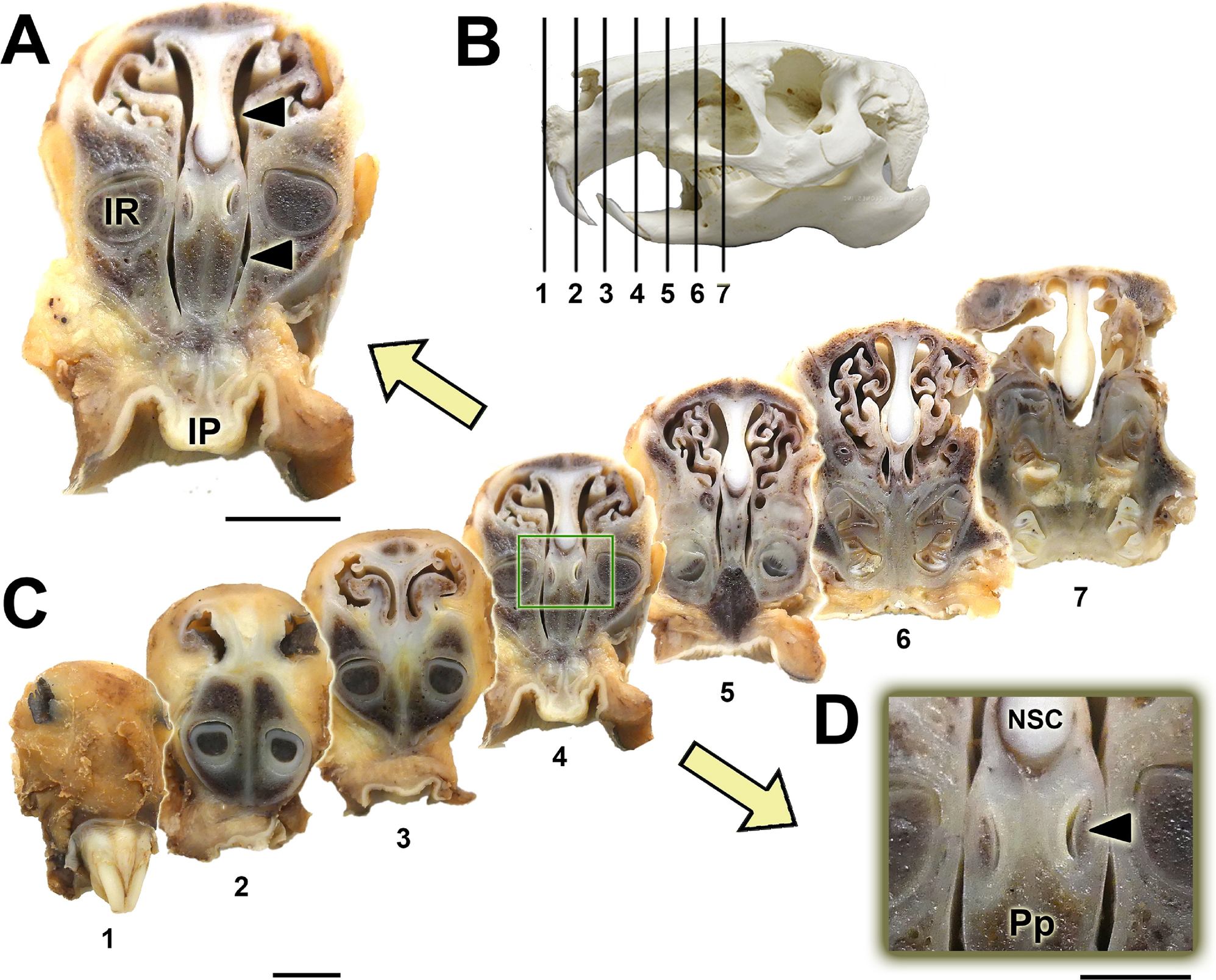
Credit: www.nature.com
First Hours And Group Integration
Soon after birth, the mother cleans her pups and encourages them to stand. Within a few hours, the pups begin to nibble on grass, though they still depend on their mother’s milk. Capybaras practice communal care—all females in the group help protect and sometimes even nurse the young, not just their own.
The group forms a circle around the pups, watching for threats. This teamwork reduces the chance of predators attacking the vulnerable newborns. Capybara pups also learn social signals, sounds, and group routines from older members.
Feeding And Development
In the first week, pups nurse from their mother several times a day. They also start eating solid food, such as grasses, very early—sometimes as soon as one day old. This mixed diet helps them grow quickly.
By the end of the first week, capybara pups become more independent. They spend time with other pups in the group, forming a “nursery” where they play and explore. Social play is crucial for their development and survival skills.
Here’s a timeline of early development:
| Age | Key Milestone |
|---|---|
| 0–1 days | Walking and nursing |
| 2–3 days | Eating small amounts of grass |
| 1 week | Active play with other pups |
| 3–4 months | Weaned from mother’s milk |
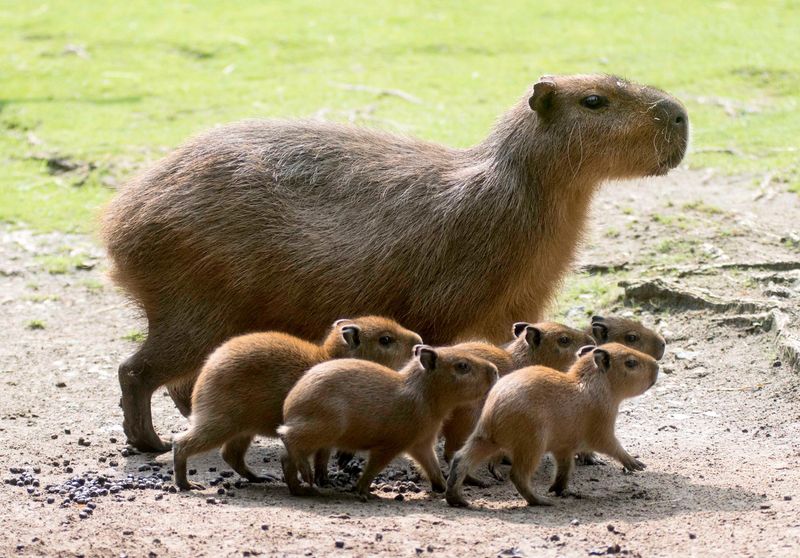
Credit: zooborns.com
Survival Challenges For Newborns
While capybaras are well adapted, their pups face many dangers. Predators such as jaguars, anacondas, and large birds can attack young capybaras. Heavy rains and flooding can also separate pups from the group.
However, the group’s protective behavior and the pups’ early ability to swim give them a better chance of survival than many other rodents. Still, experts estimate that less than half of all wild capybara pups reach adulthood.
Non-obvious Insights
Many beginners assume capybara mothers always care for their own pups. In reality, alloparenting is common—other females help, which increases survival. Also, pups have a unique call, like a whistle, that helps mothers find them if they get lost.
Another fact is that capybara pups are born with teeth, ready to chew grass immediately. This is rare among rodents and helps them survive in the wild.
Frequently Asked Questions
How Many Babies Does A Capybara Usually Have?
A capybara usually gives birth to four or five pups in a single litter, but the number can range from one to eight.
Are Baby Capybaras Born Underwater?
No, capybaras always give birth on land, in a hidden area near water. This keeps the pups safe and dry during their first moments.
How Soon Can Baby Capybaras Swim?
Capybara pups can swim within a few hours of birth. Their strong legs and early development help them escape danger quickly.
Do All Females In The Group Help Care For The Babies?
Yes, capybaras practice communal care. Other females help guard, groom, and sometimes even nurse the pups.
How Long Do Capybara Pups Stay With Their Mother?
Pups nurse for about three to four months but stay with the group for much longer, learning social skills and survival techniques.
Capybara births are a remarkable mix of social support, advanced development, and teamwork. Their unique birth process shows how much these gentle giants rely on their group and environment for survival. By understanding these steps, we get a deeper appreciation for the complexity and wonder of nature. For more on capybara behavior, visit the Wikipedia Capybara page.


