

Capybaras are the world’s largest rodents, often found in South America. Their relaxed nature and unique movements attract animal lovers everywhere. But how do capybaras move? Understanding their mobility reveals much about their lifestyle, survival, and adaptation in the wild.
This article explores how capybaras walk, swim, run, and interact with their environment. If you want to know more about these fascinating creatures, keep reading.
Walking And Running: Land Movement
Capybaras spend much of their day on land, foraging and socializing. Their movement on land is interesting to watch.
Capybaras walk with a steady, gentle gait. Their legs are short compared to their body size. When walking, they keep their body close to the ground, moving slowly and carefully. Each step is deliberate, helping them stay balanced, especially on muddy or uneven surfaces.
When capybaras sense danger, they switch from walking to running. They can reach speeds of up to 35 km/h (22 mph) for short bursts. Running is not their main defense, but it helps them escape predators. Their running style is more like a hop or gallop, similar to rabbits, rather than a sprint like a dog.
How Capybaras Navigate Land
Capybaras are excellent at moving through dense vegetation and mud. Their feet have webbed toes, giving them extra grip. This adaptation helps them avoid sinking and slipping. In forests and riverbanks, they use their strong legs to push through thick grass and brush.
Comparison: Walking Vs. Running
Below is a simple comparison between walking and running in capybaras:
| Movement | Speed | Purpose | Body Posture |
|---|---|---|---|
| Walking | 5-7 km/h | Foraging, socializing | Low, steady |
| Running | Up to 35 km/h | Escaping danger | Galloping, lifted body |
Swimming: Water Movement
Capybaras are semi-aquatic animals. They love water and are strong swimmers. Swimming is not just for fun; it is crucial for their survival.
Swimming Techniques
Capybaras swim by paddling with their webbed feet. Their body floats easily, and their head stays above water. They can swim long distances and dive underwater for several minutes. Most capybaras can hold their breath for up to five minutes. This ability helps them hide from predators.
Their swimming style is smooth and controlled. They use all four legs to push through water, similar to a dog’s paddle but slower. Young capybaras learn to swim soon after birth, following their mother.
Water Vs. Land Mobility
Here is a comparison of capybara movement in water and on land:
| Movement | Speed | Duration | Adaptations |
|---|---|---|---|
| Land | Up to 35 km/h | Short bursts | Webbed toes, strong legs |
| Water | 3-5 km/h | Several minutes | Webbed feet, floating body |
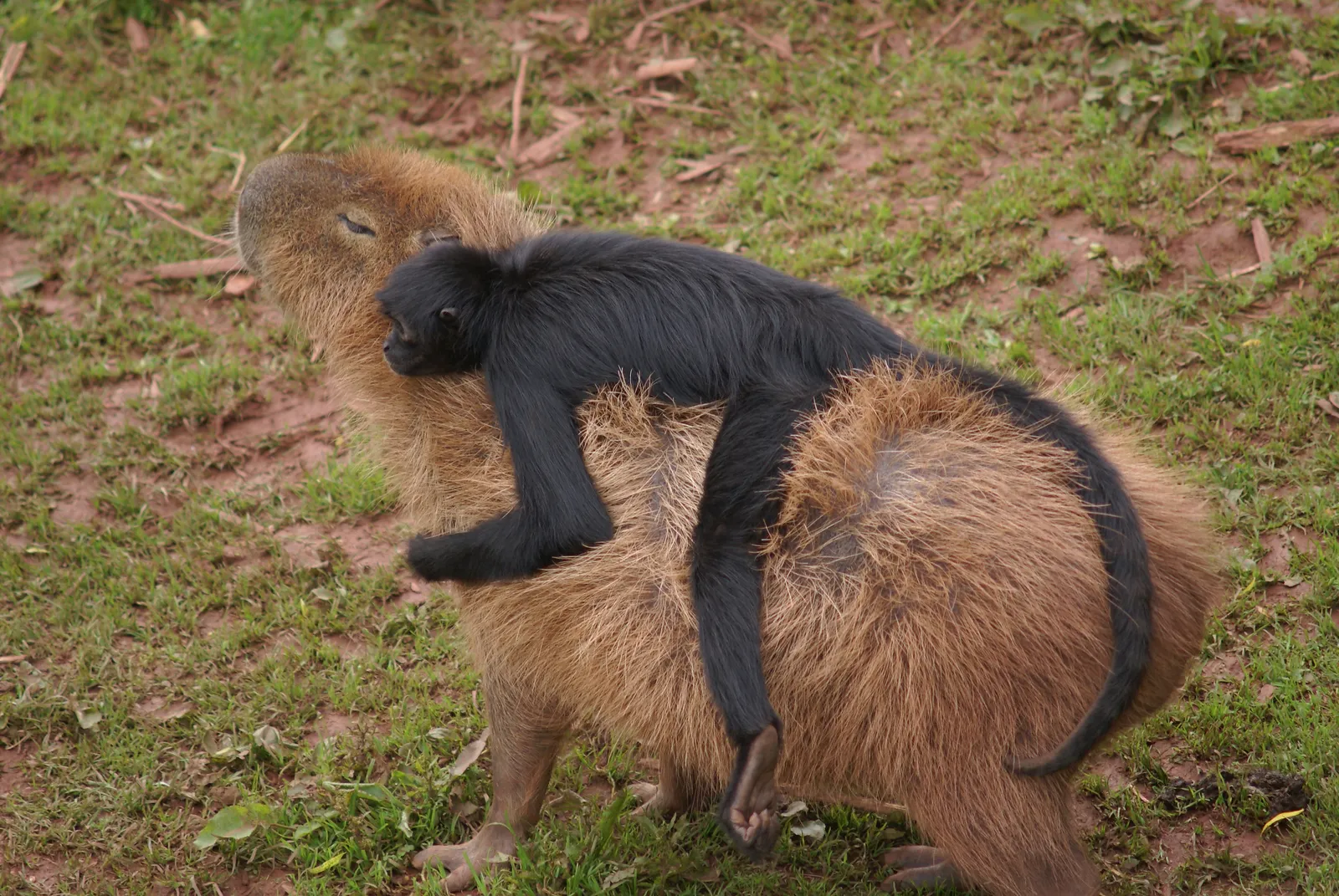
Credit: www.smithsonianmag.com
Social Movement: Group Dynamics
Capybaras are highly social animals. They move together in groups, called herds, which can range from 10 to 30 members. Their group movement helps protect them from predators and allows them to find food more easily.
Herd Movement Patterns
When moving in a herd, capybaras follow a leader. Usually, the dominant male leads the group, especially when searching for water or food. The group walks single file through dense grass, making less noise and reducing their chances of being spotted.
Capybaras also use social signals to direct movement. They communicate with whistles, clicks, and grunts. These sounds help them stay together and warn about dangers.
Data: Typical Herd Size And Behavior
| Group Size | Movement Style | Communication |
|---|---|---|
| 10-30 | Single file, coordinated | Whistles, clicks, grunts |
| 30+ | Loose cluster | Frequent signals |
Adaptations For Mobility
Capybaras have unique adaptations that help them move efficiently.
- Webbed toes: These help in both swimming and walking on muddy ground.
- Dense fur: While it looks smooth, capybara fur dries quickly, making transitions from water to land easy.
- Eyes, ears, and nose placement: These are positioned high on the head, so capybaras can see, hear, and breathe while swimming.
- Strong, muscular legs: Useful for running, swimming, and pushing through thick vegetation.
Many beginners overlook how capybaras use their social behavior to improve movement. By sticking together, they confuse predators and reduce risk. Another insight is their ability to adapt movement based on the season. In dry seasons, capybaras travel longer distances to find water, showing flexibility.
Credit: medium.com
Common Movement Mistakes In Captivity
Capybaras in zoos or homes may face movement problems.
- Lack of water access: Capybaras need water for exercise and cooling. Without water, their movement becomes limited and they may develop joint problems.
- Hard surfaces: Capybaras are used to soft ground. Hard floors can hurt their feet and affect their walking.
- Isolation: Without companions, capybaras may move less and become stressed. Social movement is important for their health.
Owners should provide water, soft ground, and social company for capybaras. Movement is key to their wellbeing.
Frequently Asked Questions
How Fast Can Capybaras Run?
Capybaras can run up to 35 km/h for short distances. This speed helps them escape predators but is not sustainable for long periods.
Are Capybaras Good Swimmers?
Yes, capybaras are excellent swimmers. They use their webbed feet to paddle and can stay underwater for about five minutes. Swimming is a natural part of their daily life.
Do Capybaras Move Alone Or In Groups?
Capybaras prefer to move in groups. Herd movement protects them and helps find food and water. Lone capybaras are rare and usually older or weaker individuals.
How Do Capybaras Communicate While Moving?
Capybaras use whistles, clicks, and grunts to signal each other. These sounds help the group stay coordinated and alert to danger.
What Happens If Capybaras Cannot Move Freely?
Restricted movement can cause health problems, stress, and boredom in capybaras. It is important to provide water, soft ground, and social partners to keep them healthy and active.
Capybaras are amazing movers, both on land and in water. Their ability to adapt, stay social, and use their unique body features makes them successful in the wild. Whether walking, running, or swimming, capybaras show us how nature designs animals for their environment. For more detailed information about capybara behavior, visit Wikipedia. If you ever see a capybara, observe its movement—you’ll notice the balance, teamwork, and calm that make this animal so special.

Credit: www.goupstate.com


