

Capybaras are the world’s largest rodents, famous for their calm nature and social lifestyle. However, living in the wild comes with many dangers. In South America, capybaras share their habitat with jaguars, caimans, anacondas, and even humans who hunt them for meat and skin. So, how do these gentle giants survive surrounded by so many predators? Their defense system is a smart mix of physical abilities, group strategies, and even clever use of their environment. Let’s dive into the fascinating ways capybaras protect themselves from predators—and why these methods really work.
Living In Groups: Safety In Numbers
Capybaras rarely live alone. Instead, they form large groups called herds, which can have anywhere from 10 to 40 individuals. During the dry season, herds sometimes join together and reach up to 100 members.
Why does this matter? In a group, there are more eyes and ears watching for danger. When one capybara spots a threat, it gives a sharp bark-like warning. The entire group reacts instantly, diving into water or running for cover.
This quick communication and teamwork help reduce the chance that any single capybara gets caught.
Water: Their Natural Shield
Capybaras are semi-aquatic, meaning they spend a lot of time in and around water. Rivers, ponds, and marshes are their favorite places to rest, eat, and escape predators.
- Diving and Swimming: When a predator comes close, capybaras can dive underwater and stay submerged for up to five minutes. Their eyes, ears, and nostrils are placed high on their heads, letting them see and breathe while most of their body stays hidden.
- Sleeping in Water: At night, capybaras sometimes sleep in shallow water with just their noses above the surface. This makes it harder for predators to find them.
Here’s how their water skills compare to some of their main predators:
| Animal | Swim Speed (km/h) | Can Stay Underwater |
|---|---|---|
| Capybara | 8 | Up to 5 minutes |
| Caiman | 24 | Over 15 minutes |
| Jaguar | 5 | Short periods |
| Anaconda | 10 | Up to 10 minutes |
While caimans and anacondas are strong swimmers, capybaras often spot them before getting too close. Jaguars swim more slowly and rarely hunt underwater, so water offers capybaras a real escape route.
Camouflage And Quiet Movement
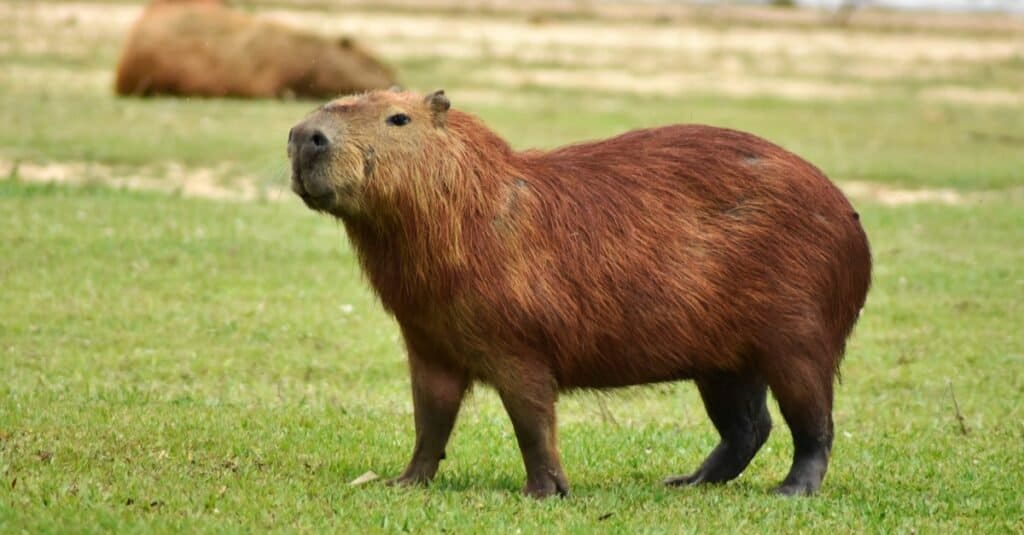
Despite their size, capybaras have coats that help them blend into their environment. Their brownish fur matches the muddy riverbanks and dense grass, making them less visible to predators. When they sense danger, they freeze and stay absolutely still. This “statue” behavior makes it hard for moving predators to notice them.
Another detail: their feet are slightly webbed. This helps them move quietly through mud and water, creating less noise that could alert predators nearby.
Early Warning Systems
Capybaras have excellent senses of smell, hearing, and vision. Their eyes and ears sit high on their heads, letting them scan for threats while staying mostly hidden.
When a capybara spots danger, it gives a loud, sharp bark. This signal is fast and clear, causing the whole group to react at once. Young capybaras learn to recognize these sounds from a very early age, helping them survive.
Here’s a look at how capybara senses compare to some predators:
| Animal | Hearing Range (kHz) | Vision Strength |
|---|---|---|
| Capybara | Up to 40 | Good in low light |
| Jaguar | Up to 50 | Excellent night vision |
| Caiman | Up to 25 | Good underwater |
While predators may have stronger senses, capybaras’ group alert system gives them an edge.

Credit: www.reddit.com
Fast And Agile Runners
Capybaras are not just swimmers—they can run quickly on land as well. When chased, they can reach speeds of up to 35 km/h (22 mph) for short bursts. Their strong legs help them dash for the water or thick vegetation where larger predators struggle to follow.
It’s important to note that capybaras avoid open areas. They prefer places with lots of hiding spots like dense grass, bushes, and water edges. This habitat choice makes it harder for predators to sneak up on them.
Social Learning And Parental Care
Young capybaras are not left to survive on their own. The adults in the herd teach them how to spot danger, use warning calls, and escape to safety. This social learning is a big reason why capybara groups have high survival rates.
A non-obvious insight: capybaras often use “babysitting”. When some adults go off to feed, others stay behind to watch the young. This teamwork means there’s always someone looking out for threats—a rare behavior in rodents.

Credit: www.teacherspayteachers.com
Adapting To Human Threats
In recent years, humans have become one of the main threats to capybaras. Hunters target them for meat and skin, and habitat loss makes them more exposed. Capybaras have started moving closer to farms and cities, where there are fewer natural predators.
Surprisingly, they are adapting by feeding at night (becoming more nocturnal) and using man-made lakes for shelter. This shows just how flexible and smart these animals are.
Frequently Asked Questions
How Do Capybaras Avoid Predators At Night?
Capybaras often sleep in shallow water with only their nostrils above the surface. This makes it hard for predators to find or catch them. They also stay in groups, so if one senses danger, it quickly warns the others.
What Animals Hunt Capybaras?
The main predators are jaguars, caimans, anacondas, and sometimes eagles. Humans are also a threat in some regions, especially where hunting is common.
Can Capybaras Defend Themselves Physically?
Capybaras rarely fight back. They rely on running, swimming, and hiding. Their sharp teeth can be used in self-defense, but they mostly try to escape instead of fight.
Are Capybaras Good Swimmers?
Yes, they are excellent swimmers. Capybaras can stay underwater for up to five minutes and use water to hide from predators. Their webbed feet help them move quickly in water.
Do Capybaras Make Good Pets Because Of Their Calm Nature?
Capybaras can be friendly but are wild animals with special needs. They need lots of space, water to swim, and company from other capybaras. In many places, it’s illegal or difficult to keep them as pets. For more details, check this Wikipedia article on capybaras.
Capybaras may look gentle and slow, but their survival strategies are anything but simple. From teamwork and early warnings to water escapes and clever camouflage, these animals have developed a full toolkit for staying safe. Their ability to adapt, learn, and use their environment shows just how impressive capybaras are in the wild. If you ever see one, remember: behind that calm face is a survivor with many secrets.
Credit: a-z-animals.com


