

Capybaras are fascinating animals that capture people’s attention with their calm nature and unique appearance. Many people are curious about their size, especially since they are the largest rodents in the world. But exactly how long is a capybara? The answer is not as simple as quoting a single number.
Capybaras’ length changes based on age, gender, and other factors. If you want to understand how big these gentle giants really are, this article will explain everything in clear, simple language.
Average Length Of A Capybara
Most adult capybaras measure between 100 cm and 135 cm in length. This means a typical capybara is about 3.3 to 4.4 feet long from its nose to the base of its tail. Their tails are very short and not easily seen.
Males and females have similar lengths, but females are often slightly larger. Capybaras reach their full length when they are about 18 months old. If you see a capybara in a zoo or the wild, it probably falls within this range.
Capybara Size Compared To Other Animals
People often wonder how capybaras compare in size to animals they already know. This comparison helps you imagine their true length.
| Animal | Average Length (cm) | Notes |
|---|---|---|
| Capybara | 100–135 | Largest rodent |
| Guinea pig | 20–25 | Common pet rodent |
| Domestic cat | 46–51 | Average house cat |
| Golden retriever | 55–61 | Medium-large dog |
As you can see, a capybara is more than twice as long as a domestic cat and almost as long as a golden retriever. However, capybaras are heavier and bulkier than most dogs of the same length.

Credit: www.dimensions.com
Capybara Growth Stages
Capybaras are not born at full size. They go through several growth stages before reaching adulthood.
- At birth: Capybara babies, called pups, are about 30–40 cm long and weigh around 1.5 kg.
- 3 months: They grow quickly, reaching about 50–60 cm in length.
- 1 year: Most reach 80–100 cm by their first birthday.
- Adulthood (18 months): Capybaras are fully grown at 100–135 cm.
It’s interesting that capybara pups can walk and swim soon after birth, even though they are much smaller than adults.
Factors That Affect Capybara Length
Not every capybara is exactly the same size. Several factors change how long a capybara grows.
Genetics
Some capybara families grow larger than others. Just like people, the genes they inherit from their parents play a big role.
Diet
Capybaras that get enough food, especially in zoos, can grow to their full size. Those in the wild with less food may be a bit smaller.
Environment
Capybaras living in warmer, wetter places with plenty of water and grass often grow bigger. In areas where food is scarce or the climate is harsh, they might not reach their maximum length.
Gender
Female capybaras are generally longer and heavier than males. This difference is not dramatic, but it is noticeable in groups.
How Scientists Measure Capybara Length
To get accurate information, scientists use standard methods for measuring capybaras.
- Nose to base of tail: This is the most common measurement, because capybara tails are very short and not visible. The animal is gently stretched out, and a tape measure is used from the tip of the nose to where the tail starts.
- Body length vs. head length: Sometimes, researchers also record head length separately. This helps compare capybaras from different regions.
- Live vs. skeleton: Measuring a live animal gives a slightly different number than measuring the bones, but the difference is small.
Zoo veterinarians, wildlife biologists, and researchers all use these methods to keep data consistent.
Capybara Length Around The World
Capybaras are native to South America, especially in countries like Brazil, Venezuela, and Argentina. You might wonder if capybaras from one country are longer than those from another.
| Country | Average Length (cm) | Notes |
|---|---|---|
| Brazil | 120–135 | Largest populations |
| Venezuela | 110–130 | Wetlands and rivers |
| Argentina | 100–120 | More variation |
Capybaras in Brazil are often the largest, possibly due to better food and more water.
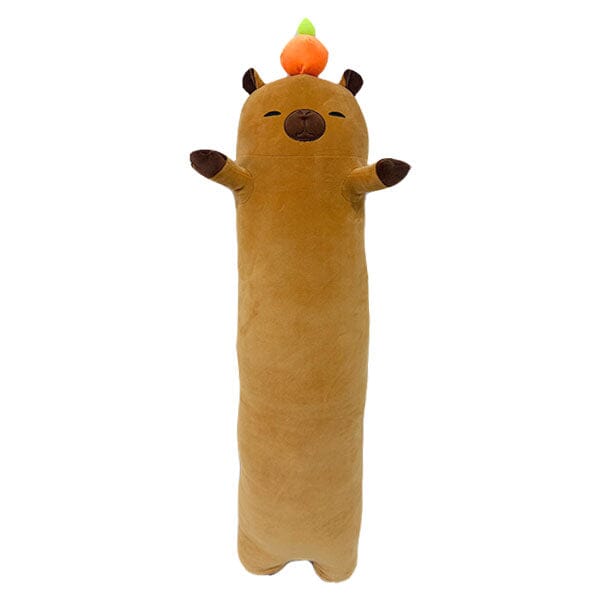
Credit: shopatshowcaseusa.com
Why Capybara Length Matters
Knowing the length of a capybara is not just a fun fact. It helps with:
- Wildlife management: Understanding their size helps in planning protected areas and studying populations.
- Zoo care: Zoos need this information to build proper enclosures and provide the right amount of food.
- Pet owners: In rare cases where people keep capybaras as pets, knowing their size helps with space and care planning.
A common mistake is underestimating their length. People often think of capybaras as big guinea pigs, but in reality, they are much longer and heavier.
Surprising Facts About Capybara Size
Here are two insights many beginners miss:
- Capybaras can squeeze through small spaces if their head fits. Their body is long but flexible, which helps them hide from predators.
- Water supports their weight and length. In the wild, capybaras spend much time in water, which helps them move easily despite their long bodies.

Credit: www.reddit.com
Frequently Asked Questions
How Long Is A Capybara At Birth?
A newborn capybara is usually 30–40 cm long. They are quite developed and active soon after birth.
Do Male And Female Capybaras Have Different Lengths?
Yes, female capybaras are typically longer and heavier than males, but the difference is not very large.
How Long Can A Capybara Live?
Capybaras can live 8–10 years in the wild and sometimes up to 12 years in zoos with good care.
Are Capybaras Longer Than Beavers?
Yes, capybaras are much longer than beavers. An adult beaver is about 90–120 cm, while capybaras reach up to 135 cm.
Where Can I Learn More About Capybaras?
You can find more detailed information on the Wikipedia Capybara page, which covers their biology, behavior, and habitat.
Capybaras are truly unique animals, not just for their gentle nature but also for their impressive length. If you ever see one in person, you’ll understand why they are called the world’s largest rodents. Knowing their size helps you appreciate their role in the wild and why they need special care in captivity.


