

Capybaras are famous for their gentle nature and unique appearance, but many people are curious about their eating habits. How much does a capybara eat? This question matters if you’re a pet owner, a zookeeper, or just interested in wildlife.
Capybaras are the world’s largest rodents, and their diet is more complex than many expect. Let’s explore their daily food intake, the types of food they prefer, and the factors that change how much they need.
Typical Food Intake For Capybaras
A healthy adult capybara weighs between 35 to 66 kg (77–146 lbs). Their size means they need plenty of food each day. On average, a capybara will eat about 2.5 to 3.5 kg (5.5–7.7 lbs) of fresh food daily. This is about 5–7% of their body weight.
The amount can change due to age, health, and environment. For example, younger capybaras and pregnant females often eat more. If food is less nutritious, they need to eat larger amounts to get enough energy.
Here’s a simple comparison of food intake based on age:
| Capybara Type | Average Daily Intake |
|---|---|
| Adult (Fully Grown) | 2.5–3.5 kg |
| Juvenile (3–12 months) | 1.5–2.5 kg |
| Infant (0–3 months) | 0.5–1 kg |
Most of their food is fresh plants. Capybaras spend hours grazing, especially in the morning and evening.
What Does A Capybara Eat?
Capybaras are herbivores, which means they eat only plants. Their diet is based on what’s available in their natural habitat, but in captivity, their food is often more controlled.
Main Foods In The Wild
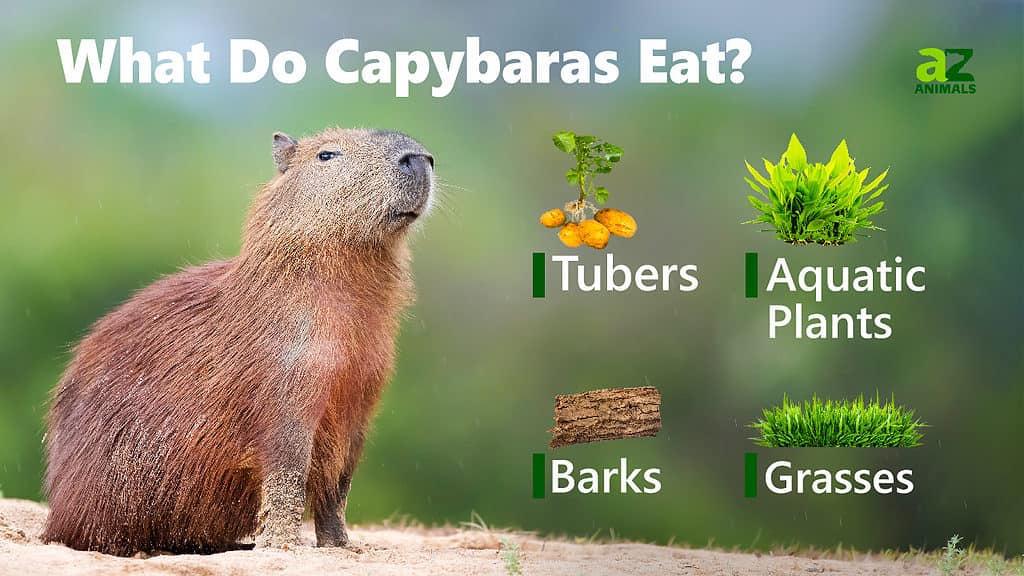
- Grasses: This makes up about 75% of their diet. They prefer short, soft grasses that are easy to chew.
- Aquatic Plants: Capybaras live near water. They often eat water hyacinth, reeds, and other soft water plants.
- Fruits and Vegetables: In the wild, they sometimes eat fallen fruits and soft roots, but these are a small part of their diet.
- Tree Bark and Twigs: During the dry season, when grass is hard to find, they eat bark, twigs, and leaves.
Foods In Captivity
In zoos or as pets, capybaras get a balanced diet:
- Fresh grass or hay (timothy or Bermuda)
- Leafy greens (lettuce, kale, dandelion greens)
- Root vegetables (carrots, sweet potato)
- Special rodent pellets
- Occasional fruits (apples, melons, in small amounts)
Below is a sample daily menu for an adult capybara in captivity:
| Food Type | Quantity |
|---|---|
| Fresh Grass/Hay | 2 kg |
| Leafy Greens | 0.5 kg |
| Root Vegetables | 0.5 kg |
| Pellets | 0.3 kg |
| Fruit | 0.2 kg |
Credit: a-z-animals.com
Factors That Affect How Much A Capybara Eats
The food needs of a capybara are not always the same. Here are some important factors:
Age And Growth Stage
- Babies eat mostly mother’s milk for the first week, then start nibbling grass.
- Young capybaras need more food for growth.
- Adults eat enough to maintain their size and health.
Season And Environment
Food availability changes with the weather. In rainy seasons, grass is everywhere. During dry times, they eat more bark and aquatic plants.
Health And Activity Level
A sick or less active capybara may eat less. Capybaras that swim and move a lot may need extra calories.
Pregnancy And Nursing
Pregnant or nursing females often eat up to 10% of their body weight. They need extra nutrients for their babies.
Special Eating Behaviors
Capybaras have some habits that surprise many people.
Coprophagy
Capybaras practice coprophagy, which means eating their own soft feces. This may sound strange, but it helps them digest plant fiber better. The soft droppings contain bacteria and nutrients that are reused by the body. This behavior is most common in the early morning.
Social Eating
Capybaras eat together in groups. This helps them stay safe from predators and share the best grazing spots. If food is limited, dominant members may eat first.
How To Feed A Capybara In Captivity
If you care for a capybara at home or in a zoo, it’s important to mimic their natural diet as much as possible. Here are some tips:
- Give unlimited hay or fresh grass. This should be most of their diet.
- Add leafy greens daily. Rotate between different types.
- Offer root vegetables and fruit in small amounts. Too much can cause digestive problems.
- Provide clean, fresh water at all times.
- Avoid processed foods and sugary snacks. These are harmful.
An often-missed tip: Capybaras need access to water for bathing. This helps with their digestion and keeps their skin healthy.
How Capybara Eating Habits Compare To Other Animals
Capybaras eat more, pound for pound, than many domestic pets. For example:
| Animal | Average Weight | Daily Food Intake |
|---|---|---|
| Capybara | 50 kg | 3 kg (6%) |
| Rabbit | 2 kg | 0.1 kg (5%) |
| Guinea Pig | 1 kg | 0.07 kg (7%) |
| Dog (large) | 30 kg | 0.7 kg (2%) |
Notice that capybaras and guinea pigs eat a similar percentage of their body weight, but capybaras need much more food overall.
Credit: www.rainforest-alliance.org
Common Mistakes When Feeding Capybaras
Many new owners make simple errors:
- Overfeeding fruit or high-sugar foods: This can lead to obesity and digestive problems.
- Not enough roughage: Capybaras need high-fiber food to avoid tooth and gut problems.
- Ignoring water needs: Lack of water affects both eating and digestion.
- No variety: Feeding only one type of food can cause malnutrition.
Remember, capybaras are sensitive. Changes in diet should be slow to avoid upsetting their stomachs.
Frequently Asked Questions
How Many Times A Day Do Capybaras Eat?
Capybaras eat small amounts throughout the day, often grazing for 6–8 hours. They do not have set meal times like dogs or cats.
Can Capybaras Eat Human Food?
Most human food is not safe for capybaras. Stick to grasses, hay, vegetables, and approved pellets. Avoid processed or salty foods.
Do Capybaras Drink A Lot Of Water?
Yes, capybaras need constant access to clean water. They drink often and also use water to help with digestion and cooling off.
What Happens If A Capybara Eats Too Much Fruit?
Too much fruit can cause digestive upset, diarrhea, or obesity. Fruit should be a small treat, not a main food.
Where Can I Learn More About Capybara Care?
You can find more detailed care guides and research at the Wikipedia Capybara page.
Capybaras are fascinating animals with specific dietary needs. Understanding how much and what they eat is key to keeping them healthy and happy, whether in the wild or at home. With the right approach, you’ll enjoy watching these gentle giants thrive.

Credit: petcapybara.com


