

Drawing a capybara can feel challenging, especially for beginners. But with the right steps, anyone can sketch this gentle animal with ease. Many people love capybaras because of their calm look and round body shape. This guide will help you draw a capybara, even if you have very little art experience.
You’ll learn simple techniques, understand common mistakes, and discover tips that make your drawing look more realistic. By the end, you’ll have a finished capybara drawing and more confidence in your skills.
What You Need Before You Start
You do not need expensive tools to draw a capybara. Here are the basic items:
- Pencil (HB or 2B is best for sketching)
- Eraser (soft erasers are easier on paper)
- Paper (any sketchbook or plain white paper)
- Black pen or marker (optional, for outlining)
- Colored pencils or crayons (optional, for coloring)
If you don’t have all these, a simple pencil and paper will work.
Step-by-step Guide To Drawing A Capybara
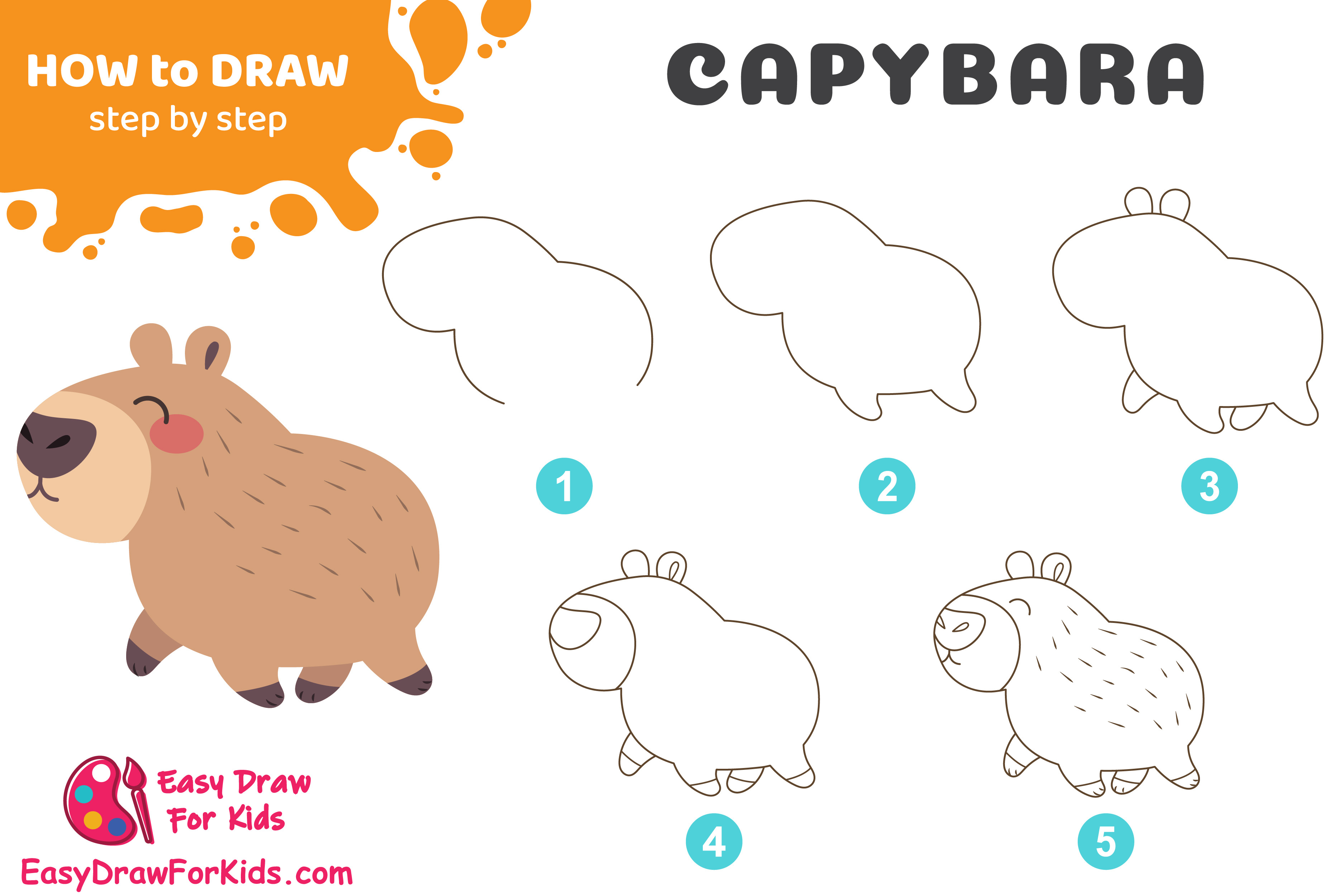
Follow these steps to draw a capybara easily. Each step builds on the last, so go slowly and don’t rush.
1. Draw The Body Shape
Start with a light oval shape. Capybaras have a long, rounded body, so make the oval a bit stretched. The oval should sit slightly tilted, like the animal is resting.
2. Add The Head
Draw a smaller circle or oval on one end of the body oval. The head connects smoothly to the body. Place it a little above the body shape, not too far apart.
3. Connect The Head And Body
Use curved lines to join the head and body. Capybaras do not have a long neck. Make sure the lines are gentle, not sharp.
4. Draw The Snout And Nose
On the head oval, add a short rounded rectangle for the snout. Draw a small oval at the tip for the nose. Capybara noses are wide, not pointy.
5. Outline The Ears
Draw two small rounded triangles on top of the head. The ears are short and not too far apart. They should not look sharp or tall.
6. Sketch The Legs
Capybaras have short, sturdy legs. Draw two legs in the front, starting from the bottom of the body. Add two more towards the back. Each leg ends with a flat, slightly webbed foot.
7. Add The Eyes And Mouth
Draw a small circle for the eye, placed above the snout. Add a short curved line for the mouth. The mouth should be soft, not too wide.
8. Refine And Outline
Check your sketch. Use your eraser to clean extra lines. If you want, use a black pen to outline the drawing.
9. Add Fur Texture
With your pencil, make short lines on the body to show fur. Do not overdo it—just enough to give texture.
10. Color Your Capybara
Capybaras are usually brown or yellow-brown. Use colored pencils or crayons to shade the body. Darken the nose, feet, and the area around the eyes.

Credit: helloartsy.com
Capybara Drawing Proportions
Getting proportions right is important. Here’s a simple table to help:
| Body Part | Proportion vs Body | Common Mistake |
|---|---|---|
| Head | 1/3 the body length | Too large or too small |
| Legs | 1/4 the body length | Too long or too thin |
| Ears | 1/6 the head length | Too pointy |
Using these proportions helps your capybara look more natural.
Common Mistakes And How To Avoid Them
Many beginners make the same errors. Here are a few to watch for:
- Head Too Big or Small: Keep the head 1/3 the length of the body.
- Legs Too Thin: Draw sturdy legs. Capybaras are not delicate.
- Sharp Ears: Ears should be rounded, not cat-like.
- Hard Lines: Use soft, curved lines for the body and head.
- Flat Fur: Add texture with short lines for a natural look.
A helpful tip: step back and look at your drawing from a distance. This shows if your proportions are right.
Credit: tips.clip-studio.com
Adding Realism And Personality
A drawing stands out when it has personality. Here’s how you can make your capybara drawing more lively:
- Pose: Draw your capybara sitting, lying, or even eating grass.
- Background: Add simple grass, water, or rocks to show its habitat.
- Expression: A slight curve in the mouth makes it look calm or happy.
Another non-obvious trick is to add a shadow under the capybara. This grounds your drawing, making it look less like it’s floating on the page.
Simple Comparison: Capybara Vs. Guinea Pig Drawing
Capybaras and guinea pigs look similar, but there are key differences. Here’s a quick comparison:
| Feature | Capybara | Guinea Pig |
|---|---|---|
| Body Shape | Long and large | Short and round |
| Legs | Longer, visible feet | Short, almost hidden feet |
| Size in Drawing | Takes more space | Fits in a small oval |
Remembering these points will help you avoid mixing up the two animals when you draw.
Practice Tips For Beginners
- Start with light lines—they are easy to erase and adjust.
- Draw the main shapes first, then add details.
- Use photo references from nature websites or animal books.
- Practice drawing capybaras in different poses.
One more thing: try drawing the capybara from different angles, such as side view and three-quarters. This builds your skill faster.
Example: Step-by-step Timings
Many people wonder how long each step should take. Here’s a rough guide:
| Step | Time Needed (min) |
|---|---|
| Body and Head | 5 |
| Legs and Features | 7 |
| Outlining and Fur | 5 |
| Coloring | 8 |
A full capybara drawing can take around 25 minutes. With practice, you’ll finish even faster.
Where To Find More Capybara Drawing Examples
You can find many capybara photos and art examples online. The Wikipedia Capybara page has detailed photos and facts that can help your reference.
Frequently Asked Questions
How Do I Make My Capybara Drawing Look Cute?
Focus on big, round eyes and a gentle smile. Keep the ears small and rounded. Soft lines and a little blush on the cheeks add cuteness.
What Color Should I Use For A Capybara?
Capybaras are usually brown or yellowish-brown. Their noses and feet are a bit darker. Use light brown for the body and dark brown for details.
Can I Draw A Capybara With A Pen Only?
Yes, but start with a pencil sketch first. Pen drawings are harder to correct, so it’s best for people with more experience.
How Do I Draw A Baby Capybara?
Make the body and head rounder and the legs shorter. Baby capybaras look more like guinea pigs, so check your proportions.
What If My Drawing Doesn’t Look Right?
Don’t worry! Drawing takes practice. Try to find what looks off—maybe the head is too big or the legs too thin. Fix one thing at a time and keep practicing.
Drawing a capybara is fun and rewarding. With these steps and tips, even beginners can create a lifelike and charming capybara. Remember to practice, use references, and enjoy the process—your skills will improve with every sketch.

Credit: www.youtube.com


