

Capybaras are famous for their calm personality and unique social behavior. But many people are curious about what these large rodents love to eat. Understanding a capybara’s favorite food is important for anyone who wants to care for them, observe them in the wild, or simply learn more about these gentle animals.
What Do Capybaras Eat In The Wild?
Capybaras live in South America, near rivers, lakes, and wetlands. Their natural diet comes from what grows in these areas. Capybaras are herbivores, which means they only eat plants. They spend a lot of time searching for food, usually early in the morning or late in the afternoon when it’s cooler.
Main Foods In Nature
Capybaras mainly eat:
- Grasses (make up about 70-80% of their diet)
- Aquatic plants
- Fruits (when available)
- Bark and reeds
During the wet season, grasses are easy to find, but in the dry season, they switch to reeds and even chew on tree bark. Capybaras need to eat a lot—up to 3. 5 kg (about 8 lbs) of fresh grass daily!
Capybara’s Favorite Foods Explained
While capybaras eat many types of plants, some foods are their favorites. Let’s look at these in detail.
1. Grasses
Fresh grass is the number one favorite food for capybaras. They prefer soft, young grass because it’s easier to chew and digest. Some common grasses they eat include:
- Bermuda grass
- Paspalum
- Panic grass
Grass is high in fiber, which helps their digestive system work well.
2. Aquatic Plants
Capybaras spend a lot of time in the water, so they naturally eat aquatic plants like water hyacinth and water lettuce. These plants are rich in moisture and vitamins.
3. Fruits
Although not a daily food, capybaras love seasonal fruits. They enjoy:
- Melon
- Apple
- Mango
- Guava
They eat fruits fallen from trees or growing near water. However, wild capybaras get fruit only when it’s in season.
4. Vegetables
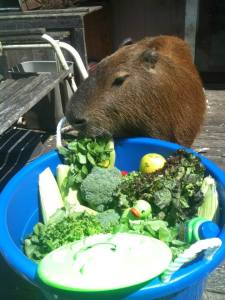
In captivity, capybaras enjoy vegetables like carrots, sweet potatoes, and squash. These foods give variety and extra nutrition, but should not replace grass.
5. Tree Bark And Reeds
When other foods are hard to find, capybaras chew on tree bark and reeds. This helps wear down their teeth, which grow all their lives.
6. Hay
Captive capybaras often eat timothy hay or alfalfa hay. Hay is a good substitute for wild grasses and is easy to store.
Credit: japanhouse.illinois.edu
What Makes A Food A Capybara Favorite?
Not all plant foods are equal for capybaras. They prefer foods that are:
- High in fiber
- Moist and fresh
- Easy to chew
Foods that are too hard, dry, or low in nutrients are less attractive to them.
Capybara Diet In Captivity Vs. Wild
There are some important differences between capybaras living in the wild and those in zoos or as pets. Here’s a comparison:
| Food Type | Wild | Captivity |
|---|---|---|
| Grasses | Fresh, seasonal, many types | Timothy, Bermuda, or orchard hay |
| Aquatic Plants | Common in their environment | Sometimes provided |
| Fruits | Only when available | Given as treats, in moderation |
| Vegetables | Rarely eaten | Commonly offered |
| Pellets | Never eaten | Special rodent pellets added |
Captive capybaras get a more controlled diet, with special pellets made for rodents, but they still need lots of grass or hay.
Foods Capybaras Should Avoid
Some foods are not safe for capybaras. It’s important to avoid:
- Processed foods (bread, chips, etc.)
- Sugary treats
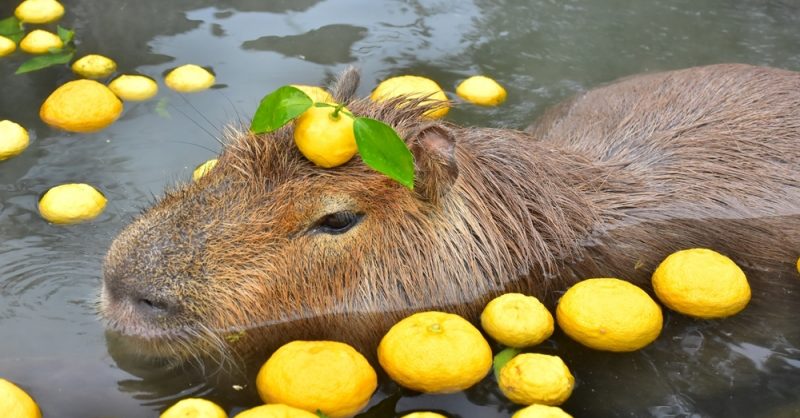
- Citrus fruits (can cause stomach upset)
- Onion, garlic, and potatoes (toxic to many rodents)
Capybaras’ digestive systems are sensitive. Overfeeding fruit or vegetables can cause health problems like diarrhea or obesity.
How Much Do Capybaras Eat Each Day?
An adult capybara can eat up to 8 pounds of grass daily. In captivity, they need:
- Unlimited hay or fresh grass
- Small servings of vegetables (1-2 cups per day)
- Occasional fruit treats (no more than a few times a week)
This keeps their digestion healthy and prevents boredom.
Surprising Facts About Capybara Eating Habits
- Capybaras practice coprophagy—they eat some of their own droppings. This helps them get important nutrients from their food, especially vitamin B.
- They are picky eaters. Even though capybaras eat many plants, they often choose the softest, freshest parts and ignore the rest.
- Water is vital. Capybaras drink a lot of water and often eat wet plants, which keeps them hydrated in hot climates.
Feeding Capybaras In Zoos And As Pets
Zoos and pet owners try to copy the wild diet as closely as possible. Here’s a typical feeding routine for a captive capybara:
| Meal Time | Food Offered |
|---|---|
| Morning | Hay or fresh grass, small amount of vegetables |
| Afternoon | More hay, occasional fruit treat |
| Evening | Hay or grass, pellets if needed |
This routine helps capybaras stay healthy and active.
Credit: petcapybara.com
Common Mistakes When Feeding Capybaras
Many new capybara owners make these errors:
- Giving too much fruit, which can cause weight gain.
- Not providing enough hay or grass, leading to dental problems.
- Feeding unsafe human foods by mistake.
Always research before offering new foods to capybaras.
Frequently Asked Questions
What Is The Single Favorite Food Of Capybaras?
Grasses are their top favorite. Capybaras spend most of their day eating various types of grass.
Can Capybaras Eat Bananas?
Yes, but only as a rare treat. Bananas are high in sugar and not part of their normal diet.
How Often Should I Feed Vegetables To A Pet Capybara?
Vegetables should be a small part of the diet, about 1-2 cups daily, with most food coming from hay or grass.
Do Capybaras Need Vitamin Supplements?
Usually, a healthy diet with grass, hay, and some vegetables is enough. Ask a vet before adding supplements.
Are All Fruits Safe For Capybaras?
No. Avoid citrus fruits, which can upset their stomach. Stick to safe options like apple, melon, or mango in small amounts.
Learning about capybaras’ favorite food helps us care for them better, whether in the wild or as pets. By focusing on a natural, high-fiber, plant-based diet, capybaras stay healthy, happy, and true to their nature. For more detailed research on capybara diets, visit the Wikipedia capybara page.

Credit: www.timeout.com


