

Capybaras are the world’s largest rodents, and their eating habits are just as unique as their appearance. If you’ve ever seen a capybara munching on grass or relaxing near water, you might wonder: what exactly do these gentle animals eat? Understanding their diet is important for people who care for capybaras as pets or in zoos, and for anyone interested in wildlife. Their food choices also tell us about how they survive and stay healthy in the wild.
What Capybaras Eat In The Wild
In their natural environment, capybaras live near rivers, lakes, and marshes across South America. Their diet mainly consists of plants that grow near water. Capybaras are herbivores, which means they only eat plant matter.
Main Foods In The Wild
1. Grasses
Grasses make up about 70–80% of a wild capybara’s diet. They eat both soft and tough types. During the rainy season, soft grasses are everywhere, so capybaras eat more of them. When the dry season comes, they switch to tougher, drier grasses because that’s what’s available.
2. Aquatic Plants
Capybaras love plants that grow in water, such as water hyacinth and reeds. These plants are high in moisture, which helps the animals stay hydrated, especially during hot months.
3. Fruits And Vegetables
While not the main part of their diet, capybaras sometimes eat fallen fruits or vegetables they find near the water. This can include wild melons, squashes, or even corn if they’re near farms.
4. Tree Bark And Twigs
In tough times, such as during drought, capybaras eat tree bark, twigs, and even the roots of certain plants. This helps them survive when their favorite foods are hard to find.
Seasonal Eating Habits
Capybaras are smart eaters. They adjust what they eat based on the season. In the wet season, they prefer juicy grasses and aquatic plants. In the dry season, they eat more bark and tougher plants. This flexible diet helps them survive changing environments.
Capybaras’ Diet In Captivity
When capybaras live in zoos or as pets, their diet looks a bit different from the wild. Caretakers aim to copy their natural eating habits but also provide extra nutrition to keep them healthy.
| Wild Diet | Captive Diet |
|---|---|
| Fresh grasses | Timothy hay, orchard grass |
| Aquatic plants | Romaine lettuce, water plants |
| Fruits from the forest | Apples, melons, carrots |
| Tree bark, twigs | Occasional branches, safe wood chews |
Common Foods For Pet And Zoo Capybaras
- Hay: Timothy and orchard grass hay are staples. They provide fiber and help wear down capybaras’ ever-growing teeth.
- Fresh Vegetables: Leafy greens like romaine lettuce, dandelion greens, and spinach are popular.
- Fruits: Apples, melons, and pears are often given as treats, but in small amounts due to sugar.
- Special Pellets: Some zoos use rodent or guinea pig pellets for extra vitamins and minerals.
- Branches and Wood: Safe branches like apple or willow help capybaras chew, which is important for their dental health.
Foods To Avoid
Not all plant foods are safe. Capybaras should never eat onions, garlic, chocolate, or processed human foods. Some popular garden plants, like azaleas and rhubarb, are also toxic.

Credit: www.wildlifenomads.com
Nutritional Needs Of Capybaras
Capybaras need a balanced diet to stay healthy. They need fiber, vitamin C, and constant access to clean water.
Why Fiber Matters
Capybaras have a special digestive system. Their stomachs and intestines are designed to break down tough plant materials. Without enough fiber, they can get sick.
Vitamin C Is Essential
Like humans, capybaras cannot make their own vitamin C. They must eat foods rich in vitamin C, such as dark leafy greens or special vitamin supplements. Without it, they can develop scurvy, which causes swollen joints and bleeding gums.
The Role Of Water
Capybaras drink lots of water and even eat water-rich plants. Good hydration is vital for their digestion and overall health.
Unique Eating Behaviors
One interesting fact is that capybaras practice coprophagy—they eat their own soft feces. This may sound strange, but it’s important. It helps them get all the nutrients from the tough plants they eat. This behavior is common in other rodents and some rabbits.
Another thing beginners often miss is that capybaras like to eat during cooler parts of the day, such as early morning or late afternoon. In the wild, this helps them avoid the heat and stay safe from predators.
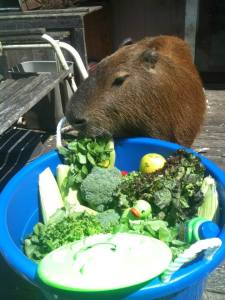
Credit: petcapybara.com
Comparing Capybaras’ Diet To Other Herbivores
Capybaras are sometimes compared to guinea pigs or rabbits. All three are herbivores, but their main foods differ.
| Animal | Main Foods | Vitamin C Needs |
|---|---|---|
| Capybara | Grasses, aquatic plants, vegetables | Essential |
| Guinea Pig | Hay, leafy greens, fruits | Essential |
| Rabbit | Hay, leafy greens, some fruits | Not required (produced naturally) |
This table highlights why capybara diets must include vitamin C, while rabbits do not need extra supplements.
Tips For Feeding Capybaras
If you care for a capybara, variety and safety are key. Here’s what you should remember:
- Offer fresh hay daily. This is the base of their diet.
- Give leafy greens and vegetables every day.
- Add fruits only as treats. Too much sugar can cause health problems.
- Provide branches for chewing. It keeps their teeth healthy.
- Use vitamin C supplements if you’re not sure they get enough from food.
- Change water often. Capybaras drink a lot.
- Watch for signs of illness, such as not eating or swollen joints. These can signal diet problems.
Many new owners forget how important chewing materials are. Without branches or chew toys, a capybara’s teeth can become too long, causing pain or infection.
Another common mistake is feeding too much fruit or sugary vegetables. Capybaras love sweet foods but their stomachs are not built for large amounts of sugar.

Credit: petcapybara.com
Frequently Asked Questions
What Is The Main Food Capybaras Eat?
The main food for capybaras is grass. In the wild, it makes up most of their diet. In captivity, timothy or orchard grass hay is used.
Can Capybaras Eat Fruit?
Yes, but only in small amounts. Fruits like apples or melons can be fed as treats, not main food. Too much fruit can lead to health problems.
Do Capybaras Need Vitamin C?
Absolutely. Capybaras cannot produce vitamin C, so they must get it from their diet or supplements. Without it, they can get very sick.
Is It Safe To Feed Capybaras Human Food?
No. Many human foods are unsafe, especially processed foods, chocolate, onions, and garlic. Always stick to safe plants and vegetables.
How Often Do Capybaras Eat In A Day?
Capybaras eat several times a day, often early in the morning and late in the afternoon. They need constant access to food and water.
Learning about capybaras’ diets shows how special these animals are. Whether in the wild or as pets, their food choices keep them healthy, active, and happy. For more details about their natural history and diet, you can visit the Wikipedia page on Capybaras. With the right knowledge, anyone can help these gentle giants thrive.


