

Capybaras are the world’s largest rodents, famous for their calm nature and social habits. Living mostly in South America, these animals are often seen lounging in rivers or grazing in grassy areas. But their peaceful life hides a daily struggle for survival.
Many predators consider capybaras an important food source. Understanding what hunts capybaras helps us appreciate their behavior and the challenges they face in the wild.
Main Predators Of Capybaras
Capybaras have several natural enemies. Each predator has its own hunting style and reasons for targeting capybaras.
1. Jaguars
The jaguar is the largest cat in the Americas. It is a skilled swimmer and often hunts near water. Capybaras are a favorite meal, especially in regions like the Amazon.
Jaguars use stealth, approaching quietly before delivering a powerful bite. They target both young and adult capybaras. In some areas, jaguars may eat capybaras several times a week.
2. Caimans
Caimans are close relatives of alligators. They live in rivers and wetlands across South America, often sharing the same habitat as capybaras.
Caimans are ambush predators. They wait underwater for capybaras to swim or drink, then attack with speed. Young capybaras are especially at risk, but adults are not always safe.
3. Anacondas
The green anaconda is one of the world’s heaviest snakes. It is found in swamps and slow-moving rivers, perfect places for capybaras.
Anacondas can kill large prey by constriction. They wait hidden in water, striking quickly to catch an unsuspecting capybara. While not their only prey, capybaras are a common target.
4. Pumas
Pumas, also called cougars or mountain lions, live across South America. They are adaptable hunters and can be found in forests, grasslands, and near rivers.
Pumas hunt mainly at night. They stalk capybara herds, aiming for the old, sick, or young. They use strong jaws and sharp claws to bring down their prey.
5. Ocelots
Although smaller than jaguars or pumas, ocelots sometimes attack young capybaras. Adult capybaras are usually too large, but ocelots may eat capybara pups if given the chance.
Ocelots are agile and hunt in thick vegetation. They rely on surprise rather than strength.
6. Birds Of Prey
Large raptors, such as the harpy eagle and black hawk, may attack young capybaras. Adult capybaras are usually too heavy for birds, but pups are vulnerable.
These birds use powerful talons to snatch prey. Their sharp eyesight helps them spot capybaras from high above.
7. Humans
Humans are among the top predators of capybaras. In some countries, people hunt capybaras for their meat and hide. Capybara meat is considered a delicacy in places like Venezuela and parts of Brazil.
Human activities also reduce capybara populations through habitat destruction and pollution.
Predator Comparison
Each predator hunts capybaras in different ways. The following table shows how their hunting methods and success rates compare:
| Predator | Hunting Method | Main Target Age | Success Rate (%) |
|---|---|---|---|
| Jaguar | Stalking, ambush | All ages | 60-70 |
| Caiman | Ambush in water | Young & adult | 40-50 |
| Anaconda | Underwater ambush | All ages | 30-50 |
| Puma | Stalking, night hunt | Old/young | 20-30 |
| Ocelot | Stalking, surprise | Pups | 10-20 |
| Birds of Prey | Snatching from ground | Pups | 10-15 |
| Humans | Hunting, trapping | All ages | Varies |
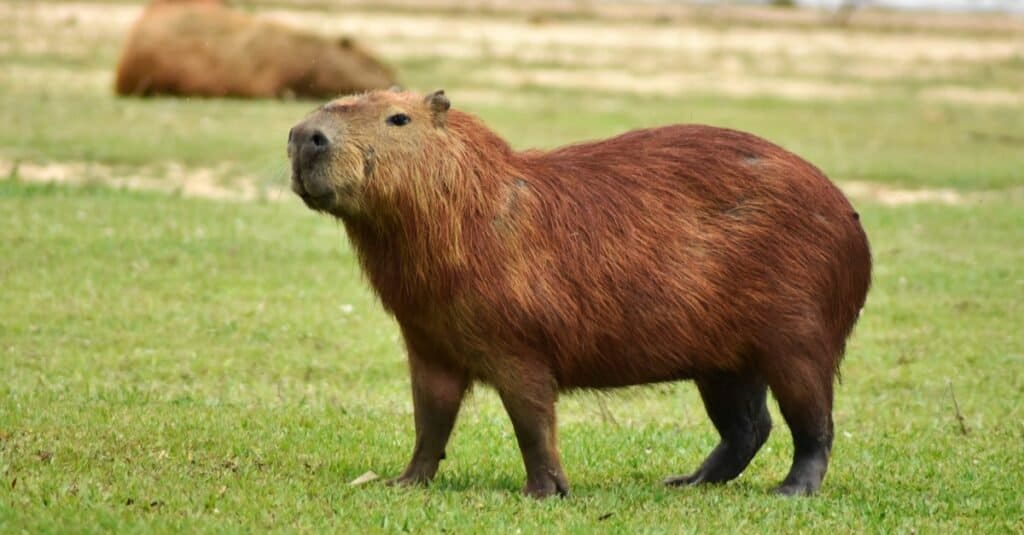
Credit: a-z-animals.com
Capybara Defense Strategies
Capybaras are not defenseless. They use several smart tactics to avoid predators.
Living In Groups
Capybaras are social. They live in groups of 10 to 20, sometimes more. A group provides safety because many eyes can spot danger.
If a predator appears, the group makes warning sounds. This allows others to escape quickly.
Water Escape
Capybaras are excellent swimmers. When threatened, they dive into water and can stay submerged for up to five minutes. Water gives them a safe escape from land predators.
Camouflage
Their brown fur helps them blend into tall grass or muddy riverbanks. Predators find it harder to spot a still capybara in these environments.
Fast Runners
On land, capybaras can run up to 35 km/h (about 22 mph) for short distances. This speed helps them reach water or thick cover before a predator catches them.
Seasonal Risks And Life Stages
The risk of predation changes throughout the year and depends on a capybara’s age.
| Season | Predator Activity | Capybara Vulnerability |
|---|---|---|
| Wet Season | More caimans, easier river ambush | High |
| Dry Season | Jaguars and humans hunt more near shrinking water sources | Very High |
| Breeding Season | Ocelots and raptors target young pups | Highest for pups |
Young capybaras are much more likely to be hunted than adults. Less than half of all capybara pups survive their first year.
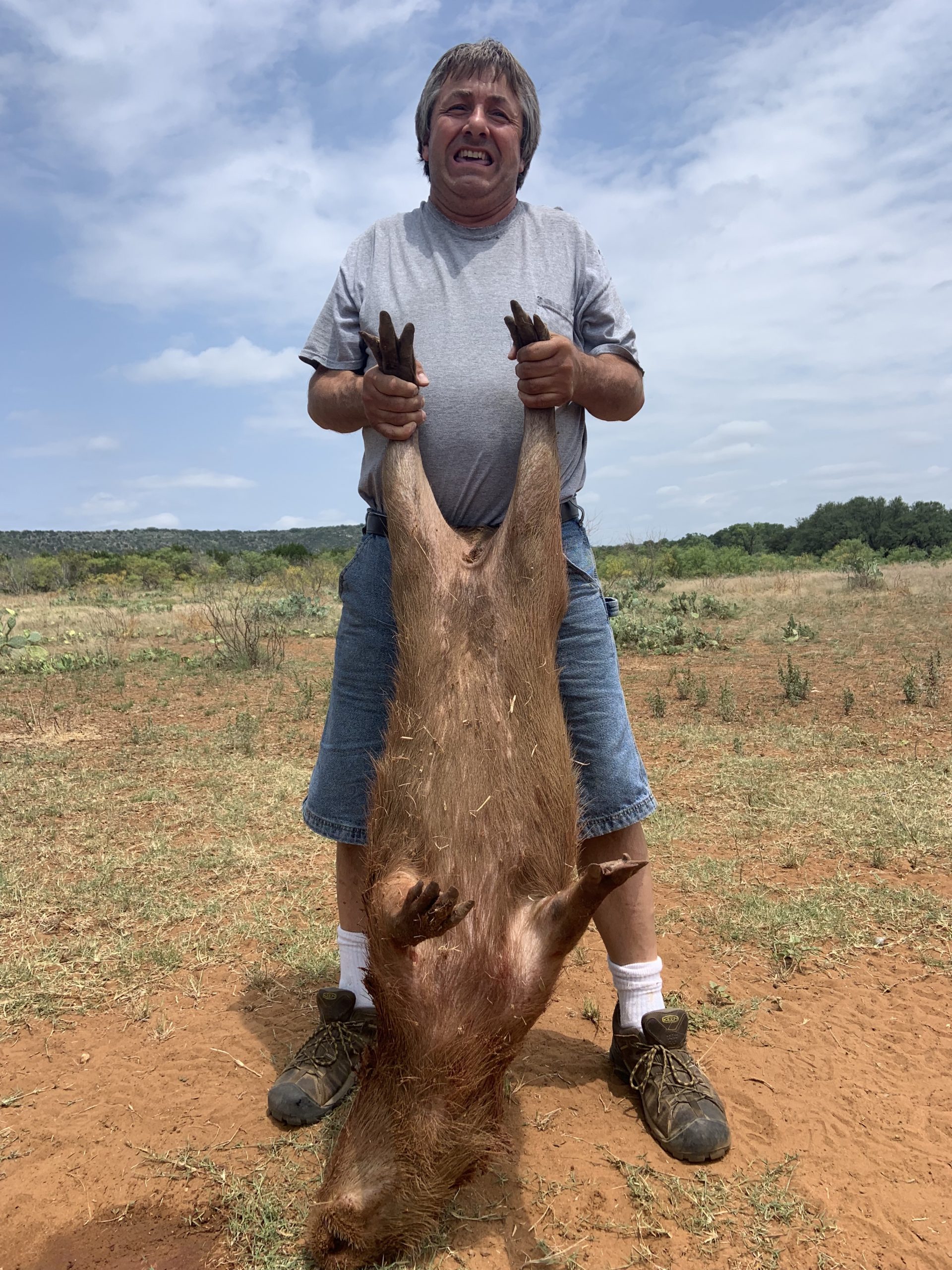
Credit: www.huntsintexas.com
Human Impact And Conservation
Humans change capybara survival in several ways. In some regions, hunting is regulated to prevent extinction. However, illegal hunting and habitat loss still occur.
Capybaras are not considered endangered, but their numbers can drop quickly if too many are hunted or their homes are destroyed. Conservation efforts focus on protecting wetlands and teaching local people about sustainable hunting.
If you want to learn more about how capybaras and other wildlife interact, see the article from the Wikipedia.
Surprising Insights About Capybara Predation
- Capybara alarm calls are so reliable that other animals, like birds and deer, sometimes use them as early warnings.
- Capybara herds sometimes include other animals, such as birds, who help spot predators. This teamwork can reduce the risk for everyone.
- When a capybara is caught by a caiman or anaconda, other capybaras rarely try to help. Each runs for its own safety.
- Humans sometimes raise capybaras on farms, where they are less likely to face natural predators but may be hunted for meat.

Credit: www.youtube.com
Frequently Asked Questions
What Is The Most Dangerous Predator For Capybaras?
The jaguar is the most dangerous predator. It is powerful, fast, and can swim well, making it a top threat in areas where both live.
Are Capybaras Hunted For Their Meat?
Yes, in parts of South America, humans hunt capybaras for meat and hides. Capybara meat is even eaten during religious holidays in some regions.
How Do Capybaras Warn Each Other About Danger?
Capybaras use a range of vocal calls—including barks, whistles, and alarm notes—to alert the group when a predator is near.
Do All Predators Hunt Adult Capybaras?
No, not all predators target adults. Smaller animals like ocelots and birds of prey focus on pups, while jaguars, caimans, and anacondas can kill adults.
What Helps Capybaras Survive In The Wild?
Group living, fast swimming, and warning calls all help capybaras survive. Their ability to use water and their sharp senses are key to escaping predators.
Capybaras may look relaxed, but their lives depend on staying alert and working together. Understanding their predators shows just how complex and risky life is for these gentle giants.


