

What Is A Group Of Capybara Called
If you have ever seen capybaras in the wild or at a zoo, you might notice they are almost never alone. Capybaras are the world’s largest rodents, and they are famous for their social nature. But what is a group of capybara called, and why do they live together?
Understanding this helps us learn about their behavior, survival, and even their surprising popularity on the internet.
The Name For A Group Of Capybara
A group of capybara is called a herd. Sometimes, people also use the word pack or cluster, but “herd” is the most widely accepted term by scientists and animal experts. This word is also used for animals like deer or cattle, and it fits capybaras well because of their close social bonds and grazing habits.
Why Capybaras Form Herds
Capybaras are native to South America, where they live near rivers, lakes, and wetlands. Their natural homes are full of both food and danger. Living in a herd helps them survive in several ways:
- Protection from predators: Capybaras are prey for jaguars, caimans, and anacondas. When they are together, they can warn each other about danger and escape faster.
- Finding food: Capybaras eat grass, water plants, and fruit. A herd can search a bigger area for food, and younger animals learn what to eat by watching adults.
- Raising young: Female capybaras often nurse each other’s babies, a behavior called “alloparenting.” This helps more babies survive.
- Social grooming: Capybaras groom each other to remove ticks and dirt, which keeps them healthy.
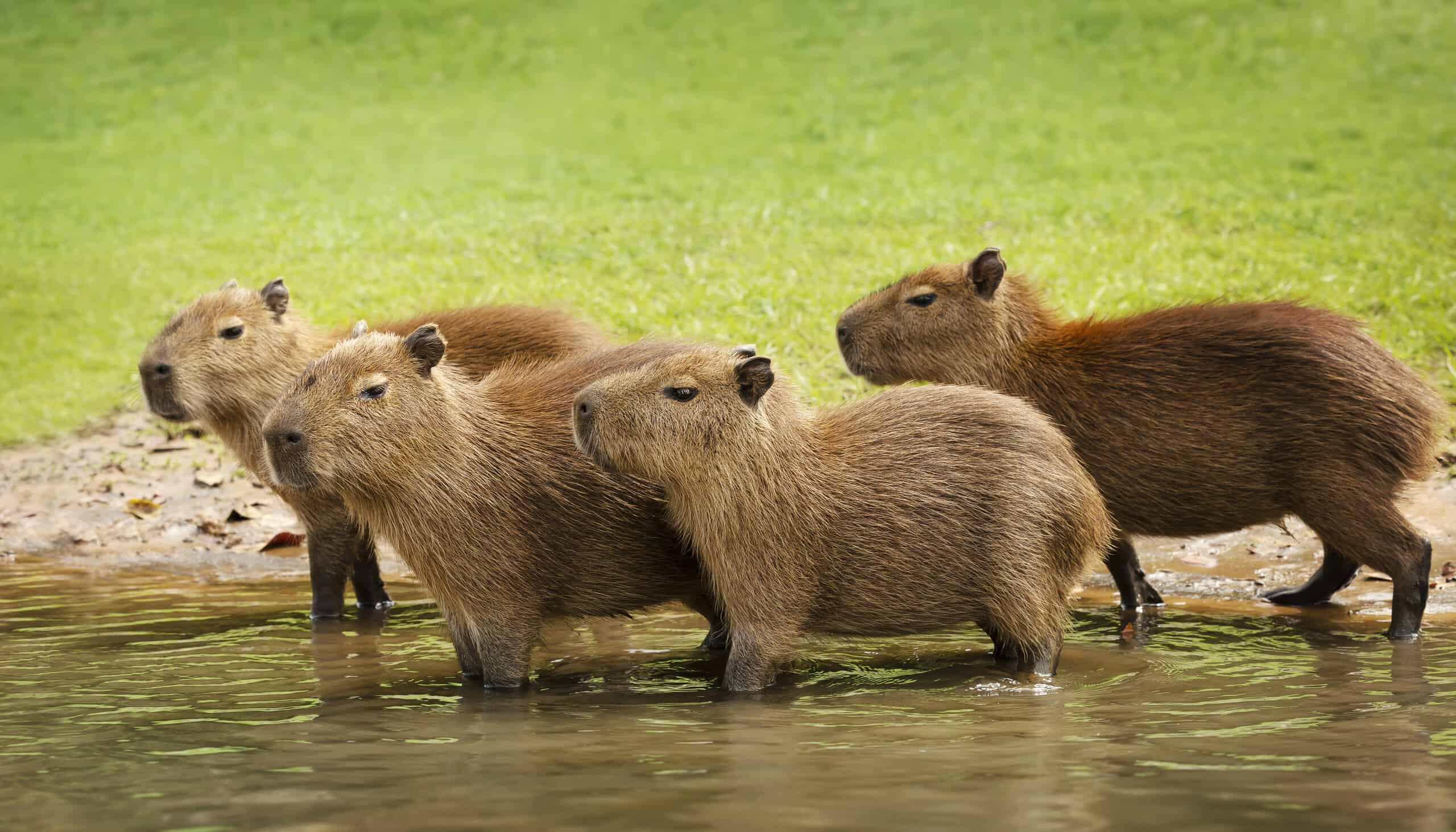
Credit: a-z-animals.com
How Big Is A Capybara Herd?
The size of a capybara herd can change depending on the season and the environment. Here is a quick look at how herd sizes can vary:
| Environment | Average Herd Size | Maximum Observed Size |
|---|---|---|
| Rainy Season | 10-20 | 40 |
| Dry Season | 2-6 | 8 |
| Captivity (Zoo) | 5-10 | 12 |
During the rainy season, food is plentiful, and herds can be much larger. In the dry season, water and food are harder to find, so herds split into smaller groups.
Social Structure Of A Capybara Herd
Capybara herds are not random groups. They have a clear social structure, which helps keep peace and order.
- Dominant male: There is usually one main male who leads the herd and has the most mating rights.
- Females: Several adult females make up most of the group.
- Subordinate males: These are younger or weaker males who follow the dominant male’s lead.
- Juveniles and pups: Young capybaras stay with the group for protection and learning.
The dominant male is easy to spot. He often walks in front, marks his territory with scent, and decides when the group moves or rests.
Communication Within The Herd
Capybaras use many sounds and signals to talk to each other. Some of the most common include:
- Whistles and barks: Used to warn about predators.
- Clicks and purrs: Show comfort and friendliness.
- Tooth chattering: Can be a sign of stress or warning.
These sounds help capybaras stay safe and connected, especially when moving through thick grass or water.
Daily Life In A Capybara Herd
Capybara herds have a daily routine that helps everyone get what they need. Here’s how a typical day looks:
| Time of Day | Main Activity |
|---|---|
| Dawn | Grazing and social grooming |
| Midday | Resting in water or shade |
| Evening | Grazing and playing |
| Night | Sleeping together in a safe spot |
Capybaras spend a lot of time in water. This helps them stay cool, escape predators, and even socialize.
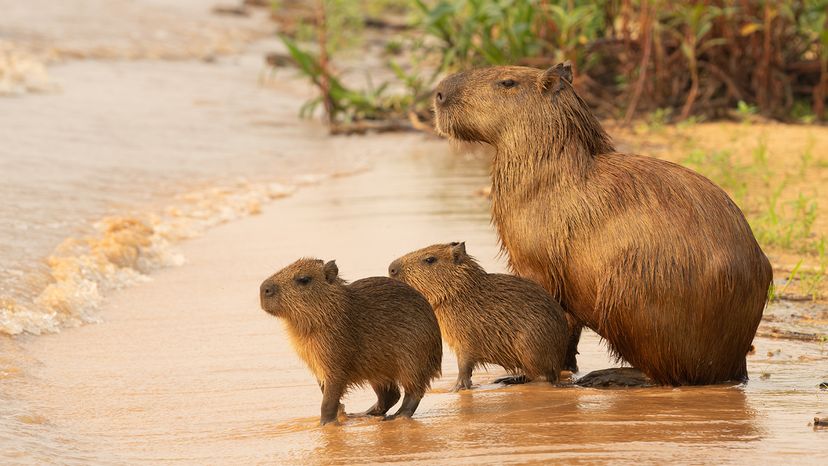
Credit: animals.howstuffworks.com
Unique Facts About Capybara Herds
There are some special things about capybara herds that many people do not know:
- Mixed species friendships: Capybaras sometimes allow birds, monkeys, or even turtles to rest on their backs. This is rare in wild animal groups.
- Flexible leadership: If the dominant male is injured or removed, another male can quickly take his place without much fighting.
- Multiple mothers: Pups often nurse from several females, not just their own mother. This increases their chances of survival.
These behaviors show how capybaras are both gentle and highly adaptable.
Capybara Herds In Popular Culture
The social habits of capybaras have made them famous on the internet. Videos and photos of capybaras relaxing with other animals, or sitting calmly in large groups, are widely shared. Their peaceful way of living has even made them symbols of friendship and community.
Zoos often keep capybaras in groups to let visitors see their natural behavior. Some zoos even let capybaras share space with other gentle animals, copying what happens in nature.
For more about capybara behavior and social life, you can visit the Wikipedia page on Capybaras.

Credit: jon-farrow.com
Frequently Asked Questions
What Is A Group Of Capybara Called?
A group of capybara is called a herd. Some people also say “pack” or “cluster,” but “herd” is the most common and correct term.
How Many Capybaras Are Usually In A Herd?
The average herd size is about 10-20 during the rainy season and 2-6 in the dry season. In some cases, herds can be as large as 40.
Why Do Capybaras Live In Groups?
Capybaras live in groups for protection, better chances of finding food, social grooming, and raising their young together.
Do All Capybaras In A Herd Get Along?
Most of the time, capybaras are peaceful, but there is a social order. The dominant male leads, and fights are rare but can happen if leadership is challenged.
Can Capybaras Live Alone?
Capybaras can survive alone, but they are much happier and healthier in a group. In captivity, keeping them alone can lead to stress or illness.
Capybaras teach us that being social and working together is a powerful way to survive and thrive. Watching a herd of capybaras is a lesson in peace, cooperation, and the value of community.


