

Many people are fascinated by capybaras, the world’s largest rodents. With their calm nature and social behavior, these animals have become favorites in zoos around the world. If you want to see a capybara up close, you might wonder where to go. Not every zoo has capybaras, but many well-known zoos do include them in their exhibits. Knowing which zoos have capybaras can help you plan your next visit and enjoy a unique animal encounter.
What Makes Capybaras Special?
Capybaras are native to South America and are known for their gentle personalities. They live in groups and are excellent swimmers, often spending time in water to stay cool. Their friendly attitude makes them popular in zoos, and they often share enclosures with other animals.
Many visitors are surprised to see capybaras interacting peacefully with birds, monkeys, or even smaller rodents.
Top Zoos With Capybaras In The United States
If you are in the US and want to see capybaras, several zoos across the country house them. Here are some of the most popular options:
- San Diego Zoo (California): Known for its large and diverse collection, the San Diego Zoo often features capybaras in its South America exhibit. The animals have plenty of water and open space, making it easy to observe their natural behavior.
- Smithsonian’s National Zoo (Washington, D.C.): This zoo includes capybaras in its Amazonia section. Visitors can see them alongside other species from the Amazon rainforest.
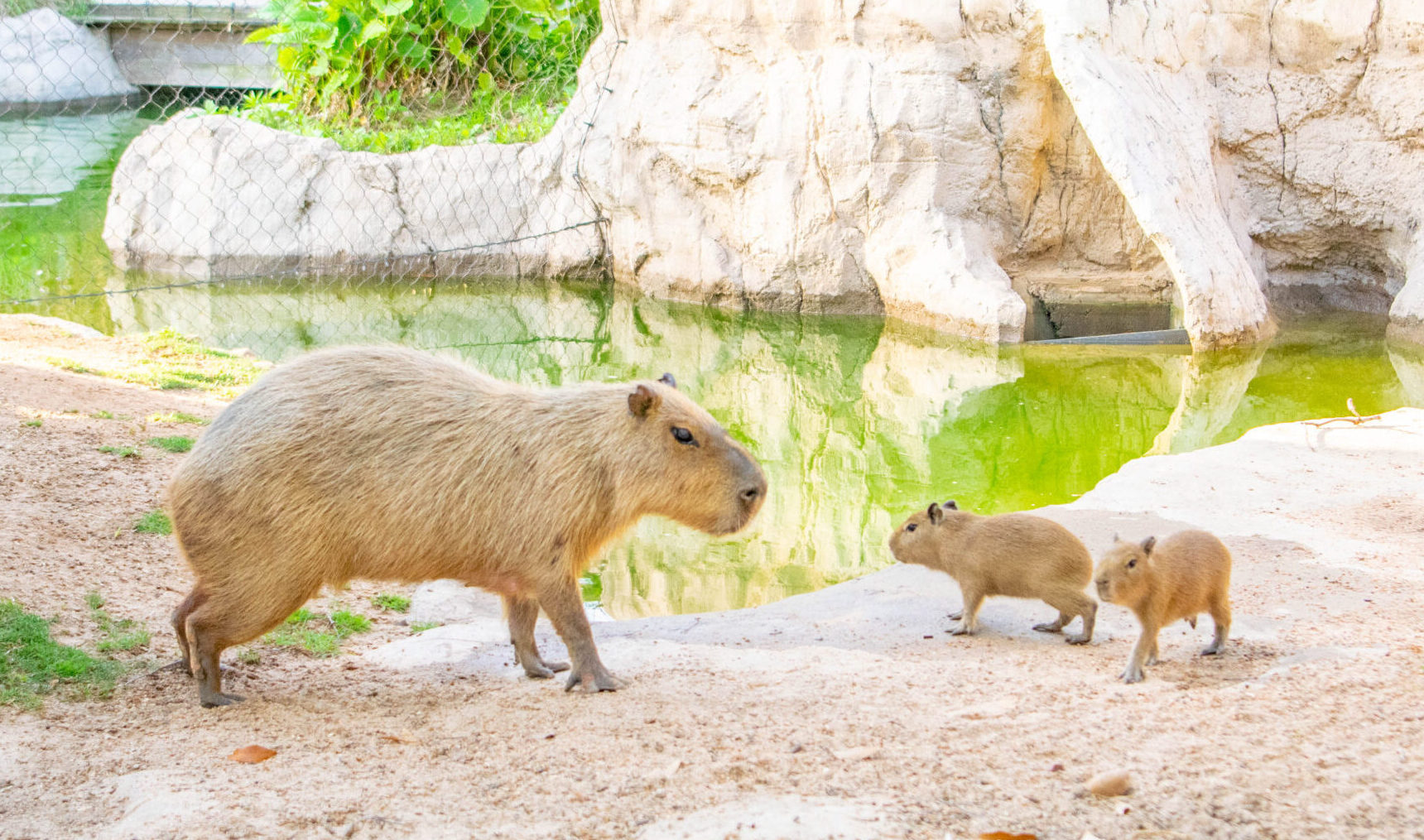
- Houston Zoo (Texas): The capybaras here live in a realistic wetland habitat. The zoo provides educational signs about their diet, habits, and conservation.
- Columbus Zoo and Aquarium (Ohio): Capybaras are part of the zoo’s Shores & Aquarium region. This area highlights animals that depend on water environments.
- Los Angeles Zoo (California): Capybaras are included in the South American section. The zoo often holds talks about their social behavior and care.
- Bronx Zoo (New York): The capybaras are found in the World of Reptiles and Mammals. This zoo is one of the largest in the US and offers close-up views.
- Zoo Miami (Florida): Capybaras live in a large, lush exhibit and often share space with other South American animals.
- Oregon Zoo (Portland, Oregon): The zoo provides naturalistic habitats, so you can watch capybaras swimming and interacting with their group.
- Denver Zoo (Colorado): Capybaras are part of the Tropical Discovery exhibit, where their role in wetland ecosystems is explained.
- Saint Louis Zoo (Missouri): This zoo features capybaras in the River’s Edge area, which mimics their natural home.
Here is a quick comparison of some key features in selected US zoos with capybaras:
| Zoo Name | Capybara Exhibit | Extra Activities |
|---|---|---|
| San Diego Zoo | South America | Keeper Talks |
| Houston Zoo | Wetland Habitat | Educational Signs |
| Columbus Zoo | Shores & Aquarium | Interactive Displays |
| Bronx Zoo | World of Reptiles | Seasonal Events |

Credit: www.biopark.co.jp
Zoos With Capybaras Around The World
Capybaras can also be found in zoos outside the United States. Some of the best-known international zoos with capybaras include:
- Toronto Zoo (Canada): Their Americas Pavilion houses capybaras, and you can often see them relaxing by the water.
- London Zoo (UK): Capybaras live in the Rainforest Life exhibit, which recreates the feel of a South American forest.
- Singapore Zoo: This zoo is famous for its open concept. Capybaras here sometimes share their space with other species, allowing for unique viewing.
- Taronga Zoo (Australia): In Sydney, capybaras are part of the South American Trail.
- Berlin Zoological Garden (Germany): The oldest zoo in Germany, it has a section dedicated to South American wildlife, including capybaras.
- Buenos Aires Eco Park (Argentina): In their native country, capybaras are a natural fit. This park focuses on conservation and education.
Here’s a quick look at how capybara habitats compare in international zoos:
| Zoo | Region | Habitat Features |
|---|---|---|
| Toronto Zoo | Canada | Large Pools, Native Plants |
| London Zoo | UK | Rainforest Exhibit |
| Singapore Zoo | Singapore | Mixed Species Enclosure |
| Taronga Zoo | Australia | South America Trail |
What To Expect When Visiting Capybaras
Seeing capybaras in a zoo is a special experience. They are usually calm and spend much of the day resting or swimming. Some zoos allow visitors to attend feeding sessions or interactive talks. Here are a few things to keep in mind:
- Best viewing times: Early morning or late afternoon, when capybaras are most active.
- Group living: Capybaras often live in groups, so expect to see several together.
- Swimming: Many exhibits have ponds, so watch for swimming or playing behaviors.
A common mistake is to overlook the capybara exhibit because these animals are sometimes quiet or resting. Spend a few extra minutes and you may see them interact with each other or with other species.

Credit: www.awsfzoo.com
Why Do Some Zoos Not Have Capybaras?
Not all zoos keep capybaras. Their need for water, space, and social groups means they require special care. Some smaller zoos may not have the resources to give capybaras a proper home. Also, capybaras can live for up to 12 years in captivity, so zoos must commit to long-term care.
If you want to see capybaras, it is best to check the zoo’s website before your visit.
Practical Tips For Capybara Fans
If you want the best experience, consider these tips:
- Plan ahead: Not every zoo has capybaras, so look up exhibit maps online.
- Check for events: Some zoos offer capybara feedings or animal encounters.
- Bring binoculars: Capybaras may relax far from the viewing area, especially in large habitats.
- Ask staff: Zookeepers often share interesting facts or point out hidden animals.
Many zoos also support capybara conservation and research. By visiting, you help these programs continue their work.
Credit: www.houstonzoo.org
Capybara Facts Many People Miss
Most people know capybaras are large, but here are some less obvious facts:
- Capybaras can weigh up to 140 pounds. They are much bigger than guinea pigs, their close relatives.
- They communicate with barks, whistles, and purrs. If you listen closely, you might hear their quiet voices.
- Capybaras are semi-aquatic. Their webbed feet help them swim, and they can hold their breath underwater for up to five minutes.
- They eat mostly grass and water plants. Their diet is simple, but they eat a lot to keep their teeth healthy.
If you want more details on capybara biology, check the Wikipedia page on Capybaras for in-depth information.
Frequently Asked Questions
Which Us Zoos Have Capybaras?
Many large US zoos, such as the San Diego Zoo, Houston Zoo, and Bronx Zoo, have capybaras. It is best to check the zoo’s website before your visit, as exhibits can change.
Are There Capybara Petting Opportunities?
Some smaller zoos and animal parks may offer limited petting or feeding sessions. However, most major zoos do not allow direct contact to protect both the animals and visitors.
Do Capybaras Live With Other Animals In Zoos?
Yes, capybaras often share enclosures with other South American animals like birds, turtles, or monkeys. Their calm behavior makes them good neighbors.
Are Capybaras Endangered?
Capybaras are not endangered. Their populations are stable in the wild and in zoos, but habitat loss in South America is still a concern.
Can Capybaras Be Adopted Or Sponsored?
Many zoos offer animal sponsorship programs, including for capybaras. This helps support their care and conservation efforts.
If you love capybaras, visiting a zoo with these gentle giants can be a memorable experience. With planning and curiosity, you can learn a lot about these amazing animals and how they live.


