

Capybaras are famous for their calm nature and their ability to get along with almost any animal. Videos and photos often show birds, monkeys, and even crocodiles peacefully sharing space with these gentle giants. But many people wonder: Why do capybaras not get eaten as often as you might expect for such a large, slow-moving rodent?
The answer is not simple. Capybaras live in environments full of predators, but they use a mix of social behavior, physical features, and unique strategies to survive. Let’s explore the main reasons why capybaras are not easy prey.
Capybara Basics: Size And Habitat
Capybaras are the world’s largest rodent. An adult can weigh between 35 to 66 kg (77 to 146 lbs) and reach up to 1.3 meters (4.3 feet) in length. They live near water in South America, especially in countries like Brazil, Venezuela, and Argentina.
Their habitats include:
- Riverbanks
- Swamps
- Lakes
These areas are full of dangers. Jaguars, caimans, anacondas, and large birds of prey hunt in the same places. Despite this, capybaras thrive.
Social Structure: Safety In Numbers
Capybaras live in groups, sometimes up to 100 in the dry season, but usually 10-20 is common. This group living is a major reason why they avoid getting eaten.
How does group living help?
- Many eyes: More capybaras means more eyes to spot danger.
- Alarm calls: When one senses a predator, it barks or whistles, warning others.
- Predator confusion: A group running together makes it hard for a predator to target one individual.
This strategy is similar to what antelopes and zebras use in Africa. Predators are less likely to attack when the prey is alert and in a large group.
Adaptations For Escape
Capybaras cannot outrun a jaguar on land, but they have other abilities:
- Excellent swimmers: Capybaras can stay underwater for up to five minutes.
- Webbed feet: Their feet help them move quickly in water and muddy areas.
When threatened, capybaras jump into the water. Many predators, like big cats, are less agile in water. Even caimans, which are water predators, find it hard to catch a group of fast-swimming capybaras.
Comparison: Capybaras Vs Other Prey
| Animal | Weight (kg) | Group Size | Swimming Ability |
|---|---|---|---|
| Capybara | 35–66 | 10–100 | Excellent |
| Agouti (small rodent) | 2–6 | 1–4 | Poor |
| Rabbit | 1–2 | 2–10 | Poor |
Capybaras are larger, live in bigger groups, and swim much better than other similar prey animals. These factors make them harder to catch.
Camouflage And Behavior
Capybaras are not brightly colored. Their brownish fur blends with mud and riverbanks, making them hard to spot, especially from a distance.
They also:
- Stay near water: Quick escape is always possible.
- Feed in open areas only when safe: They are active at dawn or dusk, when fewer predators are hunting.

Credit: www.reddit.com
Relationships With Other Animals
Capybaras often share their space with other animals, even dangerous ones like caimans and birds of prey. Why don’t these animals attack more often?
Mutual tolerance is a key factor. Capybaras are not aggressive. They do not compete for the same food as caimans or birds. Some birds, like wattled jacanas, even pick ticks off capybaras, gaining food while helping the capybara.
This peaceful behavior means capybaras do not trigger attacks from animals that might see them as a threat or competitor.
Predators: Who Eats Capybaras?
Despite all their adaptations, capybaras are not completely safe. Their main predators are:
- Jaguars
- Caimans
- Anacondas
- Eagles and large birds (mainly eat young capybaras)
However, data shows that only a small percentage of capybara populations are taken by predators each year. For example, one study in the Pantanal region found that jaguars mainly eat capybaras during the dry season, but capybaras still remain common.
Predation Rate Comparison
| Predator | Prey Taken per Year (%) |
|---|---|
| Jaguars | 5–10 |
| Caimans | 2–5 |
| Anacondas | 1–2 |
These numbers are lower than for many other prey animals, mainly due to capybaras’ group behavior and escape skills.
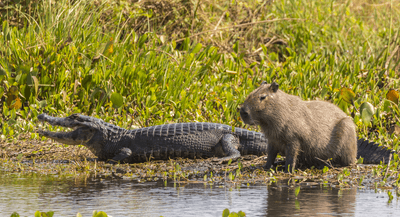
Credit: www.iflscience.com
Capybaras And Humans
Humans are the biggest threat to capybaras. In some countries, people hunt them for meat and leather. However, in many places, laws protect capybaras, and their populations are stable or even growing.
Zoos and animal parks around the world also help by showing how capybaras live. This increases understanding and support for their protection.
Non-obvious Insights
Many beginners believe capybaras are rarely attacked because they are friendly, but friendliness is not a defense. Their real safety comes from their ability to sense danger early and their strong social bonds.
Another detail is that predators often choose easier targets. Sick or young capybaras are more likely to be caught, but healthy adults in groups are much harder to catch.
What Really Protects Capybaras?
To sum up, here are the main reasons why capybaras do not get eaten often:
- Group living: More eyes and ears mean early warning.
- Swimming skills: Water escape is almost always possible.
- Camouflage: Brown fur helps them hide.
- Peaceful relationships: No conflict with other animals.
- Alertness: Capybaras are watchful and quick to react.
These features together keep most capybaras safe, even in dangerous environments.
Frequently Asked Questions
Why Do Crocodiles And Caimans Rarely Eat Capybaras?
Caimans sometimes eat capybaras, but attacks are rare. Capybaras are very fast swimmers and usually stay in groups, making it hard for caimans to catch them. Also, capybaras are alert and jump into water at the first sign of danger.
Do Capybaras Have Any Natural Weapons?
Capybaras do not have strong natural weapons like claws or sharp teeth for fighting. Their main defense is to escape quickly, especially by swimming. They rely on the group for safety, not on fighting predators.
Are Capybaras Friendly With All Animals?
Capybaras are peaceful and get along with many animals, but not all. Some animals, like jaguars, will still see them as food. Capybaras avoid conflict and try to stay away from aggressive species.
How Long Do Capybaras Live In The Wild?
Capybaras usually live about 8–10 years in the wild. Predators, disease, and habitat loss can shorten their lifespan, but their group living and escape skills help them survive longer.
Where Can I Learn More About Capybara Behavior?
You can read more about capybara biology and social life on the Wikipedia Capybara page.
Capybaras show that survival is not just about strength or speed. Their success comes from teamwork, smart choices, and adapting to their world. Understanding their story helps us respect the balance of nature and the hidden skills of even the most gentle animals.

Credit: www.youtube.com


