

Alligators and capybaras seem like an unlikely pair. Alligators are fierce predators with a powerful bite, while capybaras are the world’s largest rodents, known for their calm and social nature. So, why don’t alligators eat capybara more often? The answer is not as simple as “alligators don’t like capybara.
” The relationship between these two animals is a fascinating example of how nature works, and it shows that survival is about more than just size and strength.
Where Alligators And Capybara Live
Alligators are native to the southeastern United States, especially Florida and Louisiana. Capybaras live in South America, mostly in wetlands and rivers of Brazil, Venezuela, and Colombia. This means their natural habitats do not overlap. In the wild, alligators and capybaras almost never meet.
However, in zoos, animal parks, or rare artificial habitats, they might share the same space. This is where the question becomes interesting: if they are together, why don’t alligators eat capybara as often as people expect?
Alligator Diet And Hunting Habits
Alligators are carnivores, but their diet depends on size and age. Young alligators eat insects and small fish. As they grow, they hunt birds, turtles, and mammals. Adult alligators can take down large animals, but they are also opportunistic feeders—they eat what is easy to catch.
Here is a quick comparison of what alligators usually eat, compared to capybara:
| Prey | Common in Diet | Notes |
|---|---|---|
| Fish | Very common | Easy to catch, main food |
| Birds | Common | Young or weak birds |
| Turtles | Common | Shells are no problem for adults |
| Capybara | Very rare | Not native to alligator habitats |
Alligators like to ambush their prey. They wait quietly in the water and strike fast. If a large, slow-moving animal comes close, it could become a meal. But alligators do not usually chase animals for long distances.

Credit: capybaramag.com
Capybara Behavior And Group Living
Capybaras are social animals. They live in groups of 10 to 20, sometimes even 100 during the dry season. Living in a group gives them safety. If a predator, like an alligator, approaches, one capybara will give an alarm call, and the whole group will escape into the water.
Some key facts about capybara groups:
- Always have a lookout for danger
- Swim well and can stay underwater for up to 5 minutes
- Use water as a safe escape route
Because of these skills, it is hard for a predator to catch a healthy capybara. An alligator might catch a weak or young capybara, but not a whole group.
Why Attacks Are Rare In Shared Spaces
Sometimes, alligators and capybaras are put together in zoos or parks. People expect trouble, but serious attacks are rare. This surprises many visitors. Here are reasons why:
- Abundant Food: In captivity, alligators get regular meals. They do not need to hunt capybara for survival.
- Space to Escape: Zoos design enclosures with places for capybaras to hide or swim away.
- Size and Effort: Capybaras are large (35–66 kg). Hunting a big animal is risky and uses energy. Alligators prefer easy food.
- Behavioral Adaptation: Capybaras learn to avoid alligators, and alligators may get used to capybara presence.
Here’s a comparison of capybara size with other common alligator prey:
| Prey | Average Weight | Predator Preference |
|---|---|---|
| Fish | 0.5–2 kg | Very high |
| Turtle | 2–10 kg | High |
| Bird | 0.3–3 kg | High |
| Capybara | 35–66 kg | Low |
Capybara’s Natural Predators
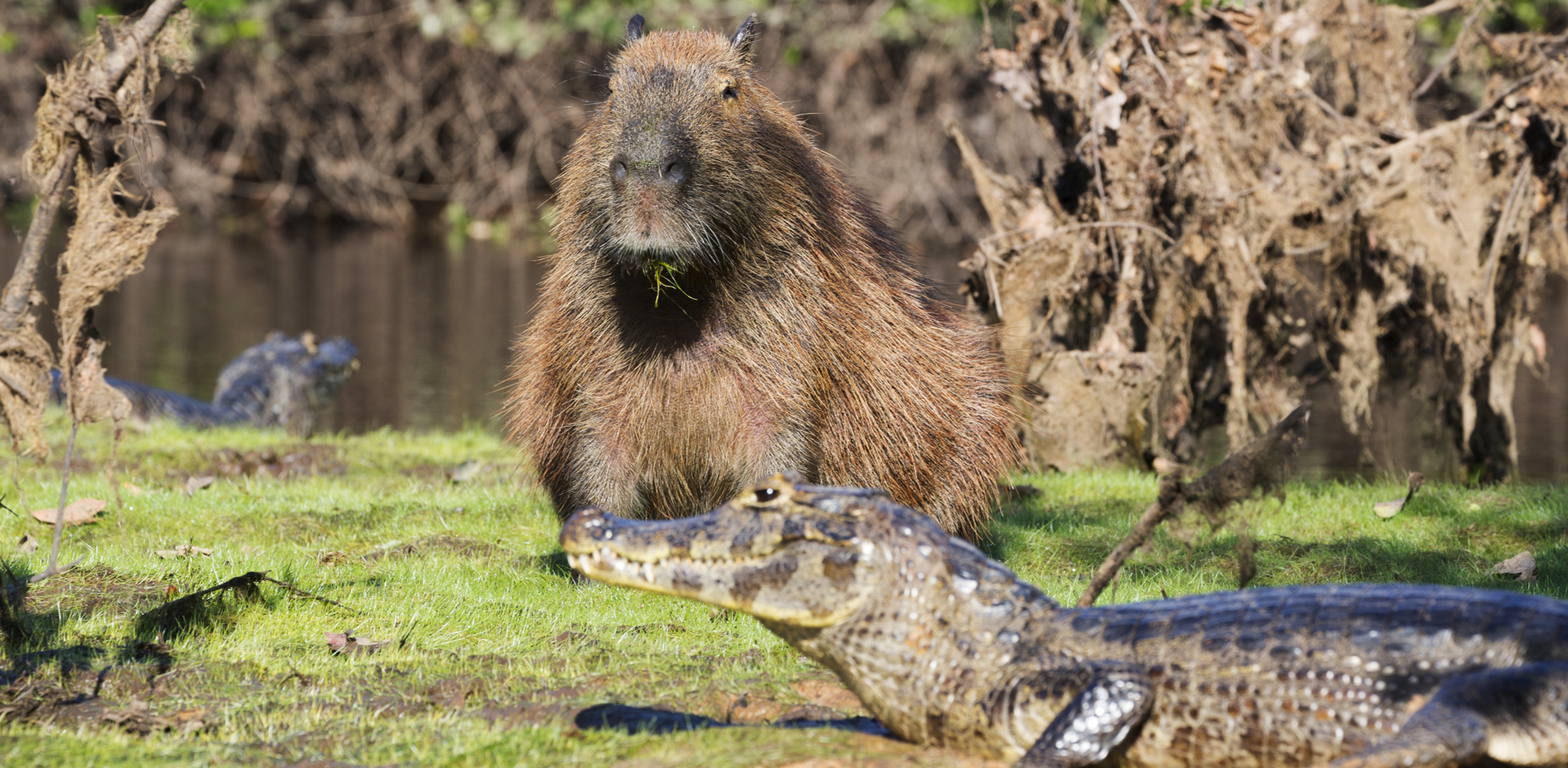
In the wild, capybaras do face danger from other predators. Jaguars, anacondas, and caimans (a South American relative of alligators) hunt capybaras. But even these predators often fail. Capybaras are alert, fast in water, and rarely stray alone.
Here’s how capybara survival rates compare between different predators:
| Predator | Hunting Success Rate | Typical Strategy |
|---|---|---|
| Jaguar | Medium | Stalks on land |
| Anaconda | Low | Ambushes in water |
| Caiman | Low | Ambush in water |
| Alligator (in captivity) | Very low | Rarely attacks due to food supply |
What Beginners Miss About Alligators And Capybaras
Many people think a predator will always attack a possible meal. But predators weigh risk vs. reward. Alligators need to protect themselves from injury. A large capybara can fight back or escape, so it is not a guaranteed meal.
Another common mistake is thinking that alligators and capybaras meet in the wild. This is almost never true. Their home ranges are separated by thousands of miles.

Credit: www.reddit.com
Unusual Cases And Exceptions
There are rare reports of alligators and capybaras living together in wildlife parks or private collections. Sometimes, young or sick capybaras are attacked. But these cases are not the norm. In the wild, it is caimans—not alligators—that pose a threat to capybaras in South America.
Final Thoughts
Nature is full of surprises. Alligators do not eat capybaras simply because it is not easy, not necessary, and often not possible. Capybaras are smart, social, and strong swimmers. Alligators prefer prey that is smaller, weaker, and easier to catch. In the few places where they do meet, both animals usually keep their distance. Understanding these relationships helps us see how animal behavior is shaped by more than just hunger.
For more details about alligator and capybara habitats, you can check Capybara Wikipedia.
Credit: www.iflscience.com
Frequently Asked Questions
Why Don’t Alligators And Capybaras Meet In The Wild?
Alligators live in North America, while capybaras live in South America. Their habitats are completely separate, so they do not meet in nature.
Can An Alligator Eat A Capybara If Given The Chance?
It is possible, especially if the capybara is young or sick. However, healthy adult capybaras are hard to catch, and alligators usually choose easier prey.
How Do Capybaras Escape From Predators?
Capybaras use their group for safety, keep watch for danger, and escape into water where they swim well and can even dive.
Are Caimans More Dangerous To Capybaras Than Alligators?
Yes. Caimans live in the same areas as capybaras and sometimes hunt them. But even caimans only succeed if the capybara is weak or careless.
Do Zoos Have To Separate Alligators And Capybaras?
Most zoos design enclosures to prevent attacks. They provide enough space and hiding spots so capybaras can avoid alligators, and keep alligators well-fed to lower hunting instincts.


