

Why Don’t Crocodiles Eat Capybaras
In the wild, nature is full of surprises. One of the most curious relationships is between crocodiles and capybaras. At first glance, you might think capybaras, the world’s largest rodents, would be easy targets for hungry crocodiles. They share the same rivers and wetlands in South America. Yet, many travelers and animal lovers notice something odd: crocodiles often ignore capybaras, even when they swim close together. Why does this happen? Let’s look deeper into their behaviors, biology, and what really shapes this unusual peace.
Understanding Capybaras And Crocodiles
Capybaras are gentle, social animals. They live in groups and love water. These creatures can weigh up to 65 kg (about 140 lbs) and are strong swimmers.
Crocodiles, on the other hand, are top predators. In South America, the main type you’ll see with capybaras is the yacaré caiman (often called a crocodile, but really a caiman). These reptiles can reach over 2.5 meters (8 feet) long and have powerful jaws.
So, Why Aren’t Crocodiles Hunting Capybaras All The Time?
Reasons Why Crocodiles Rarely Eat Capybaras
1. Capybaras’ Group Behavior
Capybaras almost always stay in groups. When they sense danger, they alert each other by barking. This makes it hard for crocodiles to sneak up. In fact, a group of capybaras can spot a predator faster than a lone animal.
2. Capybaras Are Fast In Water
These rodents are not slow, clumsy swimmers. They can dive and swim quickly, holding their breath for up to 5 minutes. If a crocodile charges, capybaras often escape by diving and zig-zagging underwater.
3. Crocodile Diet Preferences
Crocodiles and caimans have a wide diet. They eat fish, birds, amphibians, and sometimes mammals. Fish are much easier to catch than a big, alert capybara. Crocodiles usually choose prey that uses less energy to hunt.
4. Seasonal Food Abundance
During the wet season, South American rivers are full of fish. Crocodiles take advantage of this and focus on what’s plentiful. Capybaras become less attractive compared to the easy meals swimming around.
5. Risk Of Injury
Crocodiles don’t want unnecessary risks. Capybaras are large and strong. A mature capybara can kick and bite, possibly injuring a crocodile’s mouth or eyes. For a predator, a mouth injury can be deadly.
6. Mutual Tolerance
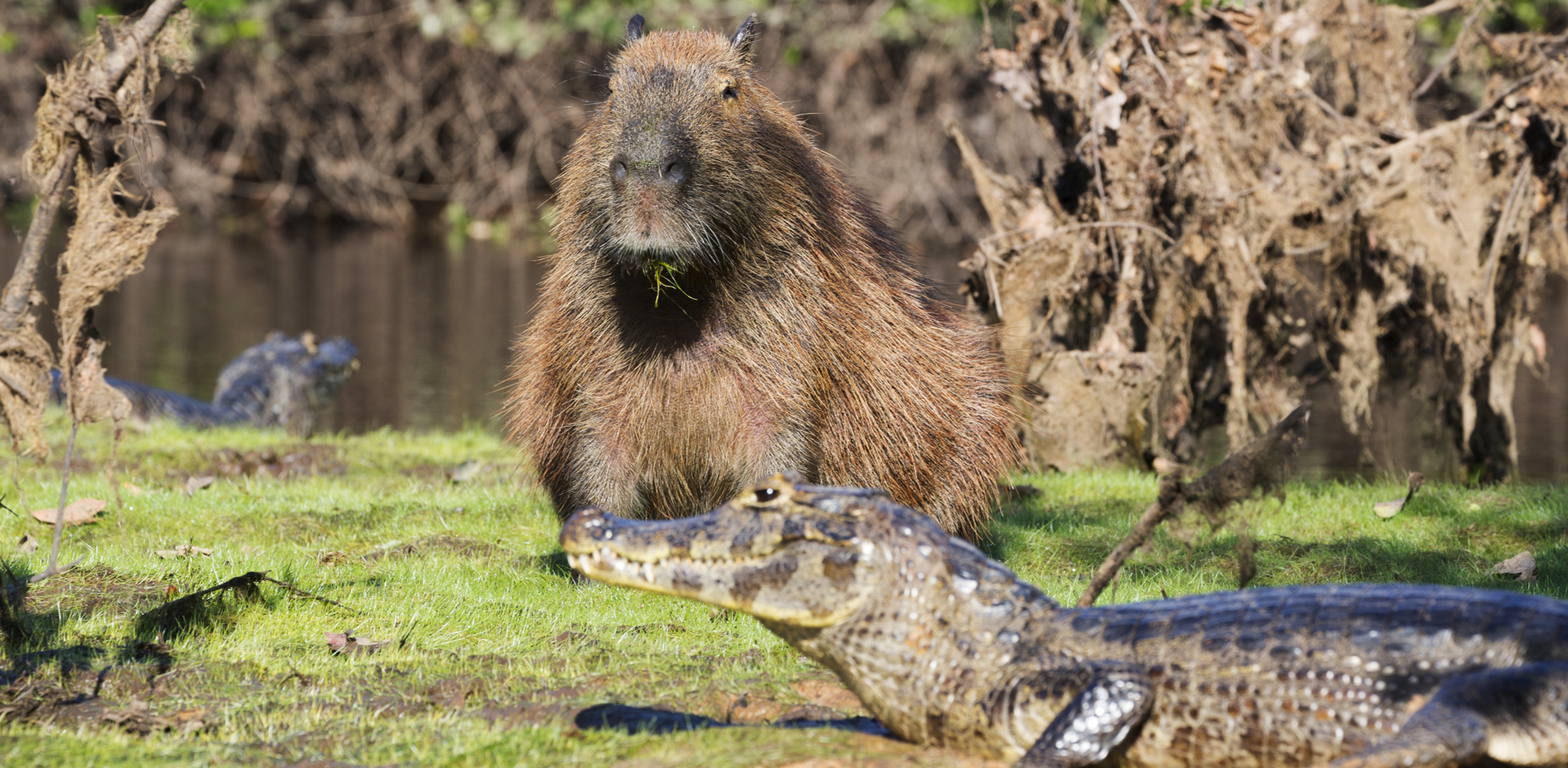
In some areas, these animals simply tolerate each other. There are many reports of capybaras even sitting on riverbanks beside crocodiles. This does not mean they are friends, but both seem to understand that fighting is not always worth it.

Credit: www.youtube.com
When Do Crocodiles Eat Capybaras?
It’s important to know that crocodiles can eat capybaras, and sometimes they do. Young or weak capybaras, or those who wander alone, are most at risk. During the dry season, when fish are scarce, crocodiles may become more aggressive and hunt larger prey.
But this is not the main rule. Most days, crocodiles focus on easier meals.
Comparing Crocodile And Capybara Behavior
To see why this relationship works, compare some key traits.
| Trait | Capybara | Crocodile/Caiman |
|---|---|---|
| Social Groups | Large groups (10-20+) | Mostly solitary |
| Diet | Plants, grasses | Fish, birds, mammals |
| Defense | Alert calls, speed | Ambush, power |
| Swimming Skill | Excellent | Excellent |
Predator-prey Dynamics In South America
South America’s rivers are crowded with many animals. Capybaras are not the only potential prey. There are also birds, small mammals, and fish.
| Prey | How Often Crocodiles Hunt | Reason |
|---|---|---|
| Fish | Very common | Abundant and easy to catch |
| Birds | Occasionally | Opportunistic |
| Capybaras | Rarely | Hard to catch, risky |
| Snakes/Amphibians | Sometimes | Size matters |
Capybaras are lower on the menu because they are not as easy as fish or small mammals.
Surprising Insights Most People Miss
Many tourists believe crocodiles “like” capybaras or that they are friends. This is not true. They simply tolerate each other because of survival needs.
Another point: crocodiles and capybaras share the same space because it works for both. Capybaras’ droppings attract insects and small fish, which then attract more fish for crocodiles to eat. It’s a food chain benefit, not a friendship.
Credit: www.reddit.com
What About Other Predators?
Capybaras are still prey for other animals. Jaguars and anacondas are major threats. Jaguars are stronger and can take down large capybaras. Anacondas attack in the water, using their size and power to wrap around prey.
Crocodiles are not the only concern for capybaras, but their hunting methods are less effective against alert, fast-moving groups.
Can Capybaras And Crocodiles Live Together?
In zoos and wildlife parks, capybaras and crocodiles are sometimes seen in the same enclosure. This can work if there is enough space and food. Zookeepers watch carefully to prevent attacks.
In the wild, the balance is natural. Both animals know how to avoid unnecessary fights and focus on survival.
Credit: www.iflscience.com
Human Impact And Conservation
Habitat loss and hunting are changing this balance. As rivers shrink or become polluted, both capybaras and crocodiles face new threats. If fish supplies fall, crocodiles may attack capybaras more often.
Conservation helps keep the system stable. Protecting wetlands means both animals can keep their natural behaviors.
For more information, check the in-depth animal behavior section on the Wikipedia Capybara page.
Frequently Asked Questions
Why Do Crocodiles Sometimes Ignore Capybaras?
Crocodiles usually prefer easier prey like fish. Capybaras in groups are hard to catch, and hunting them can be risky.
Can Crocodiles Eat Capybaras If They Want To?
Yes, crocodiles are strong enough to eat capybaras, but they only do it when food is scarce or if a capybara is weak or alone.
Are Capybaras Ever Safe From Predators?
Capybaras are alert and rely on group safety. They are not completely safe, but living in groups helps protect them from predators.
Do Capybaras And Crocodiles Help Each Other?
Not directly. However, capybaras help create a richer environment by attracting insects and fish, which benefits crocodiles.
What Other Animals Hunt Capybaras?
Jaguars, anacondas, and sometimes large birds of prey will hunt capybaras, especially the young or sick.
Nature’s balance is always changing, but the relationship between crocodiles and capybaras is a fascinating example of how survival shapes animal behavior. Understanding these patterns helps us appreciate the complexity of life in the wild.


