
Will A Crocodile Eat A Capybara?
Nature is full of surprising relationships, and one question that often comes up is: will a crocodile eat a capybara? These two animals live in the same parts of South America, especially in wetlands and rivers. People who watch wildlife, and even scientists, are curious about how they interact. Let’s explore how crocodiles and capybaras meet in the wild, what makes a capybara attractive to a crocodile, and what usually happens when they cross paths.
Understanding Crocodiles And Capybaras
The capybara is the world’s largest rodent. Adult capybaras can weigh between 35 and 66 kg (77–146 lbs). They live in groups, are good swimmers, and spend much of their time near water. Their calm nature makes them popular in zoos, but in the wild, life is more dangerous.
Crocodiles, especially the caiman species found in South America, are powerful predators. They have strong jaws, sharp teeth, and are skilled at ambushing prey. Adult caimans can be up to 2–4 meters (6.5–13 feet) long.
Comparing Size And Power
Here’s a look at the size difference between these two animals:
| Animal | Average Weight | Average Length |
|---|---|---|
| Capybara | 35–66 kg | 1.1–1.3 m |
| Caiman (crocodile family) | 7–62 kg (adult male) | 2–4 m |
Capybaras are large rodents, but caimans and crocodiles are heavier and much stronger.
Do Crocodiles Really Eat Capybaras?
The simple answer is yes. In the wild, crocodiles (mainly caimans in South America) do eat capybaras. However, it’s not as common as people think. There are reasons for this.
Capybaras live in groups. When one senses danger, it whistles loudly to warn others. This teamwork helps them escape. Also, capybaras spend a lot of time in water, and they are strong swimmers. These skills make them harder to catch.
On the other hand, crocodiles are ambush predators. They wait near the water’s edge for prey to come close. If a capybara gets too close, the crocodile may attack.
Prey Preferences Of Crocodiles
Crocodiles do not eat only capybaras. They prefer prey that is easy to catch and not too large. Here’s a breakdown of common prey for South American crocodiles:
| Prey | Frequency Eaten | Reason |
|---|---|---|
| Fish | Very Often | Easy to catch, abundant |
| Birds | Often | Available at water’s edge |
| Capybara | Sometimes | Larger, harder to catch |
| Other mammals | Rarely | Less common around water |
Capybaras are on the menu, but they are not the first choice.
Credit: www.iflscience.com
Why Would A Crocodile Attack A Capybara?
There are a few reasons why a crocodile might decide to hunt a capybara:
- Opportunity: If a capybara is alone or distracted, it becomes an easy target.
- Hunger: During dry seasons, food can be scarce. Crocodiles may take more risks.
- Size: Young capybaras are smaller and easier to catch.
A crocodile usually attacks from the water, using surprise. It grabs the prey with its strong jaws and pulls it underwater to drown it. Adult capybaras are strong swimmers, but young or weak ones are at more risk.
How Capybaras Defend Themselves
Capybaras are not helpless. They have clever ways to avoid predators:
- Group living: Staying in groups means more eyes to watch for danger.
- Water escape: Capybaras can dive and hold their breath for up to 5 minutes.
- Alert signals: They make warning calls to alert others.
It’s rare for a crocodile to catch an entire group. Usually, only the weakest or youngest capybaras are caught.

Credit: www.youtube.com
Famous Examples And Data
Wildlife cameras in South America have recorded crocodiles hunting capybaras, especially during the dry season when water holes shrink and animals gather in one place. In the Pantanal region of Brazil, it’s common to see both species sharing the same space. Sometimes, they appear to ignore each other, but that does not mean they are friends—just that hunting is not always easy.
A study by Brazilian researchers found that capybara remains were found in about 10% of caiman stomachs in certain regions. This shows that while capybaras are eaten, they are not the main food source.
The Balance Of Nature
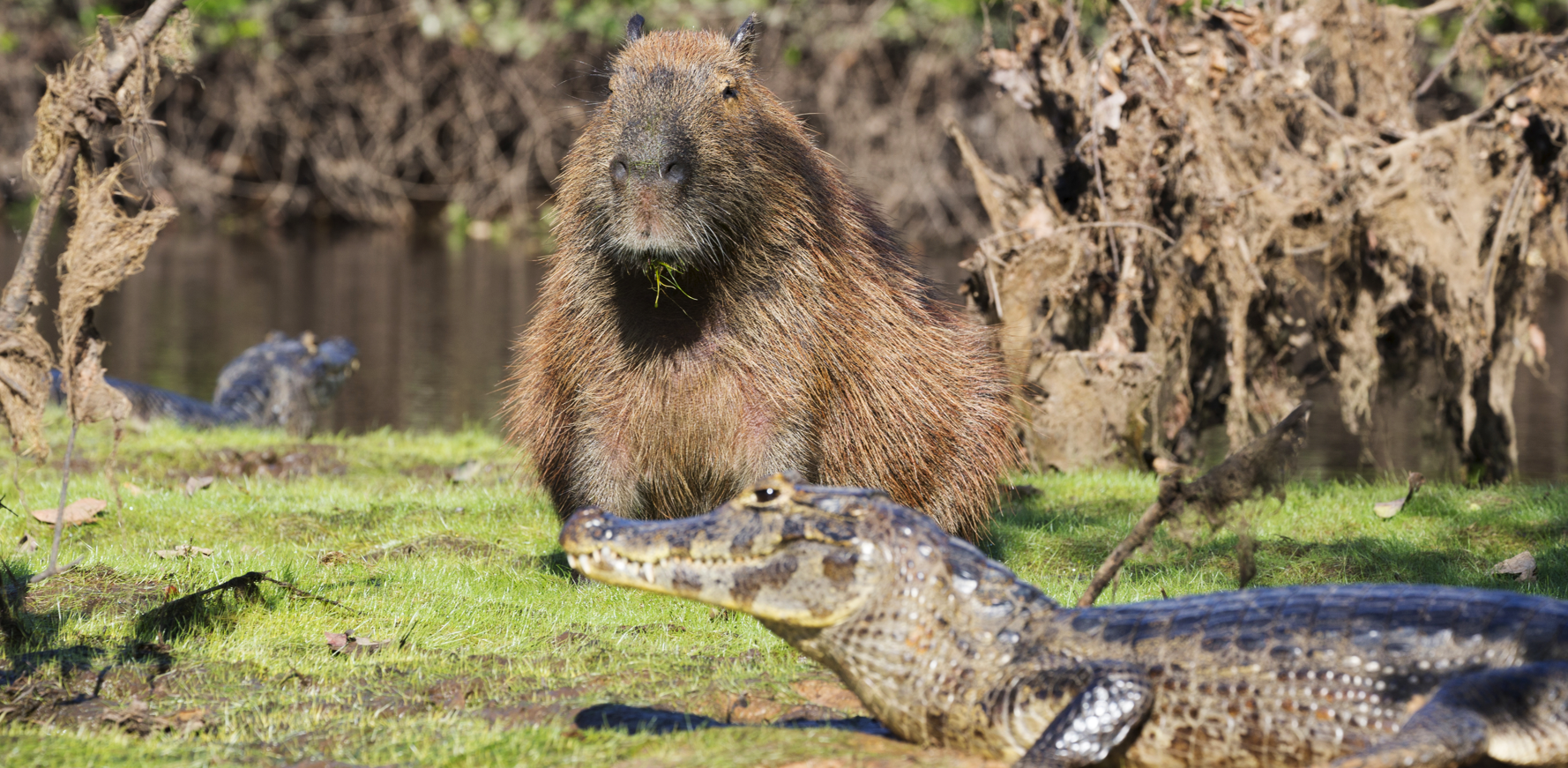
Many people are surprised that capybaras and crocodiles can live close together. Sometimes, you can even see them sunbathing on the same riverbank. This happens because hunting is risky for both sides. Crocodiles save energy for the best chances, and capybaras use teamwork and water skills to stay safe.
Here’s a simple comparison of their behaviors:
| Behavior | Capybara | Crocodile |
|---|---|---|
| Preferred Habitat | Rivers, lakes, marshes | Rivers, lakes, marshes |
| Group Size | 10–20, sometimes 100+ | Solitary or small groups |
| Defensive Action | Run, swim, alert calls | Attack by ambush |
Non-obvious Insights
Many beginners believe that crocodiles will always attack capybaras on sight. In reality, both animals balance risk and reward. Crocodiles do not want to waste energy on a difficult hunt, and capybaras are alert and ready to escape. This is why you sometimes see both animals together in the wild, sharing the same riverbank peacefully.
Another detail is that capybaras can live up to 10 years in the wild, even with predators around. This shows how effective their group defense and water skills are.
What Can Humans Learn?
Watching how crocodiles and capybaras interact teaches us about balance in nature. Predators and prey do not always fight. Sometimes, survival means knowing when to avoid conflict. It’s a lesson about respecting the boundaries of others and working together for safety.
If you want to see these animals in action, documentaries from South America’s wetlands show real-life examples. For more scientific details, the Wikipedia page on Capybaras is a good resource.

Credit: www.reddit.com
Frequently Asked Questions
Do Crocodiles Eat Adult Capybaras Or Just The Young Ones?
Crocodiles can eat both adult and young capybaras. However, young capybaras are smaller and easier to catch. Adults are more cautious and strong, making them harder targets.
Can Capybaras Fight Back Against Crocodiles?
Capybaras do not fight back directly. Instead, they escape by jumping into water, swimming away, or hiding. Their main defense is speed and teamwork.
Are There Places Where Capybaras And Crocodiles Always Live Together?
Yes, in the Pantanal and other wetlands of South America, both animals share the same habitat. They may be seen together, but attacks are not constant.
How Often Do Crocodiles Eat Capybaras?
Studies show that capybaras make up about 10% of some caiman diets. Crocodiles eat them when they are available, but fish and birds are more common food.
Do Crocodiles Hunt In Groups Like Capybaras Live In Groups?
No, crocodiles hunt alone. Capybaras live in groups for safety, but crocodiles prefer to hunt by themselves and use ambush tactics.
Capybaras and crocodiles show us how animals can live side by side, even when one is a predator and the other is prey. While a crocodile will eat a capybara if the chance comes, it is not as common or as simple as many people think.
In nature, every animal has its own way to survive.


