

Are Beavers Related To Capybaras?
When you see a beaver swimming in a river or a capybara relaxing near a pond, you might wonder if these large, brown mammals are related. They both love water, have strong teeth, and are famous for their unique lifestyles. But are beavers and capybaras family members, or just distant cousins in the animal world? Let’s dive deep into their origins, differences, and surprising connections. You’ll discover facts most people miss and get clear answers based on science.
Understanding Beavers And Capybaras
First, let’s look at what makes each animal unique.
Beavers
Beavers are famous for building dams and lodges. They live in North America and parts of Europe and Asia. Beavers are about 1 meter long, weigh up to 32 kg, and have a wide, flat tail. Their sharp teeth help them cut wood for their homes. Beavers are mostly active at night and spend much of their time in water.
Capybaras
Capybaras are the world’s largest rodents. They live in South America, especially near rivers and lakes. Capybaras can grow over 1.3 meters long and weigh up to 70 kg. They have webbed feet, short tails, and social lives—often found in groups of 10 or more. Capybaras are gentle, calm, and spend lots of time swimming or resting in shallow water.
Scientific Classification: Are They Related?
To answer the main question, we need to look at their scientific classification.
| Animal | Family | Order | Genus |
|---|---|---|---|
| Beaver | Castoridae | Rodentia | Castor |
| Capybara | Caviidae | Rodentia | Hydrochoerus |
Both animals belong to the order Rodentia, which means they are rodents. This is their main connection. However, they are in different families and different genera. Beavers are in Castoridae, while capybaras are in Caviidae. So, they are not closely related, but they do share a distant rodent ancestor.
Comparing Physical Features
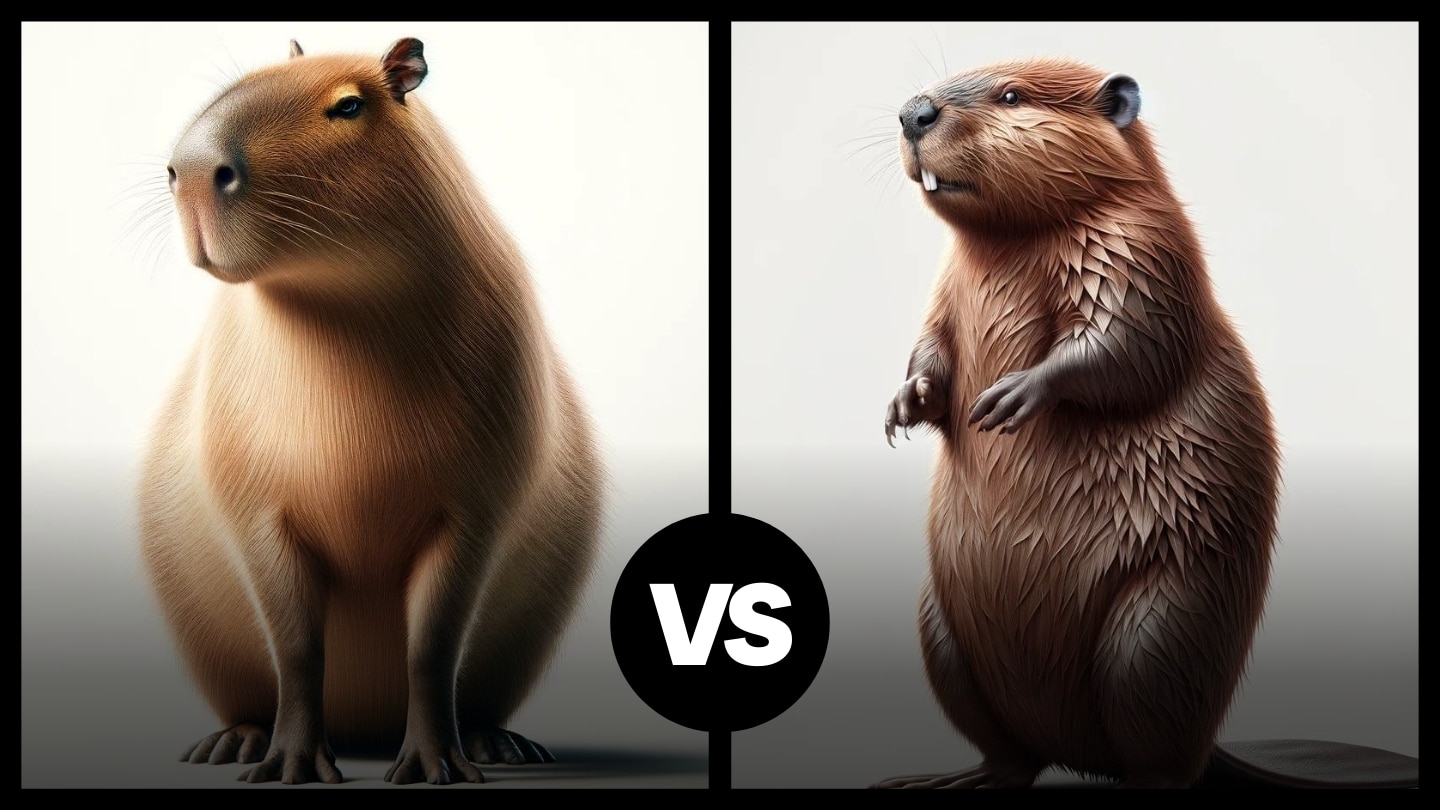
It’s easy to confuse them because of their size and love of water, but their bodies are quite different.
| Feature | Beaver | Capybara |
|---|---|---|
| Tail | Wide, flat, paddle-shaped | Small, stubby |
| Feet | Webbed | Webbed |
| Body Shape | Stocky, compact | Long, rounded |
| Teeth | Sharp, orange-colored incisors | Sharp incisors, not orange |
| Size | Up to 32 kg | Up to 70 kg |
Both have webbed feet for swimming. But the beaver’s tail is flat and wide, used for balance and warning signals. Capybaras have a tiny tail you barely notice. Beavers are smaller and more muscular, while capybaras are larger and have a more rounded shape.
Habitat And Lifestyle Differences
Where and how they live shows even more differences.
Beavers
- Found in forests and rivers of North America, Europe, and Asia
- Build dams and lodges from sticks and mud
- Create ponds for protection and food
- Live in pairs or small families
Capybaras
- Found in South American wetlands, savannas, and rainforests
- Do not build homes, but hide in tall grass and water
- Eat grasses, fruits, and aquatic plants
- Live in large groups for safety
Beavers change their environment, making new ponds and waterways. Capybaras use natural water sources and prefer open spaces. This difference is important for their survival and behavior.
Credit: capybaramag.com
Evolution And Genetic Links
Although they share the rodent order, their families split millions of years ago.
| Timeline | Beaver Ancestors | Capybara Ancestors |
|---|---|---|
| 50 million years ago | Early rodents | Early rodents |
| 20 million years ago | Castoridae branch forms | Caviidae branch forms |
| Present | Modern beavers | Modern capybaras |
Their shared ancestor is far back in time. Beavers and capybaras evolved separately, adapting to different climates and lifestyles. This is why their behaviors and appearances are so unique.
Non-obvious Insights
Many people assume similar animals must be closely related, but nature is full of surprises.
- Convergent evolution: Both beavers and capybaras developed webbed feet and swimming skills, but not because they are close relatives. Instead, their environments pushed them to adapt in similar ways. This is called convergent evolution.
- Social behavior differences: Beavers are builders and live in small groups. Capybaras are not builders but are highly social, living in large groups. This social difference is linked to their survival strategy—capybaras rely on group safety, while beavers rely on their engineering skills.
Beavers Vs. Capybaras: Other Common Questions
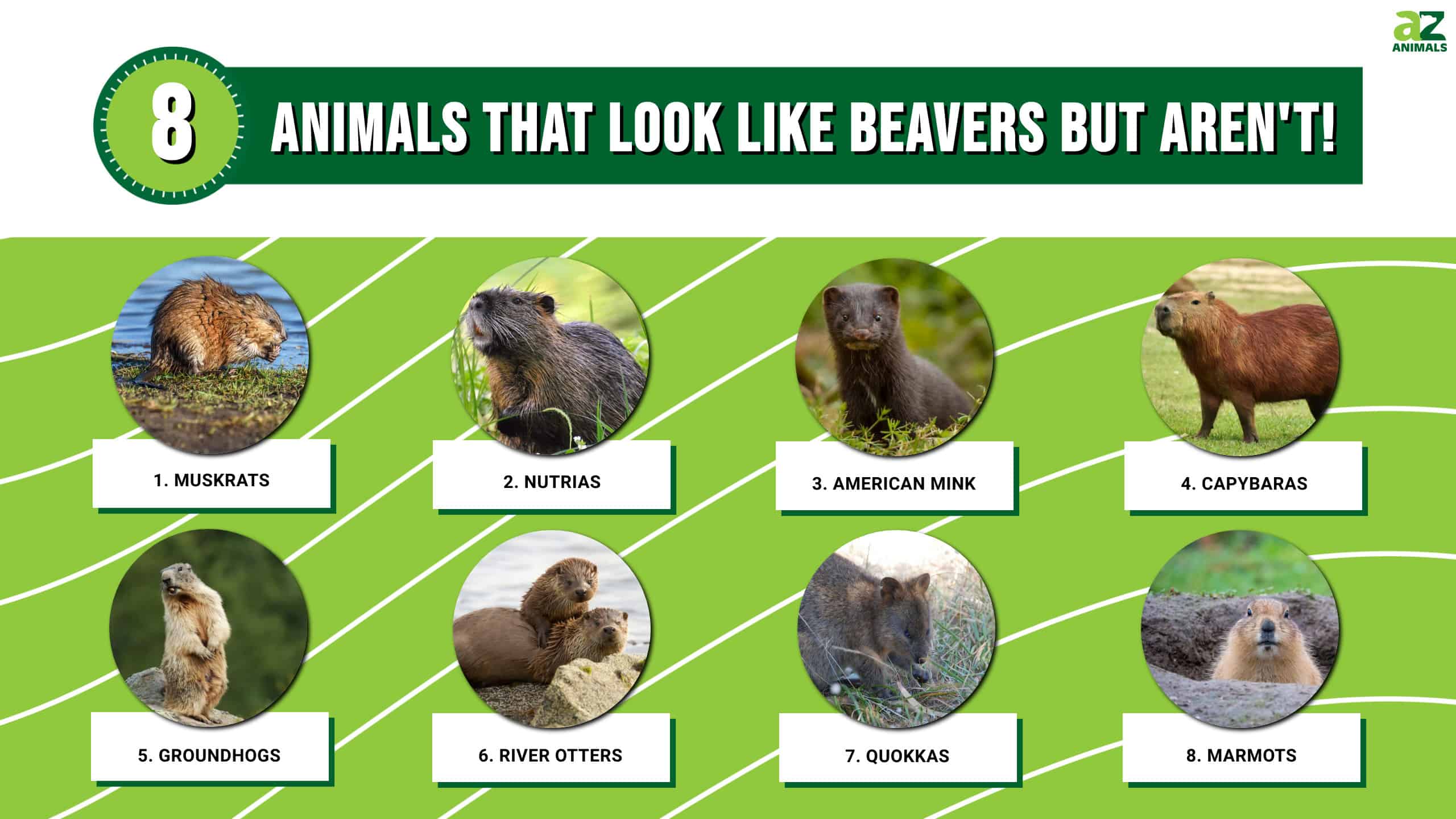
Some beginners confuse beavers and capybaras with nutria or muskrats. Nutria (also called coypu) are another water-loving rodent found in South America and introduced to North America. Muskrats are smaller and live in North America. Both are more closely related to capybaras than to beavers, but all three are in different families.
Why People Think Beavers And Capybaras Are Related
Their similar size, color, and water habits make people think they are cousins. But the real reason is their rodent teeth and love for water. Just remember, sharing a habit doesn’t mean sharing a family. They are distant relatives, not close family.
Credit: a-z-animals.com
Real-world Examples
If you visit a zoo, you might see both animals in separate enclosures. Beavers will have wood and a pond. Capybaras will have grass, mud, and water. In the wild, you’ll only find beavers in the north and capybaras in the south.
No country has both animals living together in the wild.
For more scientific details, you can check Wikipedia.
Frequently Asked Questions
Are Beavers And Capybaras Both Rodents?
Yes, both animals are rodents. They belong to the order Rodentia, but are from different families.
Can Beavers And Capybaras Live Together?
No, they live in different parts of the world. Beavers are found in the north, capybaras in the south. They also need different habitats.
Do Beavers And Capybaras Eat The Same Food?
Not exactly. Beavers eat wood, bark, and leaves. Capybaras eat grass, fruits, and aquatic plants.
Are Capybaras Larger Than Beavers?
Yes, capybaras are the world’s largest rodents and can weigh over 70 kg. Beavers are smaller, up to 32 kg.
Why Do Both Animals Like Water?
Water gives them safety from predators and easy access to food. Their webbed feet and swimming abilities are adaptations to their environment, not proof they are close relatives.

Credit: www.reddit.com
Final Thoughts
Beavers and capybaras are not closely related, but they share a distant rodent ancestor. Their similar features are the result of adaptation, not family ties. Understanding their differences helps you appreciate the diversity of life. Next time you see one, you’ll know exactly what makes each animal special.


