

Capybaras are the world’s largest rodents. They are gentle, social animals found mainly in South America. People often ask: Are capybara going extinct? This question matters because capybaras are important for the ecosystem and are loved by many. If you want to know about their survival, threats, and future, keep reading. This article explains everything you need to know in clear, simple English.
Capybara Population And Distribution
Capybaras live in many countries including Brazil, Venezuela, Colombia, and Argentina. They prefer areas with water like rivers, lakes, and marshes. These rodents are very adaptable and can survive in forests, savannas, and even farmland.
Current estimates show that capybaras are not rare. In fact, their population is stable and sometimes even growing in certain places. For example, Brazil alone has millions of capybaras. In Venezuela, they are also common near wetlands.
Here is a comparison of capybara population status in different countries:
| Country | Estimated Population | Status |
|---|---|---|
| Brazil | Millions | Stable |
| Venezuela | Hundreds of thousands | Stable |
| Argentina | Unknown | Stable |
| Colombia | Unknown | Stable |
You can see that capybara populations are not dropping rapidly. This is a key reason why they are not considered endangered.
Conservation Status
The International Union for Conservation of Nature (IUCN) lists capybaras as “Least Concern.” This means capybaras are not threatened or at risk of extinction. Their numbers are healthy and they are not facing serious danger.
Why Are Capybaras Not Endangered?
- They reproduce quickly. Female capybaras can have up to 8 babies at a time.
- They eat many kinds of plants, so food is easy to find.
- They live in groups, which helps protect them from predators.
Here is a comparison of conservation status among similar animals:
| Animal | Conservation Status | Population Trend |
|---|---|---|
| Capybara | Least Concern | Stable |
| Beaver | Least Concern | Stable |
| Nutria | Least Concern | Increasing |
| Agouti | Least Concern | Stable |
This table shows that capybaras are similar to other rodents in their conservation status.

Credit: www.rainforest-alliance.org
Threats To Capybara Survival
Even though capybaras are not going extinct, they do face some risks. The main threats are:
- Habitat loss: Deforestation and farming reduce wetlands and forests.
- Hunting: In some countries, people hunt capybaras for meat and skin.
- Climate change: Changes in rainfall and temperature can affect their habitats.
- Road accidents: Capybaras often cross roads and get hit by vehicles.
Some threats are more serious in certain areas. For example, hunting is more common in Venezuela during Easter, where capybara meat is popular. In urban areas, road accidents are a growing problem as cities expand into capybara habitats.
A non-obvious insight is that capybaras are sometimes seen as pests by farmers. They eat crops and can damage fields, leading to conflicts. However, many farmers are now finding ways to protect their crops without harming capybaras.
Capybara Conservation Efforts
Many countries have laws to protect capybaras. In Brazil, hunting capybaras is only allowed under strict regulations. In Argentina, local groups monitor capybara populations and protect wetlands.
Some key conservation strategies include:
- Wetland protection: Keeping rivers and lakes clean helps capybaras and other animals.
- Regulated hunting: Allowing hunting only during certain times prevents over-hunting.
- Education: Teaching people about capybaras helps reduce unnecessary killing.
Another interesting point: Capybaras adapt well to changed environments. In some cities, capybaras live peacefully in parks and are even enjoyed by the public. This shows their resilience and ability to survive near humans, unlike some wild animals.

Credit: worldrainforests.com
Capybara Role In The Ecosystem
Capybaras are more than just cute animals. They are important for their ecosystem. Here’s how:
- Food source: Capybaras are prey for animals like jaguars, caimans, and eagles.
- Plant control: By eating grass and plants, they help keep wetlands healthy.
- Seed dispersal: Capybaras spread seeds through their droppings, helping plants grow.
If capybaras disappeared, other animals would suffer. Wetlands might grow wild, and some predators would lose their food.
Are Capybaras Going Extinct?
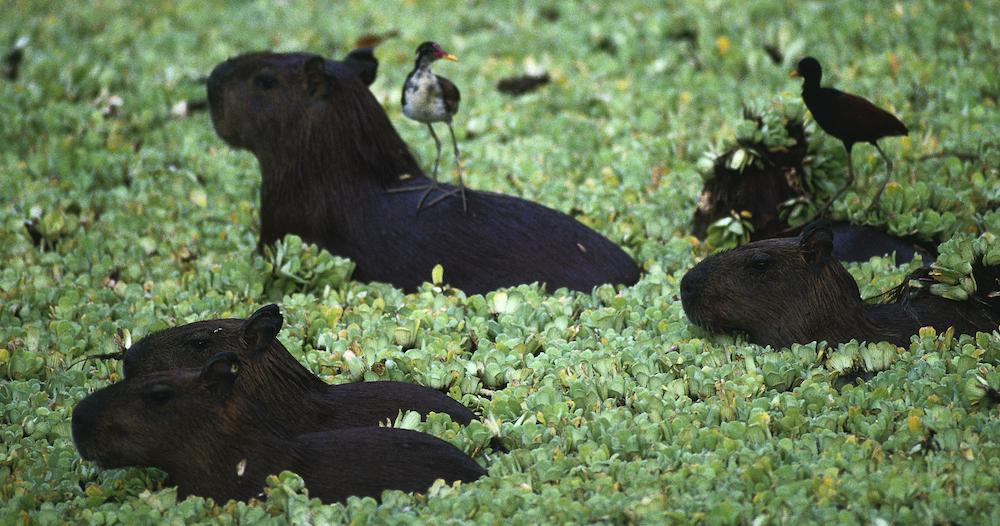
After looking at the facts, capybaras are not going extinct. Their population is stable, and they are listed as “Least Concern.” They face threats like habitat loss and hunting, but these are not severe enough to wipe them out. Capybaras are strong, adaptable animals. As long as wetlands are protected and hunting is controlled, they will survive.
If you want official information, you can check the Wikipedia page on capybaras for more details.
Credit: www.greenmatters.com
Frequently Asked Questions
Are Capybaras Endangered?
No, capybaras are listed as “Least Concern” by the IUCN. Their population is healthy and stable.
What Is The Biggest Threat To Capybaras?
The main threats are habitat loss, hunting, and road accidents. These dangers are serious in some regions, but not enough to cause extinction.
How Many Capybaras Are Left In The Wild?
There are millions of capybaras in South America, especially in Brazil and Venezuela. Exact numbers are hard to know, but they are not rare.
Can Capybaras Be Kept As Pets?
Some people keep capybaras as pets, but they need a lot of space, water, and social interaction. Keeping them is not legal everywhere.
What Do Capybaras Eat?
Capybaras mainly eat grass, aquatic plants, and sometimes fruits. They are herbivores.
Capybaras are fascinating animals with a strong future. They are not going extinct, but they need protection to stay safe. By understanding their role and threats, people can help keep capybaras thriving for years to come.


