

Capybaras are often called the “gentle giants” of the rodent world. Their calm nature, social behavior, and unusual love for water have made them popular not only in their native South America but also in zoos and on social media worldwide. But one question frequently comes up: Are capybaras amphibious? This question may sound simple, but the answer reveals much about these unique animals, their biology, and their fascinating relationship with water.
What Does Amphibious Mean?
Before deciding if capybaras are amphibious, it is important to clarify what the word amphibious means. In biology, amphibious animals can live both on land and in water. They are not the same as amphibians like frogs, which have a life cycle that often includes both water and land stages. Instead, amphibious animals are able to function well in both environments but do not necessarily need both to survive.
Capybara’s Relationship With Water
Capybaras are native to the wetlands, rivers, and flooded savannas of South America. Their bodies and behavior are highly adapted for a life where water plays a central role.
Physical Adaptations
Capybaras have several physical features that make them suited for water:
- Webbed feet: Their toes are partially webbed, which helps them paddle smoothly.
- Eyes, ears, and nose on top of the head: This allows them to breathe, see, and hear while the rest of their body is underwater.
- Dense fur and oily skin: These keep them warm and help water run off their bodies quickly.
Behavior In Water
It is common to see capybaras lounging in ponds or rivers, especially during the hottest parts of the day. Water helps them cool off, escape from predators, and even sleep—they can nap while floating. Young capybaras learn to swim within a few days of birth. In fact, capybaras can hold their breath underwater for up to five minutes.

Credit: www.alamy.com
Are Capybaras True Amphibious Animals?
This is where some confusion can arise. Capybaras are not amphibians, but are they amphibious? The answer is yes, in the sense that they are highly adapted to both water and land environments. However, there are important details that set them apart from other classic amphibious animals.
How Capybaras Compare To Other Amphibious Animals
Here’s a comparison of capybaras with two other well-known amphibious mammals: beavers and otters.
| Animal | Main Habitat | Water Skills | Land Skills |
|---|---|---|---|
| Capybara | Wetlands, rivers | Excellent swimmer, can stay underwater | Good walker, grazes on land |
| Beaver | Lakes, streams | Expert builder, strong swimmer | Can move on land, but slow |
| Otter | Rivers, coasts | Fast swimmer, playful in water | Active on land, but prefers water |
Capybaras are more at home in water than on land but use both environments daily. They can even escape predators such as jaguars and caimans by diving into water and hiding.
How Capybaras Use Water In Daily Life
Water is not just a place for capybaras to cool off. It plays many roles in their daily routine:
- Safety: Capybaras use water to escape from threats. They are skilled at diving and hiding, with only their noses above the surface.
- Social life: Groups of capybaras, sometimes as large as 40, will gather in and around water. Bathing together helps build group bonds.
- Food and health: Water plants make up a big part of their diet, and water helps them digest tough grasses.
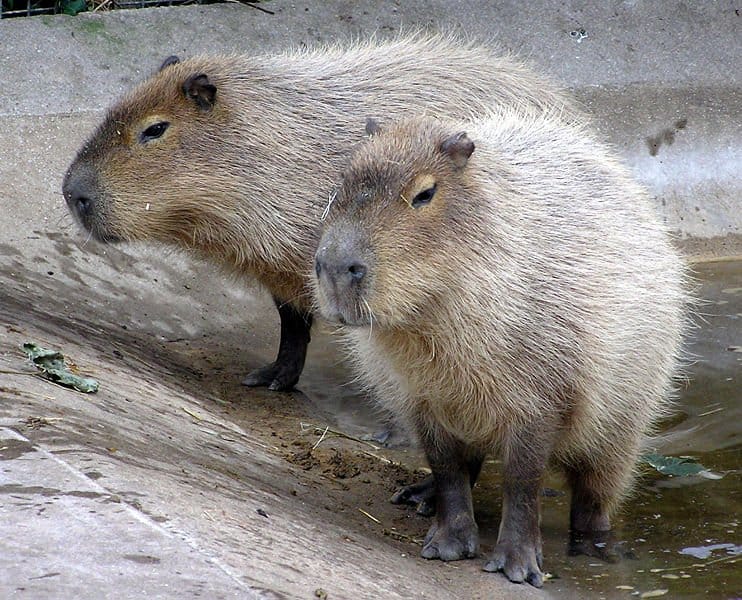
Credit: a-z-animals.com
Capybara Life On Land
Even though water is important, capybaras also spend much time on land:
- Grazing: They eat grasses and plants, moving slowly across open fields.
- Resting: Capybaras sleep on dry ground, sometimes under bushes or trees for shade.
- Reproduction: Mating often happens in water, but giving birth is done on land.
This balance between land and water is a key part of being amphibious.
Notable Capybara Abilities In Water
Some abilities make capybaras stand out compared to other large rodents.
| Ability | Capybara | Guinea Pig | Muskrat |
|---|---|---|---|
| Swimming | Strong, webbed feet | Poor, cannot swim well | Good, but less powerful |
| Diving | Holds breath 5 mins | Cannot dive | Short dives |
| Living in groups | Large, social | Small, family groups | Small groups |
Capybaras are the only large rodents that are truly comfortable in the water for long periods.

Credit: a-z-animals.com
Surprising Insights About Capybara Amphibious Life
Most people know capybaras like water, but here are a few facts that are less obvious:
- Capybaras have special muscles in their nostrils that close tightly when underwater, stopping water from entering.
- Their skin produces natural oils that help protect against infections from standing in water so much.
- In the wild, capybaras will often sleep with their noses just above the water surface, making them hard to spot by predators.
- Capybaras need water to survive in the wild. If kept as pets, lack of water can cause serious stress and health problems.
Common Misunderstandings
Some people mix up amphibious and amphibian. Capybaras are mammals, not frogs or salamanders. They do not need to lay eggs in water. Their young are born fully formed and can follow their mother into the water within hours.
Another mistake is thinking capybaras can live without land. They need both water and dry space to stay healthy. In zoos or as pets, capybaras must have access to a pool or pond and enough land to roam and graze.
Why Water Matters For Capybara Conservation
Capybaras are not endangered, but their populations can be at risk if their wetland habitats are destroyed. They depend on healthy rivers and marshes. Conservation groups work to protect wetlands, which helps not only capybaras but also many other species.
If you want to learn more, the Wikipedia entry on capybaras has more details and references.
Frequently Asked Questions
Are Capybaras Amphibians?
No, capybaras are mammals. Amphibians are animals like frogs and salamanders. Capybaras do not lay eggs or have gills. They give birth to live young and have fur.
Can Capybaras Live Only On Land?
Capybaras can survive on land for some time, but water is essential for their health and happiness. Without water, they can become stressed, overheat, and develop skin problems.
How Long Can A Capybara Stay Underwater?
A capybara can hold its breath underwater for up to five minutes. This helps them hide from predators and stay cool in hot weather.
Do Capybaras Sleep In Water?
Capybaras often rest or nap while floating in water, but they usually sleep on land, especially at night. In the wild, they sometimes doze with only their noses above water to stay safe.
What Do Capybaras Eat In Water?
Capybaras eat many plants found in and around water, such as reeds, water lilies, and grasses. They also eat land plants, so their diet is quite varied.
Capybaras are wonderful examples of how mammals can adapt to both land and water. They are not amphibians, but they are truly amphibious in their habits and needs. Their love for water is not just a cute quirk—it is a vital part of what makes them so unique.
If you ever see a capybara lounging in a pond, you are watching one of nature’s best-adapted swimmers in action.


