

Are Capybaras Guinea Pigs
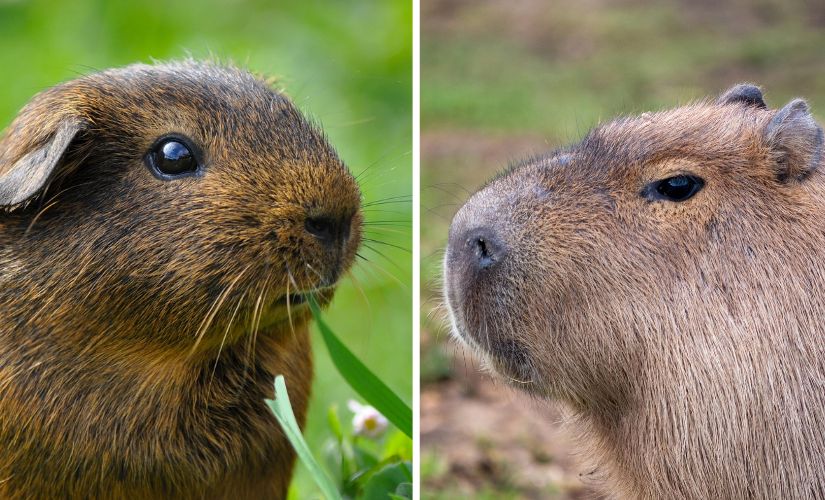
Curiosity about animals often leads to surprising questions. One question people ask is, “Are capybaras guinea pigs? ” At first glance, these two animals look alike. They both have round faces, short legs, and gentle eyes. But are they actually the same animal, or even close relatives?
Understanding their differences and similarities is important for animal lovers, pet owners, and anyone interested in nature.
Let’s explore the facts behind capybaras and guinea pigs. We’ll look at their biology, behavior, habitats, and why people often confuse them. By the end, you’ll know exactly how these animals relate to each other—and why mixing them up is more common than you might think.
What Are Capybaras?
Capybaras are the largest rodents in the world. An adult capybara can weigh between 35 to 66 kg (77 to 146 lbs) and can be over 1 meter (3.3 feet) long. They are native to South America and live near rivers, lakes, and swamps. Capybaras are social animals, often seen in groups of 10-20. They spend much of their time in the water to stay cool and avoid predators.
Capybaras eat mainly grass and aquatic plants. Their teeth grow constantly, so they need to chew on tough plants to keep them short. These animals can live up to 8-10 years in the wild.
What Are Guinea Pigs?
Guinea pigs, also called cavies, are much smaller rodents. An adult guinea pig usually weighs around 0.7 to 1.2 kg (1.5 to 2.6 lbs) and measures about 25 to 35 cm (10 to 14 inches) long. They also come from South America and were first domesticated by the Inca people over 3,000 years ago.
Guinea pigs are popular pets around the world. They live in groups and communicate with a variety of sounds. Their diet includes hay, vegetables, and special guinea pig pellets. Most guinea pigs live 5-7 years as pets.
Key Differences Between Capybaras And Guinea Pigs
People often confuse capybaras and guinea pigs because they share some physical traits. However, they are different in many ways. The table below highlights the main differences:
| Feature | Capybara | Guinea Pig |
|---|---|---|
| Average Weight | 35-66 kg (77-146 lbs) | 0.7-1.2 kg (1.5-2.6 lbs) |
| Length | 100-130 cm (3.3-4.2 ft) | 25-35 cm (10-14 in) |
| Lifespan | 8-10 years | 5-7 years |
| Habitat | Wetlands, rivers | Grasslands, domesticated |
| Swimming Ability | Excellent swimmer | Cannot swim well |
One non-obvious insight is that capybaras have webbed feet, which help them swim, while guinea pigs do not.
Similarities: Why People Get Confused
Both animals are rodents and share a herbivorous diet. They have similar-shaped faces, short ears, and no tails. They also use a wide range of sounds to communicate with their groups.
However, the biggest reason for confusion is that both belong to the Caviidae family. This makes them cousins, but not the same species. In fact, capybaras and guinea pigs split from a common ancestor millions of years ago.
Scientific Classification
To understand how closely related capybaras and guinea pigs are, it helps to look at their scientific classification:
| Classification | Capybara | Guinea Pig |
|---|---|---|
| Family | Caviidae | Caviidae |
| Genus | Hydrochoerus | Cavia |
| Species | H. hydrochaeris | C. porcellus |
So, while both are caviids, they are not the same genus. This difference is as big as the gap between dogs and foxes.
Capybara Vs. Guinea Pig: Behavior And Social Life
Capybaras are highly social and rarely live alone in the wild. They form large groups and have complex social structures. They even let birds sit on their backs and will share their food with other animals.
Guinea pigs also enjoy company, but their groups are smaller. They are prey animals and are quick to hide when they sense danger. Both capybaras and guinea pigs “talk” to each other with different sounds, but capybaras make deeper, more rumbling noises.
One thing beginners miss is that capybaras are semi-aquatic, meaning they spend much of their life in water, while guinea pigs avoid water.

Credit: www.reddit.com
Can You Keep Capybaras And Guinea Pigs As Pets?
Guinea pigs are common household pets. They need a cage, fresh food, clean water, and plenty of hay. They are easy to handle and rarely bite.
Capybaras, in contrast, are exotic pets. They need a large outdoor space with a swimming area. In some places, you need a special license to own a capybara. Their care is much more complex and expensive.
Here’s a quick comparison:
| Pet Factor | Capybara | Guinea Pig |
|---|---|---|
| Space Needed | Large yard with pool | Cage or indoor pen |
| Legal Restrictions | Often regulated | Rarely restricted |
| Cost | High (food, vet, space) | Low to moderate |
| Social Needs | Needs companions | Needs companions |
If you want a pet similar to a capybara but smaller and easier to care for, a guinea pig is a better choice for most people.
Non-obvious Insights
- Capybaras can hold their breath underwater for up to five minutes—a skill guinea pigs completely lack.
- Guinea pigs have been selectively bred for thousands of years, leading to many breeds and colors, while capybaras remain much closer to their wild ancestors.
Credit: spca.bc.ca
Final Thoughts
So, are capybaras guinea pigs? The answer is no, but they are distant cousins. They share the same rodent family but belong to different genera and species. Their size, habitat, behavior, and care needs are very different. It’s easy to see why people mix them up, but understanding their differences helps us appreciate both animals more.
If you’re thinking about a new pet, guinea pigs are the safer and easier choice. Capybaras, while fascinating, require a special environment and commitment. If you want to learn more about capybaras and their family, visit the Wikipedia page on capybaras for more details.
Frequently Asked Questions
Are Capybaras And Guinea Pigs Related?
Yes, they are both rodents in the Caviidae family, but they belong to different genera. This means they are distant relatives, not the same animal.
Can Capybaras And Guinea Pigs Live Together?
It’s not recommended. Capybaras are much larger and need very different environments, including water. Mixing them can cause stress or injury to guinea pigs.
Which One Makes A Better Pet?
For most people, guinea pigs are better pets. They are smaller, easier to care for, and don’t need special permits or pools.
Do Capybaras And Guinea Pigs Eat The Same Food?
Both eat mostly plants, but their diets are not identical. Capybaras need more variety in grasses and aquatic plants, while guinea pigs need vitamin C and more hay.
Why Do People Confuse Capybaras And Guinea Pigs?
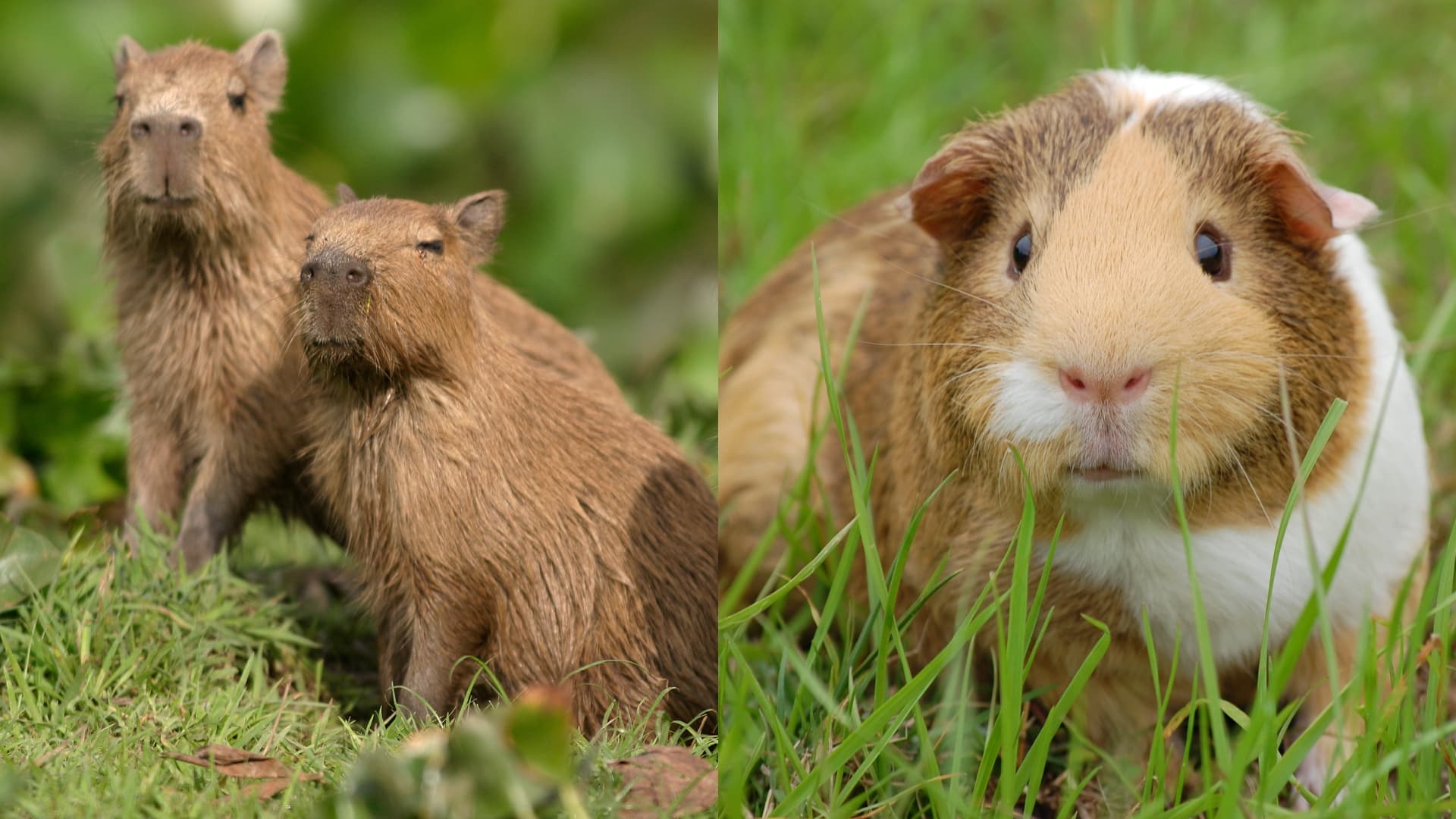
Their similar faces, social behavior, and shared rodent family make them easy to mix up. However, their size, habitat, and lifestyle are very different.
Credit: capybaramag.com


