

Alligators and capybaras belong to two very different worlds, yet sometimes their lives cross in the wild. Many people wonder if alligators attack capybaras, or if these large rodents are safe from one of nature’s most powerful predators. The answer is not as simple as it may appear.
Understanding the relationship between these two animals can help us see how nature works, and what dangers capybaras face in their natural habitat.
Where Do Alligators And Capybaras Live?
Alligators are mainly found in the southeastern United States, especially in Florida and Louisiana. They like freshwater places such as swamps, rivers, lakes, and marshes. On the other hand, capybaras are native to South America. They live in countries like Brazil, Venezuela, and Colombia. Capybaras also prefer wetlands, such as riverbanks, marshes, and ponds.
Because of this, their habitats do not usually overlap. Capybaras are not native to North America, and wild alligators are not found in South America. However, there are some places—like zoos or private reserves—where both may live in the same area. In South America, other crocodilian species, like caimans, share the same rivers as capybaras. Still, the question remains: if an alligator and a capybara shared the same space, would an attack happen?
Do Alligators Naturally Prey On Capybaras?
In the wild, alligators do not normally meet capybaras, so attacks are very rare or do not happen at all in nature. But the situation is different in zoos or private collections where both may be kept together. Alligators are carnivorous predators and will attack animals they see as food. Capybaras, being large rodents, might be seen as prey, especially if they are smaller or weaker.
In South America, capybaras face a similar risk from caimans, which are close relatives of alligators. Caimans have been known to attack and eat capybaras, especially young or sick ones. This gives us a clue about what might happen if alligators and capybaras lived together.

Credit: www.reddit.com
Capybaras’ Natural Defenses
Capybaras are not defenseless. They have several ways to protect themselves:
- Swimming ability: Capybaras are excellent swimmers. They can dive underwater and stay there for up to five minutes. This skill helps them escape from predators.
- Herd behavior: Capybaras usually stay in groups of 10–20. More eyes mean more chances to spot danger early.
- Vigilance: Capybaras are always alert. They can sense movement and quickly run to water if threatened.
Even with these defenses, young or weak capybaras are often preyed upon. If an alligator is hungry and a capybara is within reach, the capybara can be at risk.
Comparing Alligators And Capybaras
Looking at their size, behavior, and lifestyle can help explain why attacks might happen. The table below compares key features:
| Feature | Alligator | Capybara |
|---|---|---|
| Average Size | 3–4 meters (10–13 ft) | 1.2 meters (4 ft) |
| Weight | 230 kg (500 lbs) | 50 kg (110 lbs) |
| Diet | Carnivore | Herbivore |
| Habitat | Freshwater swamps, rivers, lakes | Wetlands, riverbanks |
| Predators | Humans | Jaguars, caimans, anacondas |
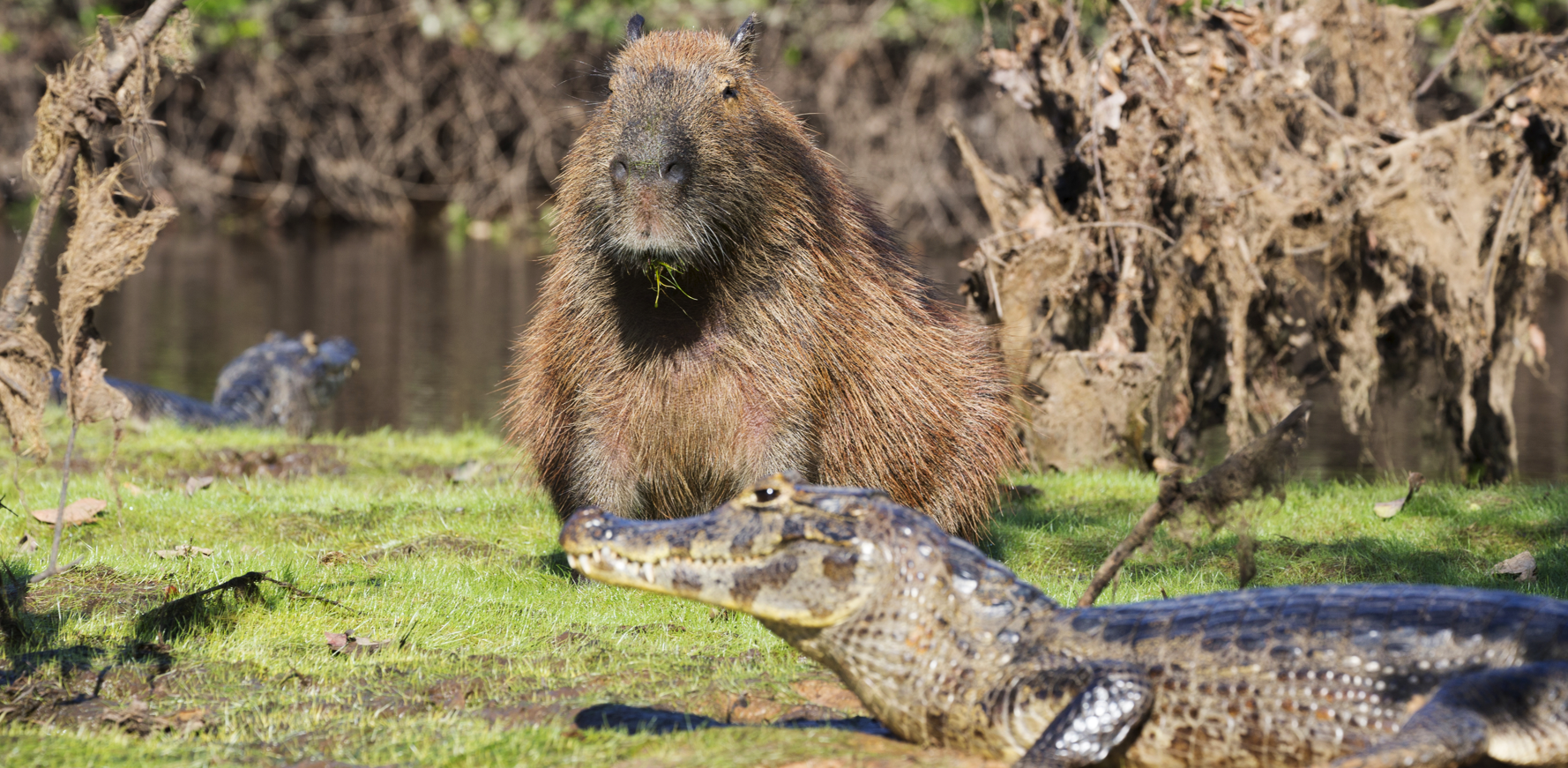
Credit: www.iflscience.com
What Triggers An Attack?
Attacks do not happen for no reason. There are specific triggers:
- Hunger: Alligators hunt when they are hungry. If food is scarce, they may attack larger animals.
- Opportunism: Alligators are opportunistic. If a capybara is alone, sick, or young, it is more likely to be targeted.
- Territorial behavior: Sometimes, alligators attack to defend their space.
It is important to note that healthy, adult capybaras in a group are less likely to be attacked compared to young or isolated individuals.
Real-world Encounters: What Happens?
In the wild, South American caimans hunt capybaras, especially during the dry season when water levels are low. A study in Brazil found that caimans often wait near water edges for capybaras to drink or swim. Attacks are usually quick, with the predator dragging the prey into the water.
In rare cases where alligators and capybaras share an enclosure (such as a zoo), keepers must watch their behavior closely. If the alligator is well-fed and the animals have enough space, attacks are less common. However, accidents can still occur.
Here’s a look at observed attack rates in captivity:
| Enclosure Type | Attack Rate (%) | Notes |
|---|---|---|
| Mixed-species (zoo) | 5–10% | Mostly on young capybaras |
| Wild (South America, caimans) | 15–20% | Seasonal variation |
Non-obvious Insights Most People Miss
First, many think size protects capybaras, but a full-grown alligator can easily overpower even a large capybara. Group behavior helps, but it is not a guarantee of safety.
Second, attacks are not always successful. Capybaras are fast swimmers, and sometimes escape. But even a failed attack can cause injuries, stress, or separation from the group, which can be deadly later.
Human Impact And Changes
Sometimes people introduce capybaras to places where alligators live, such as private lakes or exotic animal collections. This creates a risk that does not exist in the wild. If you are a keeper, never house alligators and capybaras together without strong barriers.
Also, human activity can change how often these species meet. Habitat loss pushes animals into smaller areas, making dangerous encounters more likely.
How To Protect Capybaras
If you work in animal care or run a reserve:
- Keep alligators and capybaras in separate enclosures.
- Provide hiding places and escape routes for capybaras.
- Monitor animals for signs of stress or injury.
- Feed predators well to reduce hunting behavior.
These steps lower the risk of attacks and keep both animals safe.
Summary
To answer the question: Do alligators attack capybaras? In nature, this is extremely rare because their habitats do not overlap. However, in zoos or artificial environments, attacks can happen, especially if conditions make capybaras easy targets. Most wild capybaras face more danger from caimans, which are similar to alligators. Understanding their behaviors and needs is key to keeping both species safe.
For more details on alligator and capybara behavior, you can read about their interactions at Wikipedia.

Credit: capybaramag.com
Frequently Asked Questions
Do Alligators And Capybaras Ever Live Together In The Wild?
No, they do not. Alligators live in North America, while capybaras are native to South America. In nature, their paths do not cross.
Can A Capybara Defend Itself From An Alligator?
Capybaras rely on swimming and group alerts to escape, but they do not have strong ways to fight off a large predator like an alligator.
Are Capybaras Eaten By Other Reptiles?
Yes, in South America, caimans—close relatives of alligators—often hunt and eat capybaras, especially young or weak ones.
Is It Safe To Keep Alligators And Capybaras In The Same Enclosure?
No, it is risky. Even with careful management, an attack can happen. It is best to keep them separate.
What Other Predators Hunt Capybaras?
Besides caimans, jaguars, anacondas, and sometimes large birds of prey will hunt capybaras, especially the young.
Understanding these animals helps us appreciate the balance of nature and the dangers that prey animals face every day.


