

Capybaras are often called the world’s largest rodents, but their peaceful nature and social lifestyle make them unique among mammals. If you’re curious about these fascinating creatures, one common question you might have is: what is the lifespan of a capybara? The answer depends on several factors such as their environment, diet, genetics, and how they are cared for. Understanding their lifespan is important for anyone considering a capybara as a pet, for zoos, or for wildlife enthusiasts interested in their natural history.
Capybara Lifespan In The Wild
In their natural habitat, capybaras usually live 6 to 8 years. However, most wild capybaras do not reach the higher end of this range. The main reasons are predators, diseases, and environmental dangers. Young capybaras are especially at risk. Many do not survive their first year due to predators like jaguars, anacondas, or caimans.
Here’s a quick comparison of capybara lifespan in different settings:
| Environment | Average Lifespan |
|---|---|
| Wild | 6–8 years |
| Captivity (Zoo/Pet) | 8–12 years |
Wild capybaras face daily threats. Their large size helps, but not enough to escape all dangers. Floods, droughts, and competition for food also impact their survival. Even so, they have a well-balanced place in South American ecosystems.
Capybara Lifespan In Captivity
Capybaras kept in zoos or as pets often live longer than their wild relatives. In good conditions, their lifespan can stretch to 8 to 12 years, and some have reached up to 14 years. This is mostly because they are protected from predators, receive veterinary care, and have a steady food supply.
| Setting | Maximum Recorded Age |
|---|---|
| Wild | 10 years |
| Captivity | 14 years |
Pet owners who provide clean water, proper shelter, and social interaction can expect their capybara to live towards the upper end of this range. However, capybaras are not low-maintenance pets. They have specific needs that must be met for a long and healthy life.

Credit: www.pbs.org
Key Factors Affecting Capybara Lifespan
1. Diet And Nutrition
A healthy diet is one of the most critical factors for a capybara’s longevity. In the wild, capybaras eat grasses, aquatic plants, and sometimes fruits. In captivity, a balanced diet should include:
- Fresh grass or hay
- Leafy greens like romaine lettuce
- Root vegetables in moderation
- Vitamin C supplements (capybaras cannot make their own)
Lack of Vitamin C can lead to scurvy, which shortens their lifespan. Water is equally important as capybaras spend much of their time in or near water, both for hydration and temperature control.
2. Social Needs
Capybaras are extremely social animals. In the wild, they live in groups of 10–20, sometimes even more during the dry season. Loneliness or isolation in captivity causes stress, leading to a weaker immune system and a shorter life. Keeping at least two capybaras together is recommended.
3. Veterinary Care
Regular check-ups help prevent and treat illnesses early. Common health issues include:
- Dental problems (overgrown teeth)
- Obesity from poor diet or lack of exercise
- Foot infections if living in wet, dirty environments
Exotic animal veterinarians with experience treating rodents are best suited for their care.
4. Genetics
Just like humans, some capybaras live longer simply because of good genes. Captive breeding programs try to select strong, healthy animals to avoid inherited diseases.
5. Environment And Enclosure
A safe, spacious, and stimulating environment is essential. Capybaras need:
- Large pools or ponds for swimming
- Shade and shelter from weather
- Soft ground to prevent foot sores
Poor housing can cause stress or injury, reducing their lifespan.
Common Causes Of Early Death
Even in good conditions, capybaras can die young if certain risks are not managed. These include:
- Predators (in the wild): Jaguars, anacondas, and eagles prey on young or weak capybaras.
- Disease: Leptospirosis, scurvy, or respiratory infections are common.
- Poor diet: Lack of fiber or vitamin C quickly causes health problems.
- Stress and isolation: Lack of social contact or an unsafe environment takes a toll.
One non-obvious risk is overcrowding in captivity. Too many capybaras in a small space can lead to fights, injuries, and disease spread. Another is improper flooring; hard surfaces cause foot issues that may become life-threatening.
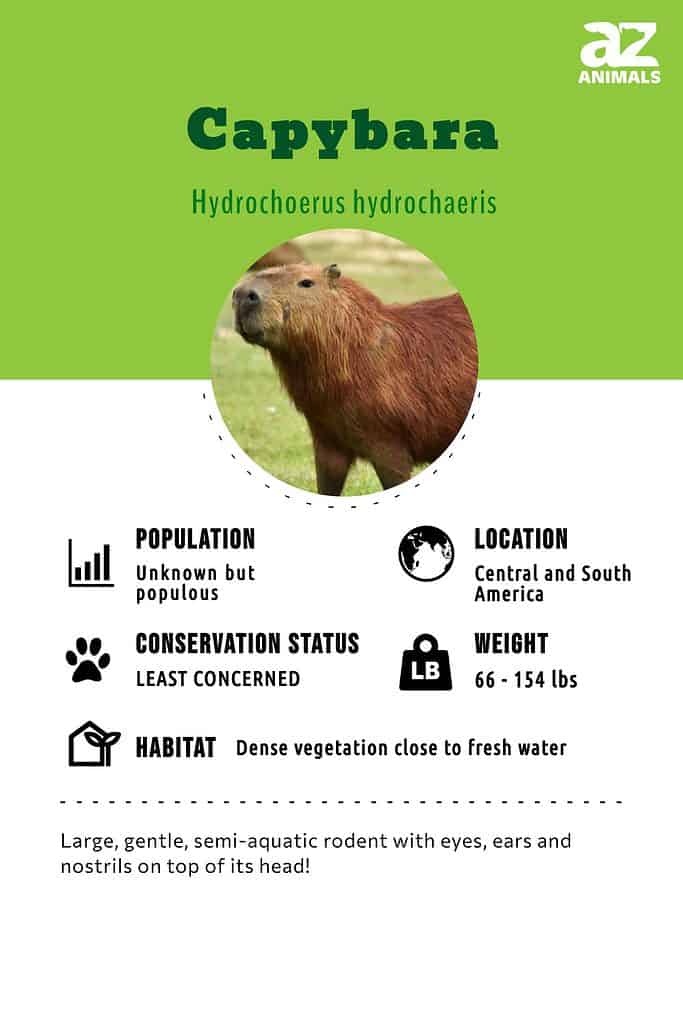
Credit: a-z-animals.com
Capybara Lifespan Compared To Other Rodents
It’s interesting to compare capybaras with other well-known rodents. See the table below for a simple comparison:
| Rodent Species | Average Lifespan (Wild) | Average Lifespan (Captivity) |
|---|---|---|
| Capybara | 6–8 years | 8–12 years |
| Guinea Pig | 4–5 years | 5–7 years |
| Beaver | 10–12 years | 15–20 years |
| Rat | 1–2 years | 2–4 years |
Capybaras outlive many small rodents but do not live as long as beavers, especially in captivity.
Tips For Increasing Capybara Lifespan
If you want your capybara to live a long, healthy life, focus on these essentials:
- Provide a balanced, vitamin-rich diet
- Make sure there’s always clean water for drinking and swimming
- Keep them with other capybaras
- Regularly clean their enclosure
- Schedule yearly vet check-ups
- Give space for exercise and natural behaviors
A rarely mentioned tip: monitor their teeth and feet. Overgrown teeth or sore feet are early signs of bigger health problems.

Credit: www.researchgate.net
Frequently Asked Questions
How Long Do Capybaras Live As Pets?
Capybaras kept as pets often live 8 to 12 years if they receive proper care, social interaction, and a suitable environment.
Do Capybaras Live Longer In The Wild Or In Captivity?
Capybaras usually live longer in captivity because they are safe from predators, get medical care, and have a steady food supply.
What Can Shorten A Capybara’s Life?
Main causes are predators, disease, poor diet, stress, and isolation. In captivity, lack of social interaction and poor housing are major risks.
How Can I Help My Capybara Live Longer?
Focus on a balanced diet, clean water, social companionship, and regular vet visits. Give them space to move and swim.
Where Can I Learn More About Capybaras?
For more information, visit the Wikipedia Capybara page for detailed research and facts.
Capybaras are gentle, intelligent animals that can be long-lived with proper care. By understanding their unique needs and common risks, you can give these remarkable rodents the best chance for a full and healthy life.


