

Capybaras are some of the most fascinating animals on earth. With their friendly faces and relaxed attitude, people often wonder about their lifestyle. One common question is: do capybaras live in water? The answer is not as simple as “yes” or “no.” To really understand these unique creatures, you need to look at where they live, how they behave, and why water is so important for their survival. Let’s explore the watery world of the capybara.
Capybara Basics: The World’s Largest Rodent
Capybaras are the largest rodents in the world. Adult capybaras can weigh between 35 and 66 kg (77 to 146 lbs) and grow up to 1.3 meters (4.3 feet) long. They are native to South America, especially in countries like Brazil, Venezuela, and Colombia. You will mostly find them in places with plenty of water—such as rivers, lakes, swamps, and marshes.
What makes capybaras stand out is their semi-aquatic lifestyle. This means they spend a lot of time in water, but they also live on land. In fact, their daily routines depend on both environments.
Capybaras’ Relationship With Water
Habitat Preferences
Capybaras are not fully aquatic, like fish or dolphins. Instead, they are semi-aquatic mammals. Their ideal home is near slow-moving bodies of water, surrounded by dense grass and plants. Water is not just a place to drink—it’s a central part of their lives.
Here’s a quick look at where you will usually find capybaras:
| Habitat Type | Water Presence | Capybara Activity |
|---|---|---|
| Rivers | High | Swimming, resting, hiding |
| Marshes | High | Feeding, socializing |
| Grasslands (near water) | Medium | Grazing, resting |
| Forests (edge) | Low/Medium | Occasional shelter |
Why Water Matters
Water is not just a comfort for capybaras—it’s a survival tool. There are a few key reasons why they spend so much time in and near water:
- Protection from predators: Capybaras have many natural enemies, including jaguars, caimans, and anacondas. Water gives them a quick escape. They can dive and stay underwater for up to five minutes.
- Temperature control: South American climates can be very hot. Capybaras use water to cool down, especially during the day.
- Feeding: Many of the plants they eat grow near or in water, such as aquatic grasses.
- Social life: Capybaras are social animals. Groups often gather in water to rest and interact.
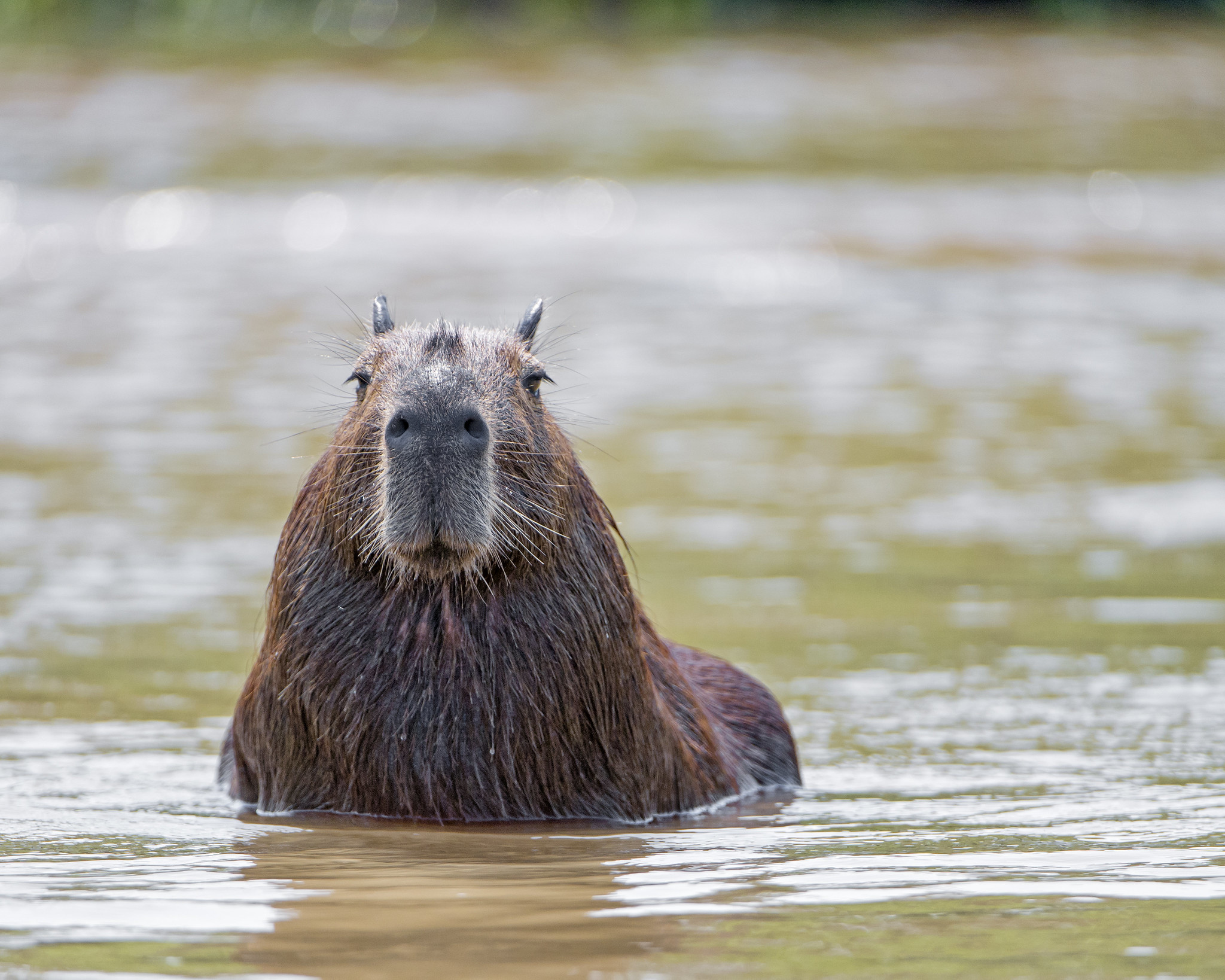
Credit: blog.nature.org
Capybaras’ Water Adaptations
Capybaras have bodies perfectly designed for a watery life. Here are some special adaptations:
- Webbed feet: Their feet have small webs, which help them swim easily.
- Eyes, ears, and nose on top: Capybaras’ eyes, ears, and nose are all set high on their heads. This allows them to see, hear, and breathe while most of their body is underwater.
- Dense, coarse fur: Their fur dries quickly, which helps prevent fungal infections common in wet environments.
Let’s compare some features of capybaras with other common semi-aquatic mammals:
| Animal | Webbed Feet | Underwater Time | Body Position in Water |
|---|---|---|---|
| Capybara | Yes | Up to 5 minutes | Mostly submerged, head above |
| Beaver | Yes | Up to 15 minutes | Fully submerged |
| Otter | Yes | Up to 8 minutes | Mostly submerged, playful |
Capybaras’ Daily Life: Land Vs. Water
Capybaras divide their time between land and water. You will often see them on land in the early morning and late afternoon, grazing on grasses. When the sun gets hot, they move to the water to stay cool.
Here’s how a typical day might look for a capybara:
- Morning: Grazing on land, group social activities
- Midday: Resting in water, hiding from heat and predators
- Afternoon: More grazing, often near the water’s edge
- Evening/Night: Return to water for safety, sleep on banks or even float in shallow water
Many people are surprised to learn that capybaras will sometimes sleep in water. They can keep their noses just above the surface to breathe, even while resting.

Credit: www.littlepassports.com
Do Capybaras Need Water To Survive?
Some beginners think capybaras can live far from water if there is enough food. In reality, capybaras cannot survive without regular access to water. If they are kept away from water sources, they can suffer from heat stress, dehydration, and even die.
When you see capybaras in zoos or parks, you may notice their enclosures always have ponds or pools. This is not just for fun—it’s a basic need.
An insight most people miss is that capybaras also use water for skin health. Their skin can get dry and crack if they cannot bathe regularly. This can lead to infections.
How Capybaras Use Water For Social Life
Capybaras are famous for being peaceful and friendly, not only with other capybaras but also with other animals. Much of their social interaction happens in or near water.
- Groups (called herds) will often gather in the water to rest together
- Young capybaras learn to swim by following adults
- Water-based play helps build bonds between individuals
You might see photos of capybaras with ducks, turtles, or even monkeys sitting on their backs. This happens because water areas attract many animals, and capybaras are rarely aggressive.

Credit: a-z-animals.com
Capybaras And Human Environments
In some parts of South America, people and capybaras share the same waterways. Farmers sometimes see capybaras near rice fields, ponds, or irrigation channels. In cities like Brasília, capybaras are known to visit urban lakes and parks.
However, humans can make life harder for capybaras by draining wetlands or polluting water. Protecting natural water sources is key to keeping capybara populations healthy.
Water Myths And Surprising Facts
Many people believe capybaras are “water pigs” who never leave the water. This is not true—they need both land and water. Another common myth is that capybaras can breathe underwater. In reality, they must surface for air, though they can hold their breath for up to five minutes.
Capybaras are also strong swimmers. They can travel several kilometers along rivers, searching for food or new homes.
Here’s how capybaras compare to other mammals in terms of time spent in water:
| Species | Time in Water (Day) | Reason for Water Use |
|---|---|---|
| Capybara | 4-8 hours | Cooling, hiding, feeding |
| Hippo | 10-16 hours | Temperature, skin protection |
| Beaver | 2-6 hours | Building, feeding, safety |
Frequently Asked Questions
Do Capybaras Sleep In Water?
Capybaras can sleep while floating in shallow water or resting at the edge, with their noses just above the surface. This helps them stay safe from predators and cool during hot days.
Are Capybaras Good Swimmers?
Yes, capybaras are excellent swimmers. Their webbed feet and strong legs allow them to move quickly through water. Young capybaras learn to swim within a few days of birth.
Can Capybaras Live Away From Water?
No, capybaras need regular access to water for cooling, hiding, and socializing. If they are kept far from water, their health suffers.
What Do Capybaras Eat In The Water?
Capybaras eat aquatic plants, grasses, and sometimes fruit. Many of their favorite foods grow at the water’s edge or just below the surface.
Are Capybaras Dangerous To Humans In Water?
No, capybaras are gentle and non-aggressive towards people. However, it’s always best to give wild animals space, especially if they have young nearby.
Capybaras truly are masters of water and land. Their lives show how important natural water sources are for animals. For more about capybara behavior, visit the Wikipedia Capybara page. If you ever see these peaceful giants relaxing in a river, you’ll know just how much water shapes their world.


