

Capybaras are famous for their calm nature and unusual friendships with other animals. Photos and videos often show these large rodents sitting quietly, sometimes with other creatures perched on top. But a curious question often comes up: do capybaras stand on each other? Or is this just a myth from the internet? Let’s explore the truth behind this behavior, what it means, and why capybaras fascinate so many people.
What Capybaras Are Really Like
Capybaras are the world’s largest rodents. Adults can weigh between 35–66 kg (77–146 lbs) and reach up to 130 cm (4.2 ft) in length. They live in South America, mostly near water. Capybaras are social animals, usually living in groups of 10–20 members, though sometimes groups can grow to 100 during the dry season.
These animals are known for their gentle and patient personalities. They rarely fight or show aggression, even when food is involved. This peaceful attitude is one reason why so many other animals, from birds to monkeys, feel comfortable around them.
Do Capybaras Stand On Each Other?
The direct answer is: capybaras rarely stand on each other in the wild or in captivity. Unlike meerkats or otters, capybaras do not climb or stack themselves for fun or safety. However, sometimes you might see a capybara partially resting its head or body on another capybara, especially while sleeping or relaxing.
Why Don’t They Stand On Each Other?
There are several reasons for this behavior:
- Body Shape: Capybaras have round, barrel-shaped bodies that are not easy to balance on.
- Social Structure: They value personal space. While they enjoy close contact, they prefer sitting side by side, not on top of each other.
- Weight: With their heavy bodies, standing on another capybara could cause discomfort or even injury.
Credit: www.reddit.com
Common Capybara Behaviors In Groups
Capybaras are very social, and they show affection in gentle ways. Here’s what you are more likely to see:
- Huddling: They often sit close together, especially during cold weather or when resting.
- Grooming: Capybaras groom each other by nibbling on fur to remove parasites.
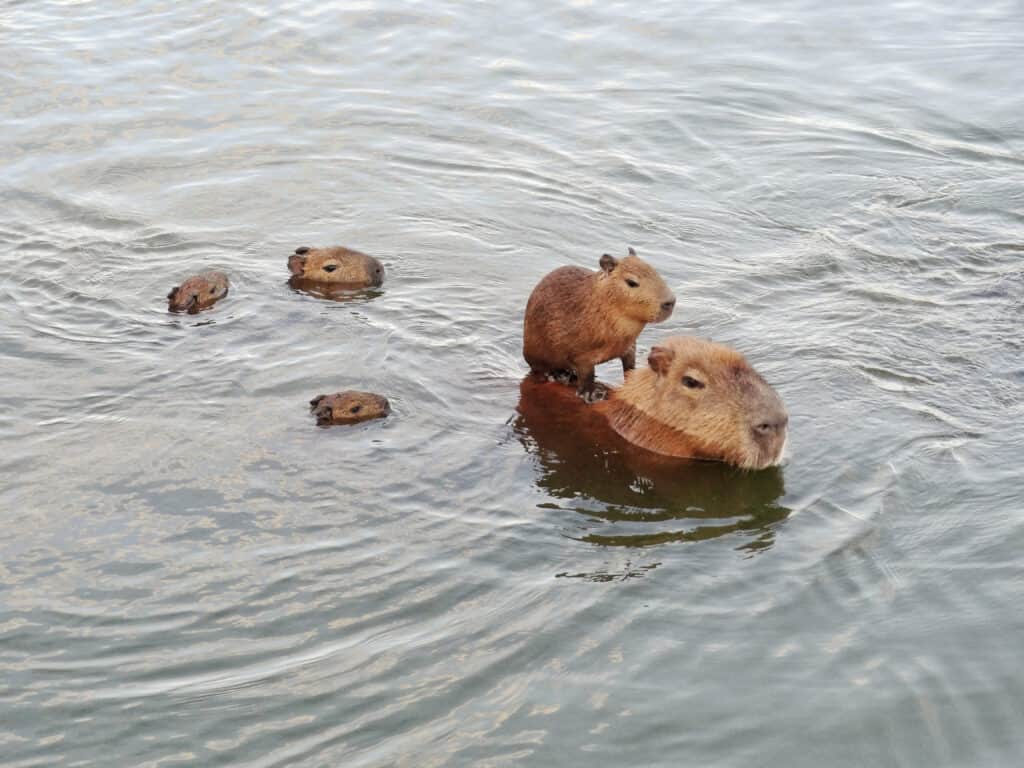
- Stacking Heads: Sometimes, a younger capybara rests its head on an adult’s back. This is more about comfort than dominance.
Below is a quick comparison of typical capybara social behaviors:
| Behavior | How Common | Why It Happens |
|---|---|---|
| Huddling | Very common | Warmth, bonding |
| Head Resting | Common | Comfort, affection |
| Climbing on Others | Rare | Usually only by babies |
Why Do Other Animals Sit On Capybaras?
The internet is full of images of birds, monkeys, and even turtles sitting on capybaras. This happens for a few reasons:
- Capybaras are tolerant. They rarely react or move when another animal climbs on them.
- Safety. Small animals feel safer from predators by sitting on a large, calm animal.
- Food. Birds sometimes look for insects in the capybara’s fur.
But capybaras do not copy this with each other. Their social rules are different from the way they interact with other species.

Credit: www.reddit.com
When Might Capybaras Stand On Each Other?
There are a few rare situations where you might see one capybara partly on another:
- Baby Capybaras: Young capybaras sometimes climb onto adults for warmth or fun. Their light weight makes this safe and harmless.
- Accidental Piling: In crowded spaces, capybaras might end up half on top of each other, but they quickly move away.
- Medical Checks in Zoos: During group exams, a capybara might step over another by mistake. This is not natural behavior.
Here’s a simple table showing when capybaras might stand on each other:
| Situation | Frequency | Is It Normal? |
|---|---|---|
| Babies climbing adults | Occasionally | Yes |
| During play | Rare | Yes, but not common |
| Adults standing on each other | Very rare | No |
Myths And Misunderstandings
The myth that capybaras stand on each other comes from two sources:
- Photos of other animals standing on capybaras
- Social media jokes, where images are edited or misinterpreted
In reality, capybaras do not pile up like dogs, cats, or otters sometimes do. If you see a photo with a capybara stack, it’s probably staged, edited, or features babies.
Non-obvious Insights About Capybara Behavior
Many people miss these facts when learning about capybaras:
- Personal Space Is Important: Even though they seem relaxed, capybaras can become stressed if their personal space is invaded for too long. This is why they don’t like being climbed on by other adults.
- Communication Is Subtle: Capybaras use soft sounds and gentle touches to communicate their comfort or discomfort. If one is uncomfortable with another climbing on it, it will quietly move away rather than fight.
- Group Leadership: The leader (usually a dominant male) rarely lets others get too close or on top, even during sleep.
What Makes Capybaras So Tolerant?
Scientists believe that capybaras’ peaceful behavior evolved because they live in large groups and face many predators. Staying calm and avoiding fights helps the group survive. This tolerance extends mostly to other species, not to standing on each other.
For more information on capybara social behavior, check out this detailed overview from the Wikipedia Capybara page.
Credit: a-z-animals.com
Comparison With Other Social Animals
It’s helpful to compare capybaras with other animals that do stack or climb:
| Animal | Stack/Climb on Each Other? | Main Reason |
|---|---|---|
| Capybara | Rarely | Babies for warmth |
| Meerkat | Often | Lookout duty |
| Otter | Common | Sleeping together |
| Guinea Pig | Occasionally | Play or shelter |


