

Crocodiles and capybaras both live in South America’s rivers and wetlands. But do crocodiles attack capybaras? This question often comes up when people learn about these animals sharing the same habitat. The answer is not as simple as “yes” or “no.
” It depends on the crocodile species, the environment, and the behavior of both animals.
Many people are surprised to learn that capybaras, the world’s largest rodents, often live in groups near water, where crocodiles are known to hunt. Understanding the real relationship between crocodiles and capybaras can help us see how nature balances predator and prey.
It also reveals some fascinating survival strategies that capybaras use to stay safe.
Where Do Crocodiles And Capybaras Live Together?
Crocodiles and capybaras share the wetlands, rivers, and lakes of South America. The main crocodile found here is the yacaré caiman (Caiman yacare), sometimes called a crocodile but technically a caiman. There are also Orinoco crocodiles and spectacled caimans.
Capybaras live in large groups, usually close to water. They are strong swimmers and often graze on plants near riverbanks.
Here’s a simple table showing where capybaras and main crocodilian species overlap:
| Species | Main Habitat | Capybara Presence |
|---|---|---|
| Yacaré Caiman | Argentina, Brazil, Paraguay, Bolivia | Yes |
| Orinoco Crocodile | Venezuela, Colombia | Yes |
| Spectacled Caiman | Central & South America | Yes |
Why Do Crocodiles Attack Capybaras?
Crocodiles are opportunistic predators. This means they attack animals that are easy to catch. Capybaras, being large and often moving in groups, are not the easiest targets. But sometimes, especially when food is scarce or a young capybara strays from the group, crocodiles will attack.
Some reasons crocodiles might attack capybaras:
- Hunger: When other prey is hard to find, capybaras become a target.
- Young or Weak Individuals: Small or sick capybaras are easier to catch.
- Close Encounters: If a capybara enters the water at the wrong time, it may not escape a lurking crocodile.

Credit: www.reddit.com
How Do Capybaras Defend Themselves?
Capybaras are not defenseless. They use several smart strategies to avoid crocodile attacks:
- Group Living: Capybaras live in groups of 10–20 or more. This “safety in numbers” means more eyes to spot danger.
- Alertness: They are always watching and listening. At the first sign of danger, capybaras make warning sounds.
- Swimming Skills: Capybaras can dive and swim fast. They often escape by jumping into water and hiding under the surface.
- Close to Land: They prefer shallow water and stay near the bank, where crocodiles are less able to ambush.
Here’s a comparison of capybara and crocodile swimming abilities:
| Animal | Top Swimming Speed | Underwater Duration |
|---|---|---|
| Capybara | ~5 km/h | Up to 5 minutes |
| Yacaré Caiman | ~14 km/h | Up to 15 minutes |
While crocodiles are faster, capybaras use their agility and knowledge of the terrain to escape.
How Often Do Crocodile Attacks Happen?
Many people think crocodiles attack capybaras all the time. In reality, such attacks are not as common as expected. Capybaras are a part of the crocodile’s diet, but they are not the top prey.
A study in the Pantanal wetlands of Brazil found that capybaras made up less than 10% of the yacaré caiman’s diet. Fish, birds, and smaller animals are more frequent meals. Crocodiles prefer smaller, easier-to-catch prey.
However, during the dry season, when water sources shrink and prey becomes scarce, attacks on capybaras may increase.
Credit: www.iflscience.com
Real-life Examples Of Crocodile Attacks
Wildlife documentaries sometimes show dramatic scenes of crocodiles catching capybaras. These videos are popular, but they do not tell the whole story. In most cases, capybaras escape.
For example, in the Pantanal, researchers observed that capybara groups often share the riverbanks with caimans with little conflict. Only when a capybara is isolated or distracted does a crocodile make a move. Even then, the attack is not always successful.
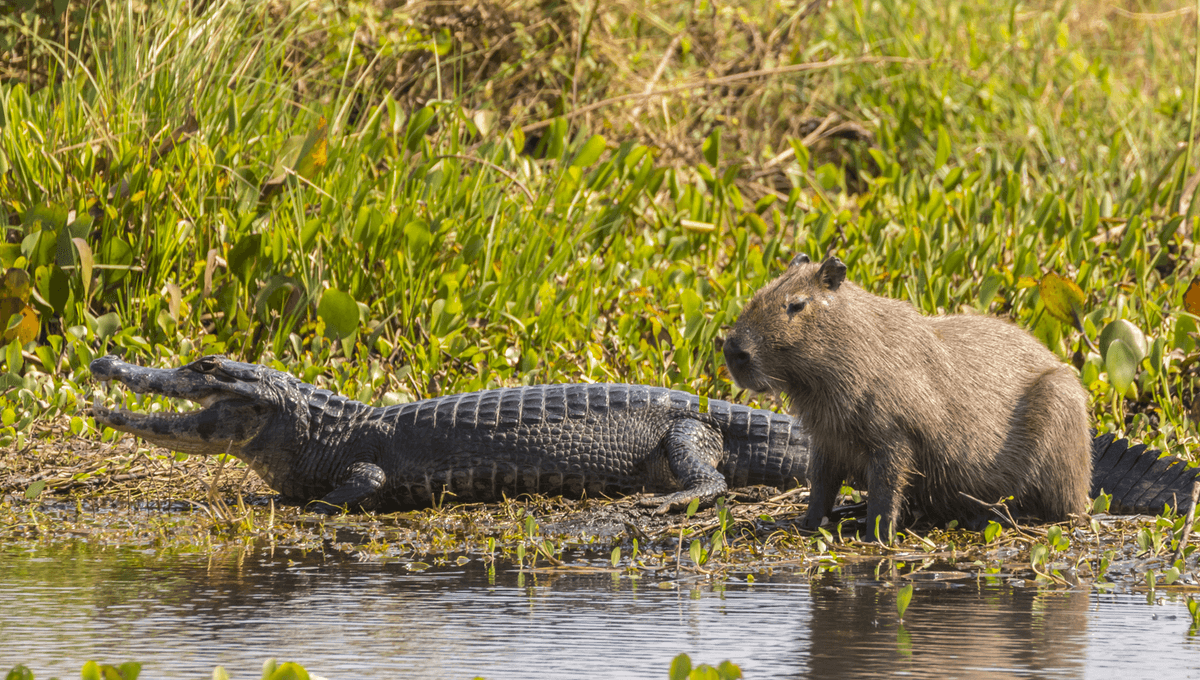
A non-obvious insight: Caimans and capybaras often ignore each other when well-fed. Some even rest side by side on riverbanks, showing that attacks are not constant.
What Makes Capybaras At Risk?
Several factors can increase the risk of a crocodile attack:
- Young Capybaras: Babies and juveniles are slower and less skilled swimmers.
- Inexperienced Groups: Smaller groups have fewer eyes to spot danger.
- Limited Escape Routes: In dry seasons, when water bodies are smaller, capybaras have less space to run or swim.
Another insight: Capybaras sometimes use the presence of humans (such as cattle farms) as a shield. Crocodiles are shy around people, so capybaras near human activity may be safer.
Do Capybaras Have Natural Defenses Against Crocodiles?
Capybaras do not have sharp teeth or claws for fighting off crocodiles. Their main defense is vigilance and teamwork. The group’s lookout system means that one capybara usually sees the crocodile before it attacks.
Here’s a quick look at their main survival strengths:
| Defense | How It Helps |
|---|---|
| Group Alertness | More eyes to spot threats early |
| Fast Escape | Quick dives and swimming away from danger |
| Hiding | Can stay underwater, hidden from view |
Capybaras are also good at learning which parts of the river are safest and avoid areas where crocodiles hunt most.
Coexistence: More Than Just Predator And Prey
It might surprise you that capybaras and crocodiles are often seen together. This is because the ecosystem is balanced. Crocodiles help keep capybara numbers under control, and capybaras help support the food web.
When food is plentiful, both animals may ignore each other. Only when food is scarce does the relationship become more dangerous for the capybara.
If you want to learn more about the wildlife of South America and the relationship between these animals, you can visit the Wikipedia page on Capybaras.
In short, crocodiles do attack capybaras, but it is not a constant battle. Most of the time, capybaras avoid becoming a meal through smart behaviors and group living.

Credit: www.reddit.com
Frequently Asked Questions
Do Crocodiles Eat Capybaras Often?
No, crocodiles prefer smaller and easier prey like fish. Capybaras are sometimes attacked, but it is not their main food source.
Are Capybaras Afraid Of Crocodiles?
Capybaras are cautious around crocodiles. They stay alert and rely on their group for early warning. They are not fearless but know how to avoid danger.
Can A Capybara Kill A Crocodile?
No, capybaras do not have the strength or weapons to kill a crocodile. Their best defense is to escape.
Why Do Crocodiles And Capybaras Sometimes Rest Near Each Other?
When food is plentiful, crocodiles may not be interested in hunting. Capybaras sense this and may share riverbanks with crocodiles without fear.
How Do Baby Capybaras Stay Safe From Crocodiles?
Young capybaras stay close to adults in the group. The adults are always watching for danger and help protect the young by sounding alarms and guiding them to safety.
Crocodiles and capybaras have a complex relationship. While attacks do happen, both animals have adapted to live side by side in the rich wetlands of South America. Understanding this balance shows just how smart and resourceful these creatures can be.


