

Capybaras are one of the most fascinating animals in the world. Many people know them as the world’s largest rodent, but there is much more to these gentle giants than their size. They have unique behaviors, live in interesting social groups, and even play a special role in their ecosystem.
Let’s explore the most interesting facts about capybaras and see what makes them so special.
Capybara Basics
Capybaras are native to South America. You can find them in countries like Brazil, Venezuela, Colombia, and Argentina. They live near rivers, lakes, and swamps because they need water for both safety and food.
Capybaras belong to the Caviidae family, which also includes guinea pigs and rock cavies. Their scientific name is Hydrochoerus hydrochaeris. Most adult capybaras weigh between 35 and 66 kg (77–146 lbs) and stand about 60 cm (2 feet) tall at the shoulder.
Unique Physical Features
Capybaras have a barrel-shaped body and short legs. Their fur is coarse and brownish, which helps them blend into muddy riverbanks. Their eyes, ears, and nostrils are on top of their head. This allows them to stay mostly underwater while watching for danger.
One feature many people miss is their webbed feet. This adaptation helps them swim fast and walk on soft, muddy ground without sinking.
| Feature | Adaptation |
|---|---|
| Webbed feet | Better swimming and walking in mud |
| High-set eyes & ears | See and hear while mostly underwater |
| Coarse fur | Dries quickly after leaving water |
Social Lives
Capybaras are highly social animals. They often live in groups of 10–20, but sometimes herds can be as large as 100 during the dry season. Living in groups helps them stay safe from predators like jaguars, anacondas, and caimans.
A typical group has one dominant male, several females, their young, and a few subordinate males. The dominant male is easy to spot because he usually sits in the middle and marks his territory with a special scent gland on his nose.
Diet And Eating Habits
Capybaras are herbivores. They mostly eat grasses, but they also eat aquatic plants, fruit, and tree bark. They need a lot of food because their digestive system is not very efficient.
One strange behavior is coprophagy—they eat their own droppings in the morning. This may sound unpleasant, but it helps them get more nutrients from their food by digesting it a second time.
| Food Type | Percent of Diet |
|---|---|
| Grasses | 70-80% |
| Aquatic plants | 10-15% |
| Fruits & Bark | 5-10% |
:max_bytes(150000):strip_icc()/GettyImages-527972230-d8401435393948c3a5d81ae64ba98308.jpg)
Credit: www.treehugger.com
Life Cycle And Reproduction
Capybara females give birth to litters of 2–8 babies after a pregnancy of about 150 days. Babies are called pups and are able to eat grass within a week, though they nurse for about four months.
Both males and females help care for the young. Pups stay with the group for safety and learn social rules from older capybaras. This strong social bond helps them survive in the wild.
Capybaras And Water
Capybaras are semi-aquatic. They spend much of their time in water to escape from heat and predators. They can hold their breath for up to five minutes underwater. Young capybaras even learn to swim before they can walk well on land.
At night, capybaras rest on riverbanks. During hot days, they often stay in the water with only their noses above the surface.
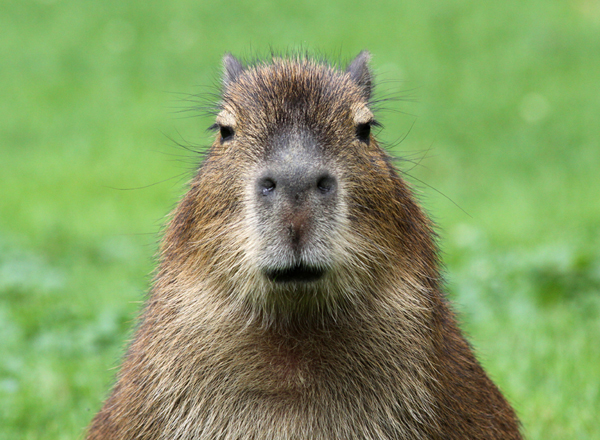
Credit: www.livescience.com
Capybara Communication
Capybaras use many sounds to talk to each other. They bark, whistle, purr, and even make a clicking noise. Each sound has a meaning, such as warning about danger, keeping the group together, or showing affection.
One interesting fact is that capybara purrs are a sign of contentment, similar to a cat’s purr.
Relationship With Humans
Capybaras are often seen as gentle and are sometimes kept as pets in countries where it is legal. In some cultures, especially in Venezuela, people even eat capybara meat, especially during Lent because the Catholic Church once classified them as “fish” for religious reasons.
In zoos and wildlife parks, capybaras are popular because they are calm and rarely aggressive. However, they do need a lot of space and water to stay healthy.

Credit: www.savacations.com
Capybaras In The Ecosystem
Capybaras play a key role in their habitat. By eating grass and aquatic plants, they help control plant growth and keep waterways clear. Their droppings also help fertilize the soil, supporting other animals and plants.
Capybaras are also an important food source for many predators, which helps keep the ecosystem balanced.
Surprising Facts
- Capybaras can sleep in water, keeping just their noses above the surface.
- They have sharp teeth that never stop growing, so they chew tough plants to keep them short.
- Their closest relatives are guinea pigs and rock cavies—not beavers, as many people believe.
- Capybaras have a lifespan of 8–10 years in the wild and up to 12 years in captivity.
- They can run surprisingly fast, up to 35 km/h (22 mph), when escaping predators.
Capybara Comparisons
Capybaras are often compared to other large rodents. Here’s how they stack up:
| Rodent | Average Weight | Habitat |
|---|---|---|
| Capybara | 35-66 kg | South America, wetlands |
| Beaver | 16-32 kg | North America, rivers/lakes |
| Porcupine | 5-16 kg | Worldwide, forests |
Conservation Status
Capybaras are not endangered. Their population is stable, and they are listed as Least Concern by the International Union for Conservation of Nature (IUCN). However, habitat loss and hunting in some regions can be a problem.
In some countries, capybaras are farmed for meat and leather, but strict rules help protect wild populations. Conservation groups work to balance human needs with capybara survival.
Frequently Asked Questions
How Long Do Capybaras Live?
Capybaras usually live 8–10 years in the wild. In captivity, with good care, they can reach up to 12 years.
Are Capybaras Dangerous To Humans?
Capybaras are gentle and rarely aggressive. They may bite if threatened, but most are calm around people.
Can You Keep A Capybara As A Pet?
In some countries, you can keep a capybara as a pet. However, they need a large space, a swimming area, and at least one other capybara for company.
What Do Capybaras Eat?
Capybaras eat mostly grasses, aquatic plants, fruits, and sometimes tree bark. They practice coprophagy to get more nutrients.
Do Capybaras Have Any Natural Predators?
Yes, capybaras are prey for jaguars, caimans, anacondas, and some large birds of prey.
Capybaras are more than just giant rodents. They are social, adaptable, and play a key role in their ecosystem. By understanding these facts, we can appreciate why capybaras are so special. If you want to learn even more about capybaras, check out this Wikipedia article for more details.


