

Drawing capybaras is fun and can be relaxing. These gentle animals are the world’s largest rodents and are known for their friendly faces, rounded bodies, and calm personalities. If you’re a beginner or want to improve your animal drawing skills, learning how to draw a capybara step by step will help you create cute, realistic art.
This guide gives clear instructions, practical tips, and useful examples to make the process simple—even if English is not your first language.
Understanding Capybara Features
Before you start, it’s important to study the basic features of a capybara. They have a rounded body, short legs, and a flat face. Their eyes and ears are small and sit high on the head. Their fur is thick and often brown or gray.
Capybaras look friendly, which makes them a favorite subject for artists.
Let’s compare capybara features with other common animals to understand what makes them unique:
| Animal | Body Shape | Face Shape | Legs | Fur |
|---|---|---|---|---|
| Capybara | Rounded | Flat, wide | Short | Thick, brown/gray |
| Guinea Pig | Small, round | Short, round | Very short | Soft, various colors |
| Rabbit | Oval, compact | Pointed, narrow | Medium | Soft, various colors |
Materials You Need
You don’t need expensive materials to draw a capybara. Here are the basics:
- Pencil (HB or 2B for sketching)
- Eraser (for corrections)
- Paper (any size, but A4 is easy to handle)
- Colored pencils or markers (optional, for coloring)
- Sharpener (keep your pencil tip fine)
Having simple tools makes it easier to focus on learning shapes and lines.
Step-by-step Guide To Drawing Capybaras
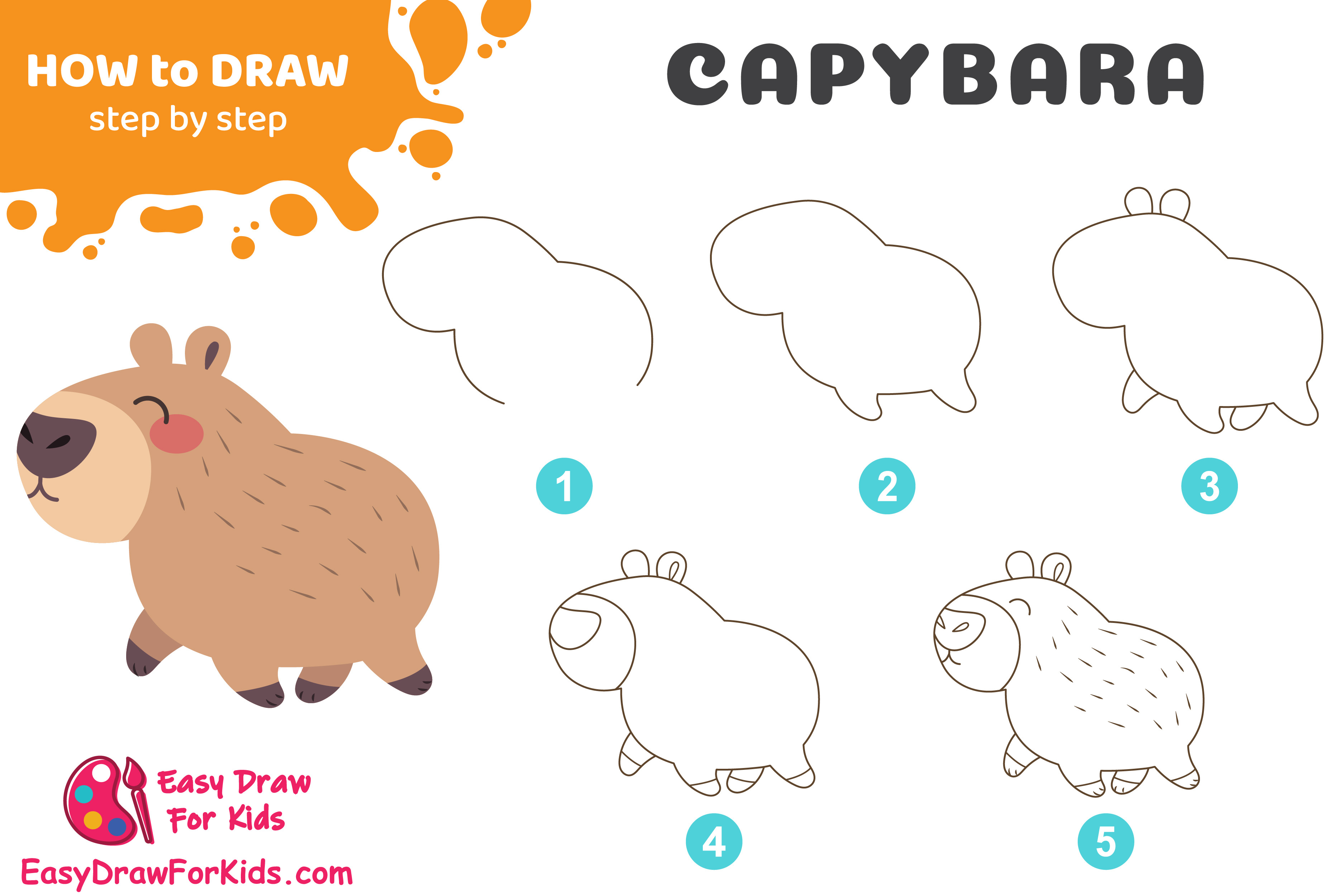
Let’s break the drawing process into easy steps. Each step helps you build the capybara shape, add details, and finish your artwork.
1. Sketch The Basic Shapes
Start with simple shapes to outline the body.
- Draw a large oval for the body.
- Add a smaller circle or oval at one end for the head.
- Sketch four short lines under the body for the legs.
This helps you get proportions right. Beginners often skip this step, but it makes drawing easier and more accurate.
2. Add The Face Features
Capybara faces are flat and wide.
- Draw two small circles for the eyes near the top of the head.
- Sketch a horizontal oval for the nose.
- Add two small rounded shapes for the ears, placing them above the eyes.
Pay attention to the placement of the features. Capybara eyes and ears are close together and high on the head, which gives their unique look.
3. Shape The Legs And Feet
Capybaras have short, sturdy legs.
- Refine the leg lines into thicker shapes.
- Draw simple oval shapes at the ends for the feet.
- Add small lines for the toes (usually four per foot).
Many beginners forget to show the toes, but they help make your drawing realistic.
4. Refine The Body Outline
Now, smooth the shapes and connect the head and body.
- Use your pencil to join the head and body with soft curves.
- Erase extra lines from the original shapes.
At this stage, check proportions. Capybaras are about twice as long as they are tall. Here’s a quick comparison of proportions:
| Animal | Body Length | Body Height | Length:Height Ratio |
|---|---|---|---|
| Capybara | 100 cm | 50 cm | 2:1 |
| Guinea Pig | 20 cm | 12 cm | 1.7:1 |
5. Draw The Fur Texture
Capybaras have thick fur, so show this with small lines.
- Use short, quick pencil strokes along the body.
- Focus on the areas around the back, sides, and cheeks.
- Don’t overdo it—just enough to suggest fur.
Drawing fur is a common challenge. If you use too many lines, your capybara will look messy. If you use too few, it will look smooth like a seal.
6. Add Final Details
Details make your drawing come alive.
- Darken the eyes and add a tiny white spot for a shine.
- Shade the nose and add nostrils.
- Draw simple lines inside the ears.
You can also add grass or water under the capybara to show its natural habitat.
7. Color Your Drawing (optional)
If you want to color your capybara:
- Use brown or gray pencils for the fur.
- Color the nose and feet with dark brown.
- Add light green for grass or blue for water.
Capybaras often look lighter on the belly and darker on the back.
Practical Tips For Better Capybara Drawings
- Use reference photos: Look at real capybara images to see details.
- Draw lightly at first: This makes erasing mistakes easier.
- Focus on proportions: Capybaras are long and low, not tall.
- Keep your lines simple: Don’t try to draw everything at once.
- Practice different poses: Try sitting, standing, or swimming capybaras.
Many beginners miss the importance of drawing capybaras in different poses. It helps you understand their movement and makes your drawings more interesting.
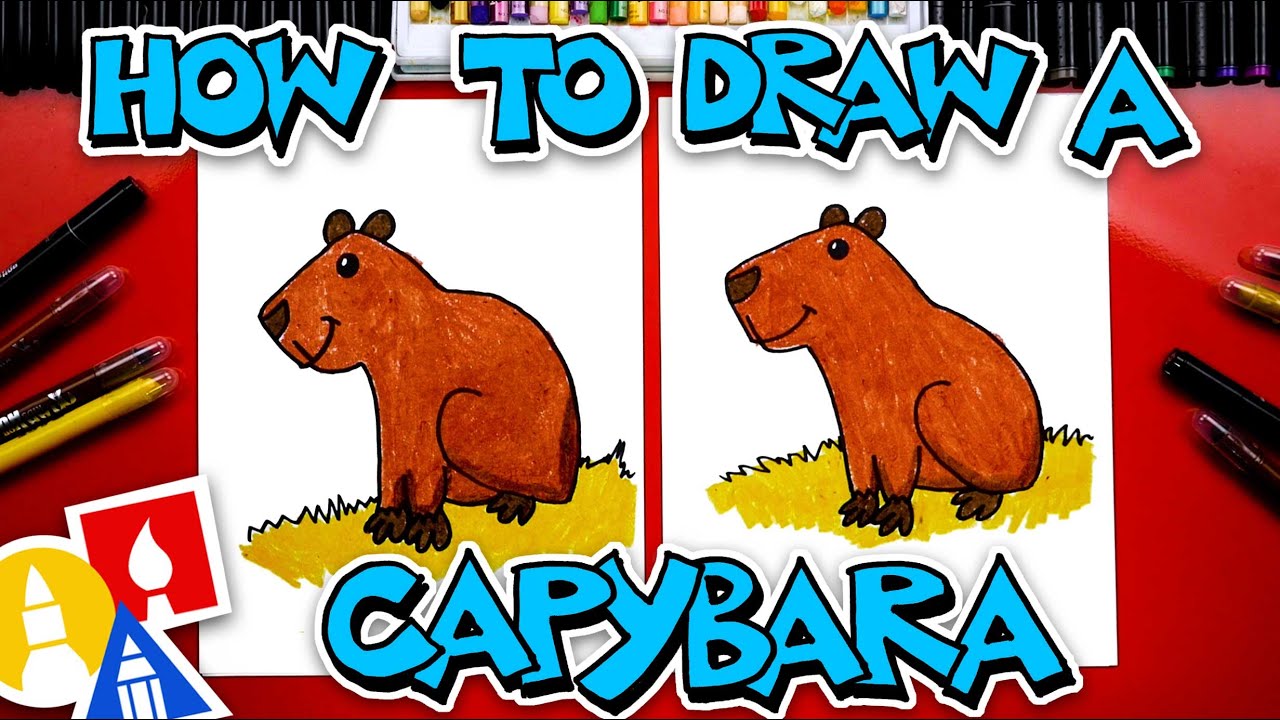
Credit: www.youtube.com
Common Mistakes And How To Fix Them
Mistakes are part of learning. Here are some errors beginners make and ways to avoid them:
- Making the body too tall: Capybaras are long, not upright.
- Placing eyes too low: Their eyes are high and close to the ears.
- Over-detailing the fur: Use simple lines for texture.
- Ignoring the habitat: Adding water or grass helps your drawing look more natural.
If you notice these mistakes, erase and redraw the part. Practicing fixes will make your drawings better.
Capybara Drawing Examples
To inspire you, here are some ideas for capybara drawings:
- A capybara sitting in grass, looking relaxed.
- A group of capybaras swimming in a pond.
- A baby capybara next to its parent.
Try drawing these scenes and add your own creative touch.

Credit: helloartsy.com
Learning From Other Artists
Studying other artists’ work is a smart way to improve. You can find capybara drawings in children’s books, wildlife magazines, and online galleries. Look at how artists show fur, faces, and poses. Sometimes, artists use simple shapes and colors for a cartoon style.
Others use shading and detail for realism.
For more inspiration and scientific information, visit the Wikipedia page on Capybaras.
Frequently Asked Questions
How Long Does It Take To Draw A Capybara?
Most beginners can complete a simple capybara drawing in about 30 minutes. Detailed drawings may take longer, up to an hour.
What If My Drawing Doesn’t Look Realistic?
Don’t worry. Practice helps. Use reference photos and focus on shapes and proportions. Start simple, and add details as you improve.
Can I Use Digital Tools To Draw Capybaras?
Yes. You can use drawing apps on tablets or computers. The steps are similar, but you use digital brushes instead of pencils.
How Do I Make My Capybara Look Cute?
To create a cute capybara, exaggerate the eyes and make the cheeks rounder. Use soft lines and avoid harsh angles. Smiling faces also help.
Is It Okay To Draw Capybaras In Cartoon Style?
Absolutely. Cartoon capybaras are fun to draw. Use bright colors and simple shapes. Try different expressions and poses to make them unique.
Drawing capybaras is rewarding and enjoyable. With practice, your art will improve. Remember to study real animals, keep your lines simple, and try new poses. Whether you draw for fun or want to become an animal artist, capybaras are a great subject.
Credit: tips.clip-studio.com


