

Why Do Pelicans Try To Eat Capybaras
If you’ve ever seen a picture or video of a pelican with its massive beak wide open near a capybara, you might wonder, “Is that pelican really trying to eat that giant rodent?” This question pops up often on social media and wildlife forums. Pelicans are famous for scooping up fish, but capybaras? That seems strange. Let’s explore why this happens, what’s really going on, and what it reveals about the surprising behavior of these fascinating birds.
Understanding Pelican Diet And Hunting Behavior
Pelicans are well-known for their fish-based diet. Their large, flexible beaks and expandable throat pouches help them scoop up slippery prey from water. Most species, like the American white pelican and brown pelican, are expert fishers, often working together to herd fish.
However, pelicans are not strict fish-eaters. They are opportunistic feeders. This means if they see an easy meal—like small birds, amphibians, or even mammals—they may try to eat it. For example, in urban parks, pelicans have been seen swallowing pigeons or ducklings. Their hunting instinct can override caution, leading them to attempt eating animals much larger than their usual prey.
Capybaras: The Unlikely Target
Capybaras are the world’s largest rodents, reaching up to 66 kg (145 lbs). They are gentle, social animals native to South America, often seen near water. Capybaras eat grasses and aquatic plants, and rarely show aggression.
The size difference between a pelican and a capybara is huge. Even the largest pelican, the Dalmatian pelican, usually weighs less than 15 kg (33 lbs). So, why do pelicans try to eat capybaras? The answer is not as simple as it seems.
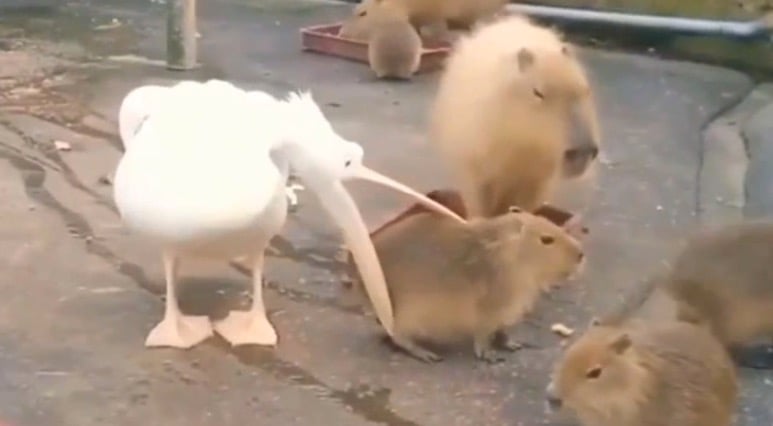
Credit: uglystage.com
Why Pelicans Attempt To Eat Capybaras
There are several reasons why pelicans might go after capybaras, and most are based on instinct, confusion, and rare circumstances.
1. Mistaken Identity
Pelicans hunt by sight. Sometimes, a young capybara or a baby can be about the same size as a large fish or small mammal. The quick movement of a capybara in the water might trigger the pelican’s predatory response. The bird doesn’t realize it’s facing a rodent, not a fish.
2. Opportunistic Feeding
If a capybara is very young, sick, or injured, it might not move quickly. Pelicans are known to target weak or easy prey. In rare cases, a pelican might try to swallow a capybara baby simply because it looks vulnerable.
3. Unusual Encounters In Captivity
Many reports of pelicans chasing capybaras come from zoos or animal parks. Here, animals that would not meet in the wild share the same space. This unnatural mix can confuse a pelican’s instincts, causing it to try eating something it would never find in its native habitat.
4. Experimental Behavior
Pelicans sometimes test objects to see if they are edible. Their beaks are sensitive, and they might scoop up a capybara out of curiosity. If the animal is too large or resists, the pelican usually spits it out.
5. Social Media And Viral Videos
Many people have seen short clips of pelicans “eating” capybaras. These videos are often misunderstood. In most cases, the pelican does not succeed, and the capybara escapes unharmed. The shocking moment is what goes viral, but it does not show the whole story.
How Often Does This Happen?
Trying to eat a capybara is very rare for a pelican. There are no scientific records of pelicans swallowing adult capybaras. Most attempts involve baby capybaras or playful pecking.
The following table compares the natural diets of pelicans and capybaras:
| Animal | Typical Diet | Occasional Food |
|---|---|---|
| Pelican | Fish, amphibians | Small birds, crustaceans, rodents (rare) |
| Capybara | Grasses, aquatic plants | Fruits, tree bark |
As you can see, capybaras are not a natural part of a pelican’s diet. Most encounters are accidental or experimental.

Credit: www.youtube.com
Are Pelicans Dangerous To Capybaras?
Pelicans are not a serious threat to healthy, adult capybaras. Their beaks are strong, but not designed for hunting large mammals. A full-grown capybara is simply too big to swallow. However, baby capybaras or those that are weak may be at risk, especially in artificial environments where food competition is high.
Animal Behavior In Shared Habitats
When animals from different continents live together in zoos, unusual behavior can occur. Pelicans may not recognize capybaras as “off-limits” prey. Keepers usually monitor mixed-species habitats to prevent injuries.
Here’s a quick look at their size comparison:
| Animal | Average Adult Weight | Max Length |
|---|---|---|
| Pelican | 5–15 kg | 1.8 meters (beak to tail) |
| Capybara | 35–66 kg | 1.3 meters (nose to rump) |
Clearly, the capybara is much larger and heavier.

Credit: www.reddit.com
What Do Experts Say?
Wildlife experts agree that most pelican attempts are simple mistakes. Dr. Jane Morrison, a zoologist at the Smithsonian National Zoo, explains: “Pelicans sometimes try to swallow objects that fit in their mouths, especially in captivity. They quickly realize their mistake with animals like capybaras.”
Another important detail: pelicans do not chew. They swallow food whole. If prey is too big or struggles, the pelican usually gives up.
Non-obvious Insights About Pelican Feeding
- Pelicans have poor taste discrimination: Their beaks are built for grabbing, not for tasting or chewing. This means they might test-scoop anything that moves in their environment.
- Digestive risks: Pelicans that try to swallow large or unusual prey sometimes risk choking. There are rare reports of pelicans dying after trying to eat animals too big for their throats. This reinforces why most failed attempts end quickly.
How To Prevent Problems In Zoos And Parks
Modern zoos have learned to separate animals that could cause harm to each other. Zookeepers:
- Monitor feeding times and limit direct contact
- Remove baby capybaras from pelican areas
- Provide enrichment to reduce boredom and experimental behavior
These steps help keep both pelicans and capybaras safe.
Famous Cases And Real-life Examples
One viral video from a European zoo showed a pelican trying to scoop a small capybara into its beak. Staff quickly intervened, and the capybara was unharmed. In another case, a pelican in a South American park was seen pecking at a capybara’s fur but soon lost interest.
For more detailed records of pelican feeding behavior, see this Wikipedia page on pelicans.
Frequently Asked Questions
Why Do Pelicans Sometimes Attack Animals Larger Than Fish?
Pelicans are opportunistic feeders. When food is scarce or an animal moves quickly, they may try to catch it even if it’s not a typical prey.
Can A Pelican Actually Swallow A Capybara?
No, an adult capybara is far too big. At most, a pelican might scoop up a baby capybara, but it cannot swallow it whole.
Do Pelicans Eat Other Mammals?
Rarely. Pelicans have been seen eating small birds and rodents, but mammals are not a regular part of their diet.
Is It Dangerous To Keep Pelicans And Capybaras Together?
It can be risky for baby or weak capybaras. Most zoos avoid mixing them without supervision.
Are These Encounters Common In The Wild?
No. Pelicans and capybaras do not share the same natural habitats, so these encounters almost always happen in captivity.
Pelicans trying to eat capybaras is a rare and curious event. It shows that animal instincts can lead to surprising behavior, especially outside the wild. By understanding why this happens, we can better protect both species and appreciate their unique roles in nature.


